The Question Behind “Is There a Growth Clinic in Korea?”
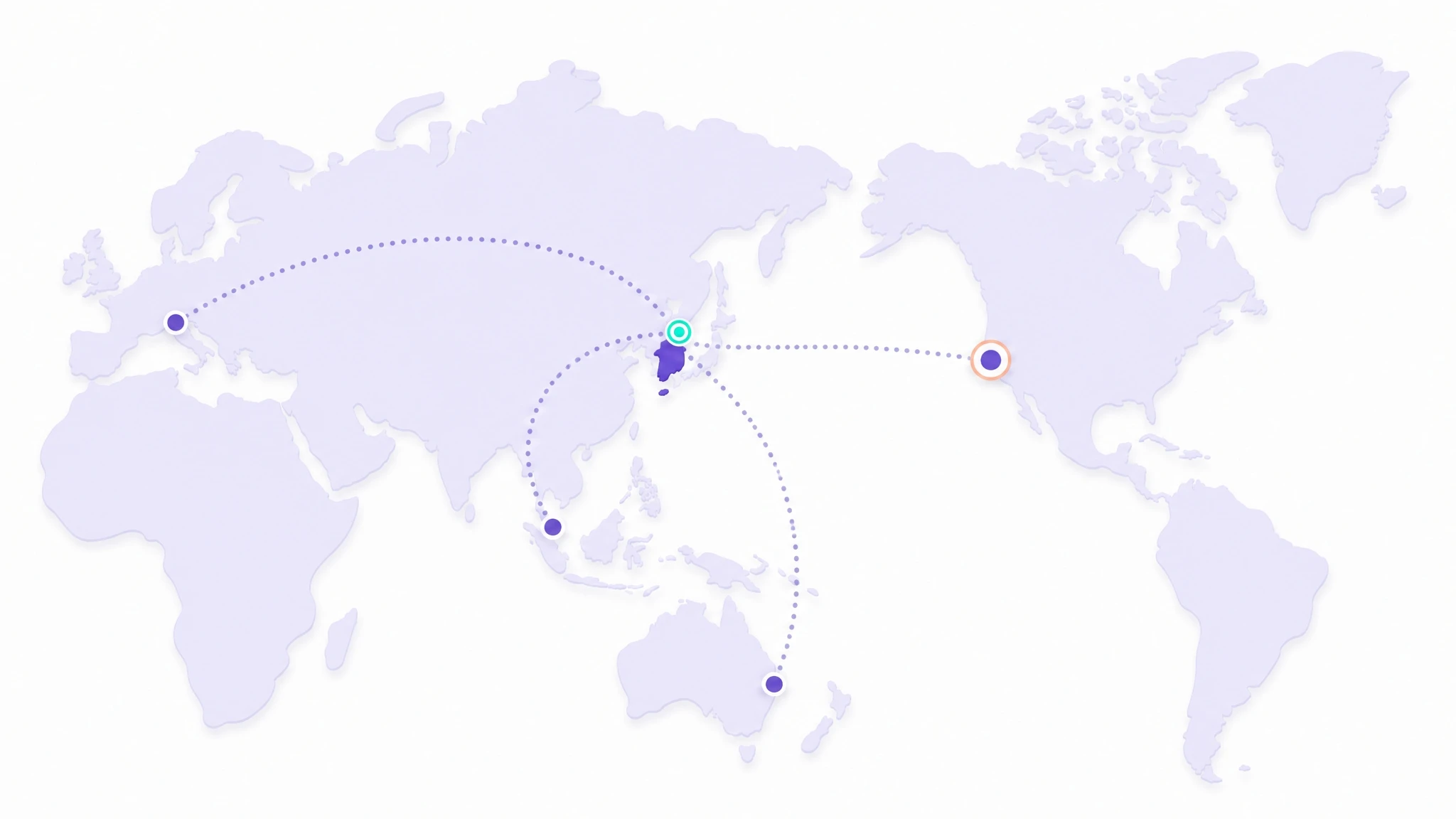
Parents who search for a growth clinic in Korea are rarely asking whether one exists. They are asking something more practical: can we actually do this from where we live, and how much of it requires being in Seoul?
Families have written to us from Australia, Singapore, Malaysia, the United Kingdom and Indonesia. The questions arrive in almost the same order every time — can we start without flying over, how many days does the visit take, and can tests done at our local hospital be used.
This article answers those in sequence, because the sequence is the answer. Most of the first stage happens where you already live.
One thing worth saying at the start: a growth clinic is not something you commit to before you know anything. The first stage exists to produce two pieces of information — your child’s bone age and their growth velocity — and those two decide whether there is anything to act on at all. Some families finish that stage and learn there is plenty of time. That is a useful answer, and it costs a local X-ray to get.
Stage One — What Happens Before Anyone Books a Flight

Four things happen before travel, and none of them require it.
1. You tell us three numbers. Your child’s age, current height, and how much they grew over the last twelve months. Growth velocity — that third number — often says more than the first two.
2. We send an English medical letter. It lists exactly which tests to request, written for a doctor at your local hospital to read and act on.
3. You have a wrist X-ray taken locally. A hand-and-wrist radiograph is a routine study almost anywhere. You send us the image. Nobody flies for this step.
4. A video consultation. The director reads the bone age against your child’s growth curve and explains what the two together mean. Whether an in-person visit is worth making is decided here, not before.
The reason the letter matters more than it sounds: a parent asking a local hospital for “a growth test” often gets something other than what is needed. A document written doctor-to-doctor, naming the study and the conditions, removes that translation problem. It is also the step families most often tell us they did not know was possible.
Nothing in this stage is irreversible. You end it with information and a conversation, not a treatment.
Why Bone Age Comes First, Not Calendar Age
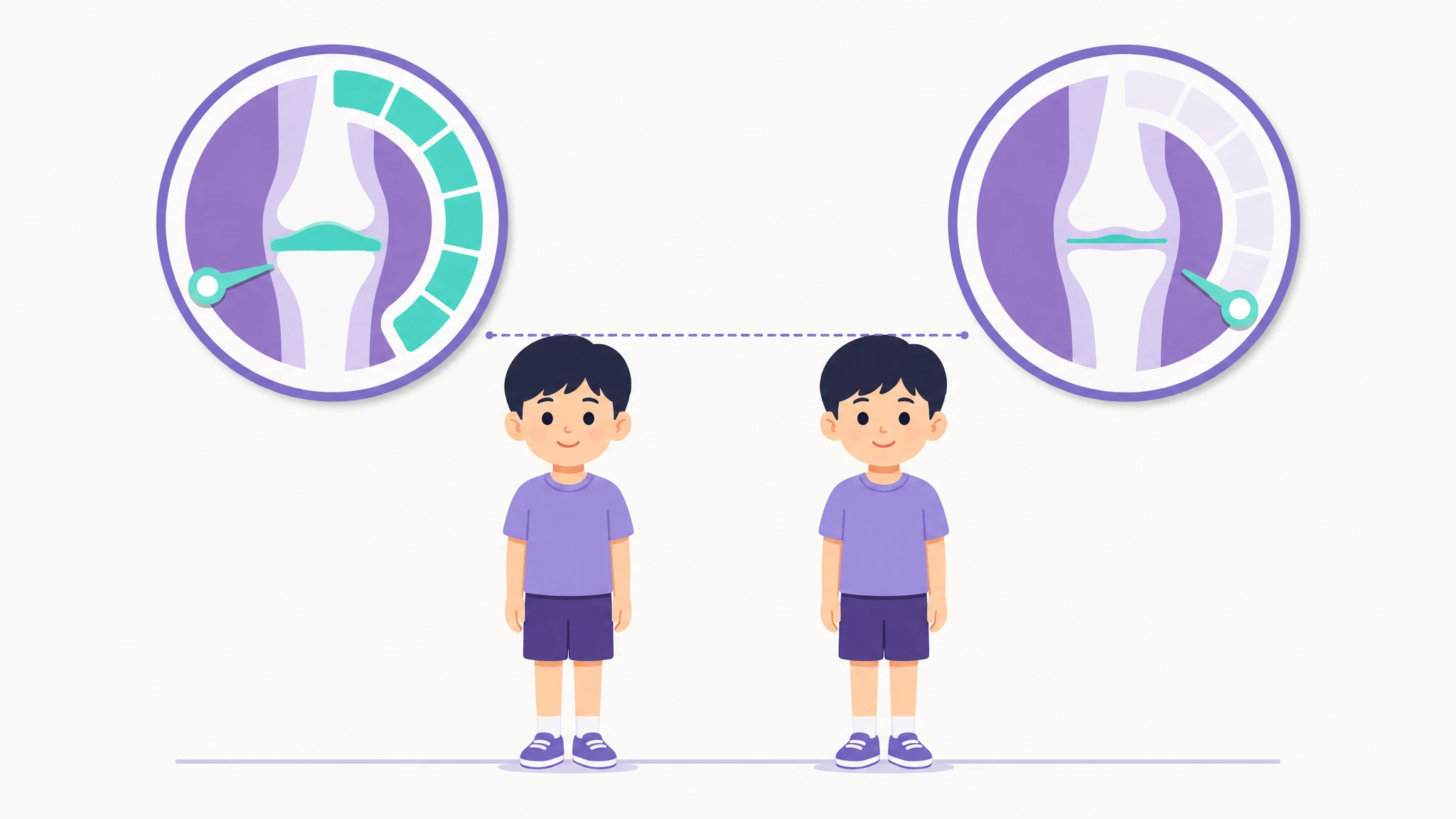
Two children who are eleven and exactly the same height can finish years apart. Calendar age says how long they have been alive; bone age says how much growth plate is left.
A wrist X-ray shows the growth plates directly. If they are closing earlier than the birthday suggests, the window for doing anything is shorter than the family assumes — and that is worth knowing before deciding whether to travel at all.
It also decides who does not need to come. Some children turn out to have plenty of time and no signal worth acting on. Finding that out from home is a reasonable outcome.
There is a second reason bone age leads. When puberty arrives early the growth plates begin closing early, and the predicted adult height falls accordingly. Slowing that progression is one of the few things that changes the arithmetic rather than adding to it — but only while the plates remain open. The X-ray is what tells you where in that window a child actually is.
Growth velocity does the other half of the work. A child at the fortieth percentile who is growing steadily is in a different situation from one at the same percentile who grew two centimetres last year, even though the two look identical on a single measurement.
Stage Two — The In-Person Day

When a visit is warranted, it is built to fit in one day rather than spread across a week. Everything happens in the same building, in order.
- Wrist X-ray and bone age
- Blood work, including hormone levels
- Body measurement and composition
- Consultation with the director and the treatment plan
- Prescription, medication, and instruction on how to give it
If you sent a local X-ray beforehand, the consultation is shorter, because the discussion starts from results rather than from taking them.
Families visiting Seoul are usually doing several things on the same trip. One day is a deliberate constraint, not a coincidence.
Blood work covers more than growth hormone. Liver and kidney function, thyroid and blood glucose are checked before anything is prescribed, because those results decide whether a given approach suits this child — and they give a baseline to compare against later.
The consultation is where the plan gets narrowed. By that point there is a bone age, a set of hormone levels, a body composition reading and a growth history, and the question stops being “what do you do for short children” and becomes “which axis is limiting this one”.
Stage Three — After You Fly Home

Treatment does not end at the airport, and it does not require living in Korea.
You leave with six months of medication. What is needed after that is posted to your address.
Monthly video consultations track height and general condition, and adjust the plan when something changes.
Every six to twelve months there is a review. That can be another visit to Seoul, or a local X-ray and blood test sent to us — whichever is practical that year.
In practice many families come once per school holiday and stay connected by video in between.
The monthly rhythm matters more than it appears. Growth is measured in centimetres per year, which means a plan that is not working takes months to show up in the numbers. Checking monthly is how a stalled axis gets found in the same season rather than the following one.
What gets reviewed at six to twelve months is whether the bone age gap has moved. That is the number telling you whether the window is being preserved, and it is why a repeat X-ray is worth taking even when the child is clearly growing.
When It Is Worth Asking at All
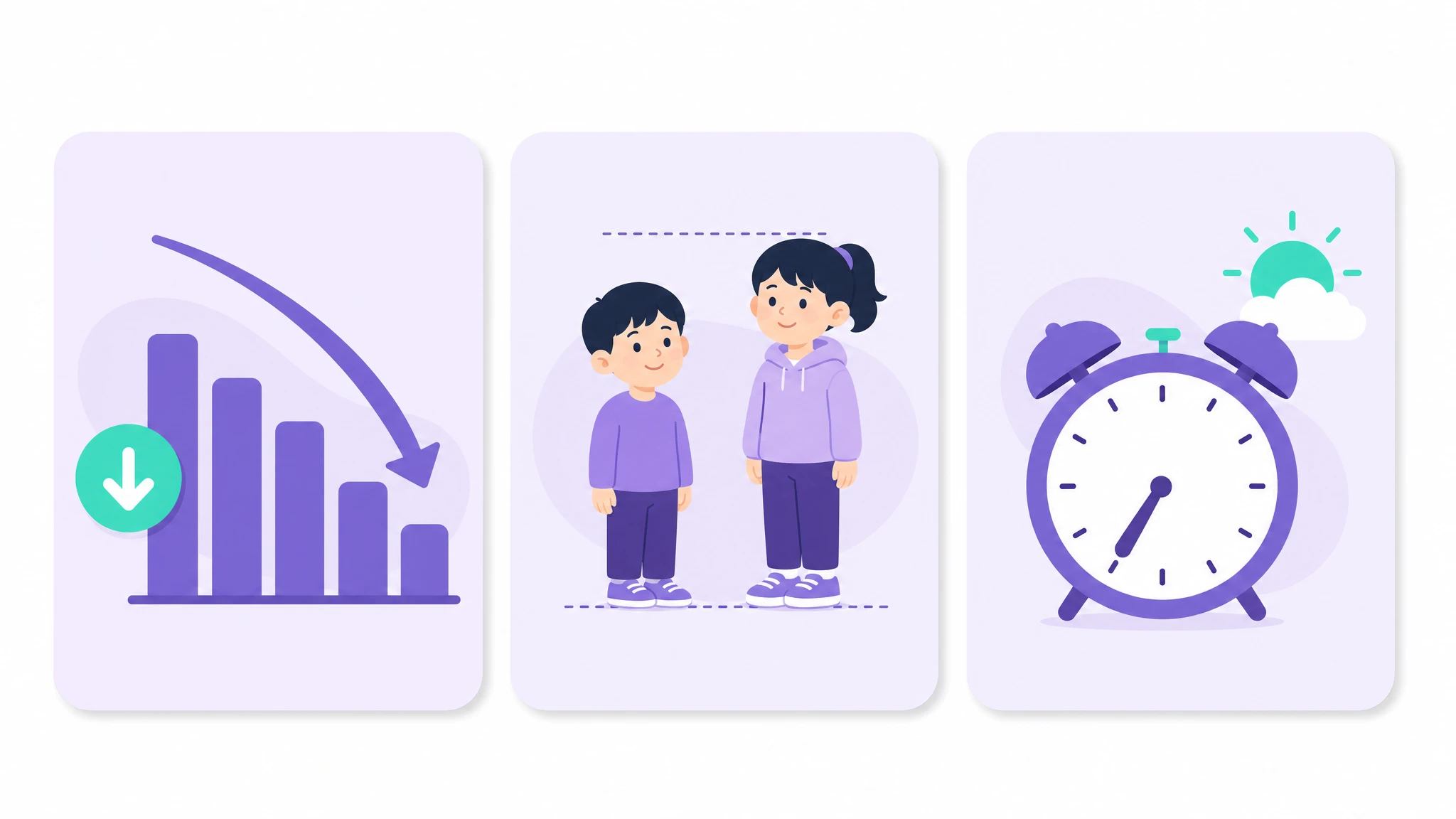
Three signals are worth a check rather than a wait.
Under 4cm in a year. Growth velocity below roughly four centimetres over twelve months.
Around 10cm below peers. Noticeably shorter than the average for the same age.
Early puberty. Secondary sexual characteristics appearing earlier than classmates, which can mean bone age is running ahead.
What all three share is that the adjustable period lasts only until the growth plates close. Whether any of them applies to your child is decided by testing, not by looking.
Growth depends on the individual child, and this article is general information rather than a diagnosis.
If you would like the short version of the process, or to ask something specific, it is on the consultation page.
FAQ
Can we really start without traveling to Korea?
Yes — the enquiry, the English medical letter, the local wrist X-ray and the video consultation all happen where you live. Whether an in-person visit is worthwhile is decided during that consultation, using your child’s actual bone age and growth curve.
Can we use an X-ray taken at our local hospital?
Yes. The English medical letter we send specifies which study to request and under what conditions, so a local hospital can take it and you can send us the image.
How many days does the visit to Korea take?
It is planned as a single day. The X-ray, blood work, measurements, consultation and prescription happen in the same building in sequence. Sending a local X-ray beforehand shortens the consultation further.