Why Winter Break Is a Hidden Growth Opportunity

When it comes to winter break height growth tips for kids, the most underrated factor is timing. Winter break removes two major obstacles to healthy growth: irregular sleep caused by early school start times, and the sustained stress of a packed academic schedule. Growth hormone is released in pulses during deep sleep, and cortisol — the stress hormone — actively suppresses that release. When the school alarm disappears and academic pressure eases, the body's hormonal environment shifts noticeably in favor of growth. Pediatric growth specialists often refer to school holidays as a "reset window" — a short but meaningful period when parents can recalibrate a child's sleep, nutrition, and activity habits all at once. The key is using that window intentionally rather than letting it drift into late nights and idle screen time.
Sleep: The Non-Negotiable Foundation of Winter Growth

Of all the school holiday child growth routine habits worth building, sleep is the most impactful and the easiest to improve during winter break. During the school year, many children accumulate what researchers call "social jet lag" — a mismatch between the body's natural sleep timing and the schedule imposed by early morning classes. The result is chronically shortened deep-sleep cycles, which is precisely when the largest pulses of growth hormone occur.
During winter break, aim for a consistent bedtime between 9:00 and 10:00 PM and a natural wake time — without an alarm — ideally between 7:00 and 8:30 AM. Children aged 6 to 12 need nine to eleven hours of sleep per night; teenagers need eight to ten. Rather than simply allowing kids to sleep in, the goal is to establish a stable rhythm. A consistent rhythm deepens sleep quality, which is more important for growth hormone output than total hours alone. Limit screen exposure for at least sixty minutes before bed, as blue light delays the melatonin rise that initiates deep sleep.
Building a Nutrition Routine That Supports Growth

A structured school holiday child growth routine should include three balanced meals at consistent times rather than irregular snacking throughout the day. Protein is the building block of bone and muscle tissue — include eggs, lean poultry, fish, legumes, or dairy at every meal. Calcium and vitamin D work together to mineralize growing bones; dairy products, fortified plant milks, tofu, and leafy greens are reliable sources, but vitamin D synthesis from sunlight is limited in winter, making a supplement worth discussing with your child's doctor.
Zinc is another frequently overlooked mineral that directly supports cell division in growth plates. Foods rich in zinc include beef, pumpkin seeds, chickpeas, and whole grains. Equally important is what to minimize: high-sugar beverages, ultra-processed snacks, and fast food can trigger insulin spikes that interfere with growth hormone signaling. Winter break is an ideal time to introduce a consistent breakfast routine — a high-protein morning meal helps regulate appetite hormones for the rest of the day and provides the raw materials for afternoon and nighttime tissue repair.
Exercise That Actually Stimulates Growth Plates

One of the most practical winter break height growth tips for kids is replacing unstructured screen time with targeted physical activity. Not all exercise supports growth equally. Activities that generate rhythmic, moderate-impact loading on the skeleton — jumping rope, basketball, swimming, and gymnastics — stimulate the bone-forming cells at growth plates more effectively than static or very high-impact activities. Aim for at least thirty to sixty minutes of moderate aerobic activity per day during the break.
Jump rope is particularly effective and accessible: ten to fifteen minutes of jumping at a comfortable pace creates the axial loading that promotes bone density and growth plate stimulation. Swimming provides resistance without excessive joint stress and is an excellent choice for children with joint concerns or low fitness levels. Outdoor play in general supports two goals simultaneously — physical stimulation and exposure to natural daylight, which helps regulate circadian rhythms for better nighttime growth hormone release. The key is consistency over the break rather than one or two intensive sessions.
When to Consider a Professional Growth Evaluation

Knowing how to maximize height growth during vacation through lifestyle changes is valuable, but some children may benefit from a professional evaluation regardless of how well they sleep or eat. Winter break provides a natural window for a clinic visit without disrupting school attendance. Consider seeking a pediatric growth evaluation if your child shows any of the following patterns.
- Height is consistently in the bottom 3rd percentile for age and sex on a standard growth chart.
- Annual growth rate has been less than 4 cm (roughly 1.5 inches) per year for a child in the elementary school years.
- Clothing and shoe sizes have not changed in two or more years despite the child being in an active growth phase.
- Signs of puberty appeared earlier than expected — breast development before age 8 in girls, or testicular enlargement before age 9 in boys.
- There is a family history of short stature and the child is also tracking below the expected mid-parental height range.
A growth specialist can assess bone age through a hand X-ray, calculate predicted adult height, and determine whether any medical factors — such as growth hormone deficiency, precocious puberty, or a thyroid issue — are contributing to slow growth. Catching these conditions early offers significantly more therapeutic options.
A Simple Daily Winter Break Growth Routine
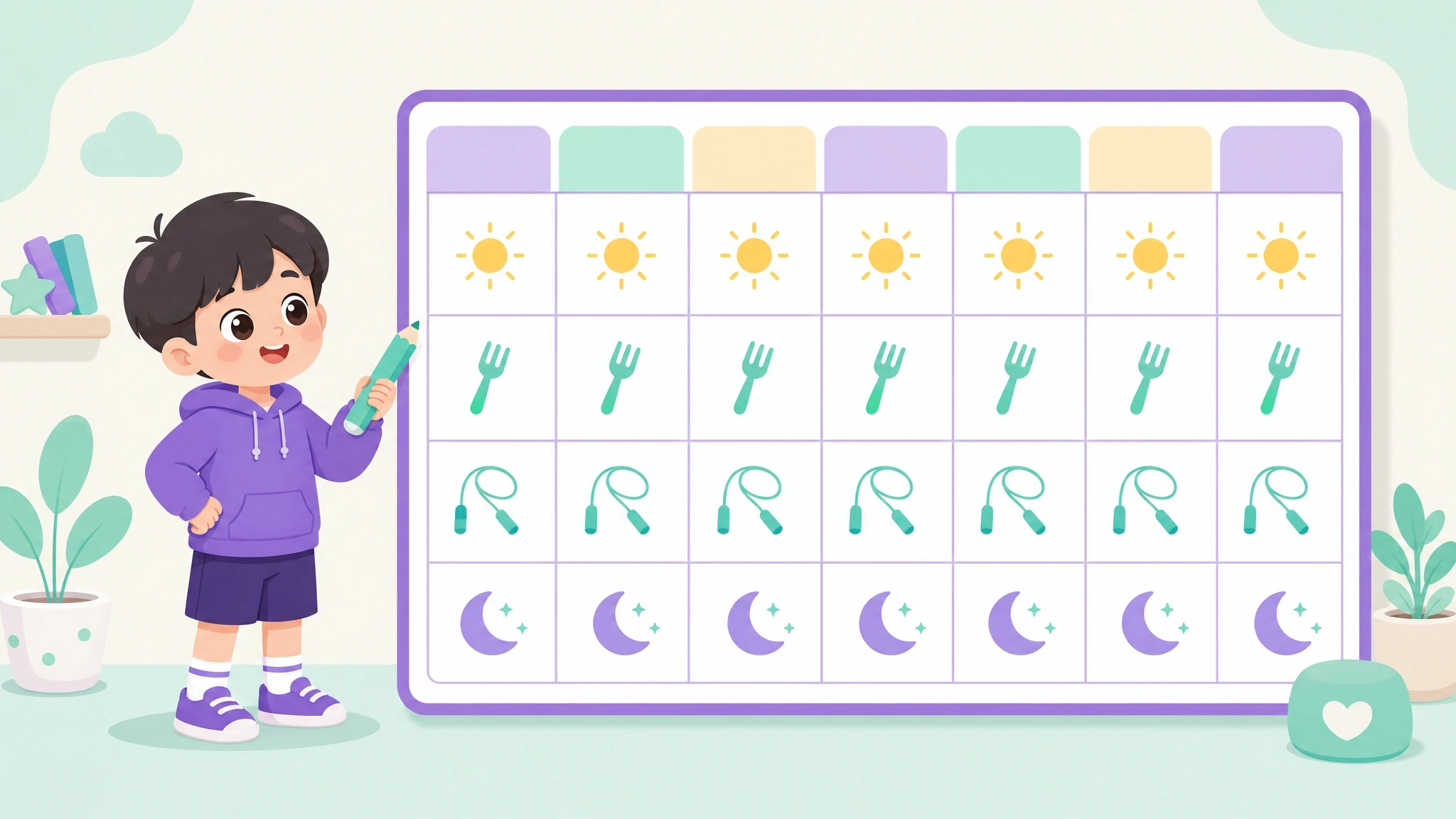
Combining all of the above into a practical daily structure makes the habits sustainable across the break. A workable framework for a winter growth spurt children routine might look like this: wake naturally around 7:30 AM, eat a high-protein breakfast within an hour of waking, spend thirty to sixty minutes outdoors or engaged in active play before noon, eat a balanced lunch with vegetables and protein, allow quiet rest or calm indoor activity in early afternoon, return to outdoor or active play in the late afternoon, eat dinner by 7:00 PM, begin a wind-down routine — dim lights, no screens — by 8:30 PM, and aim to be asleep by 9:30 to 10:00 PM.
This schedule is not rigid — it can flex with family plans and holiday events. The goal is simply to anchor the day around sleep quality and physical activity rather than defaulting to late nights and sedentary screen time. Even maintaining this structure for ten to fourteen days produces measurable improvements in sleep depth and daytime energy, which are the foundations on which growth biology builds. Parents who track their child's height monthly will often notice a small but real increment after a well-managed school break.
FAQ
Do children actually grow faster during winter break?
Research on seasonal variation in child growth is mixed, but many pediatric specialists observe that children grow more consistently during periods when sleep is adequate and stress is low — conditions that school holidays tend to provide. Winter break is less about a biological "winter growth spurt" and more about removing the barriers — sleep deprivation and chronic stress — that suppress growth hormone during the school year.
How much exercise should my child do during winter break to support height growth?
Aim for thirty to sixty minutes of moderate physical activity per day. Activities with rhythmic, moderate impact — such as jumping rope, basketball, or swimming — are particularly effective at stimulating growth plate cells. Consistency across the break matters more than intensity on any single day.
At what point should I consult a growth specialist rather than just improving lifestyle habits?
If your child is growing less than 4 cm per year, is consistently in the lowest 3rd percentile for height, or is showing early signs of puberty, a professional evaluation is worth pursuing. A bone age X-ray and growth assessment can identify medical causes that lifestyle changes alone cannot address, and earlier evaluation leaves more time to act if treatment is indicated.
References
- Complex relationship between growth hormone and sleep in children: insights, discrepancies, and implications. Frontiers in endocrinology. 2024. PubMed · DOI
- Overnight growth hormone secretion in short children: independence of the sleep pattern. The Journal of clinical endocrinology and metabolism. 1994. PubMed · DOI
- Morning vs. evening growth hormone injections and their impact on sleep-wake patterns and daytime alertness. Frontiers in endocrinology. 2025. PubMed · DOI
- Auxology - an update 2025. Growth hormone & IGF research : official journal of the Growth Hormone Research Society and the International IGF Research Society. 2026. PubMed