Why the Thyroid Matters More Than Most Parents Think
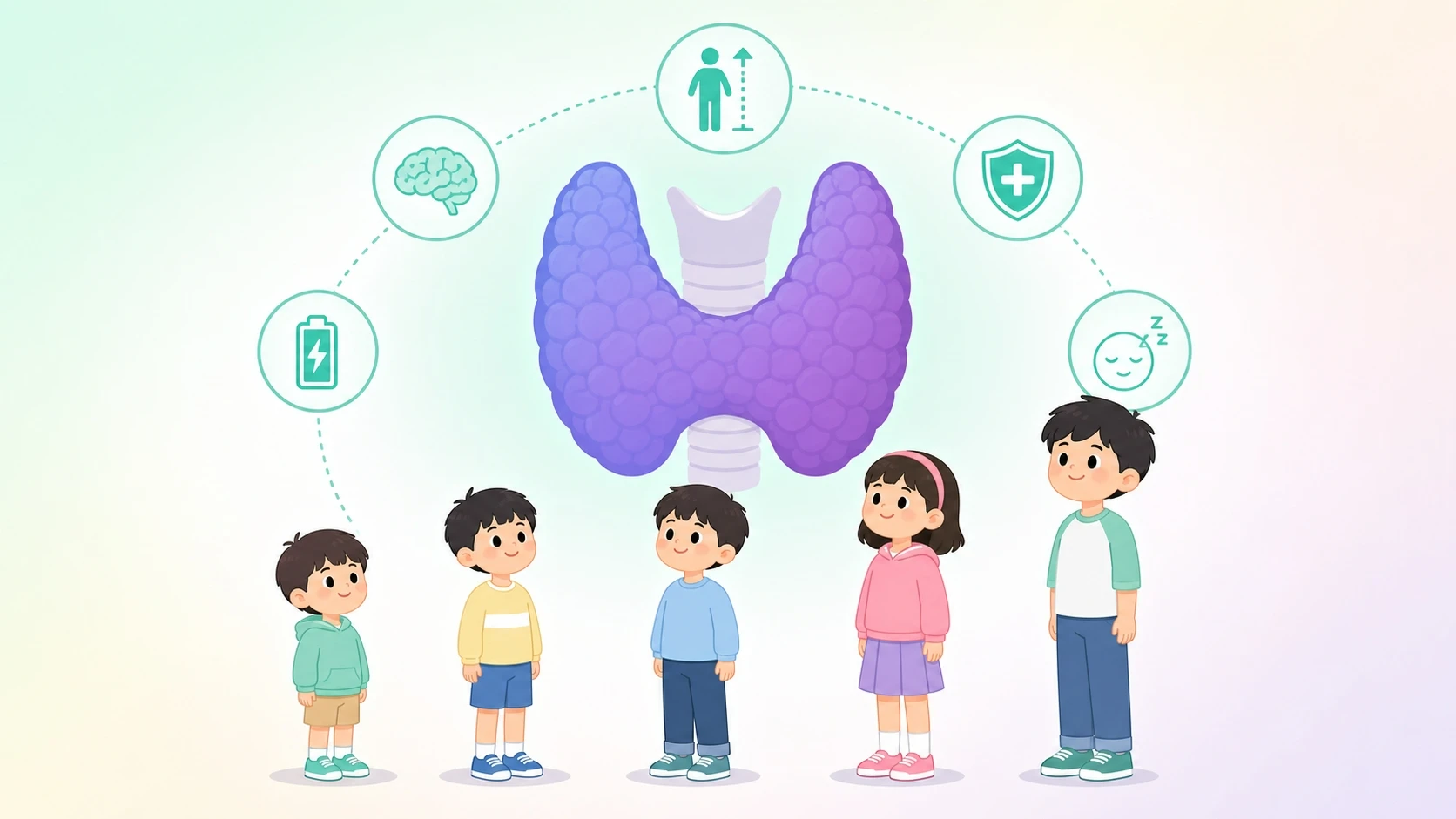
When parents notice their child is not growing as expected, thyroid problems and growth in children are rarely the first thing that comes to mind. Most families focus on growth hormone, nutrition, or sleep — and those factors absolutely matter. But tucked at the base of the throat sits a small, butterfly-shaped gland that quietly controls far more than people realize. The thyroid gland produces hormones that regulate metabolism, body temperature, energy production, and — critically — the rate at which children grow. Without adequate thyroid hormone, every cell in the body slows down, including the bone cells responsible for adding those all-important centimeters year after year. Understanding the connection between thyroid and height in kids is one of the most underappreciated pieces of the pediatric growth puzzle.
How Thyroid Hormone and Growth Hormone Work Together

Thyroid hormone does not act alone. It works in close partnership with growth hormone to stimulate the division and multiplication of cartilage cells in the growth plates — the active zones at the ends of long bones where new bone tissue is created. When thyroid levels are normal, growth hormone can do its job efficiently: signaling the liver to produce IGF-1, which in turn drives bone elongation. When thyroid levels drop, this entire cascade is disrupted. Growth hormone secretion itself is impaired, and the growth plates become less responsive to whatever growth hormone is still present. The result is a double setback: less hormone and less effect per unit of hormone. This is why hypothyroidism stunted growth is not a minor concern — it represents a compound failure at the very foundation of how children get taller. Bone maturation slows, and the thyroid hormone growth plate relationship becomes a bottleneck that no amount of good nutrition or sleep can fully compensate for.
What Hypothyroidism Looks Like in a Growing Child
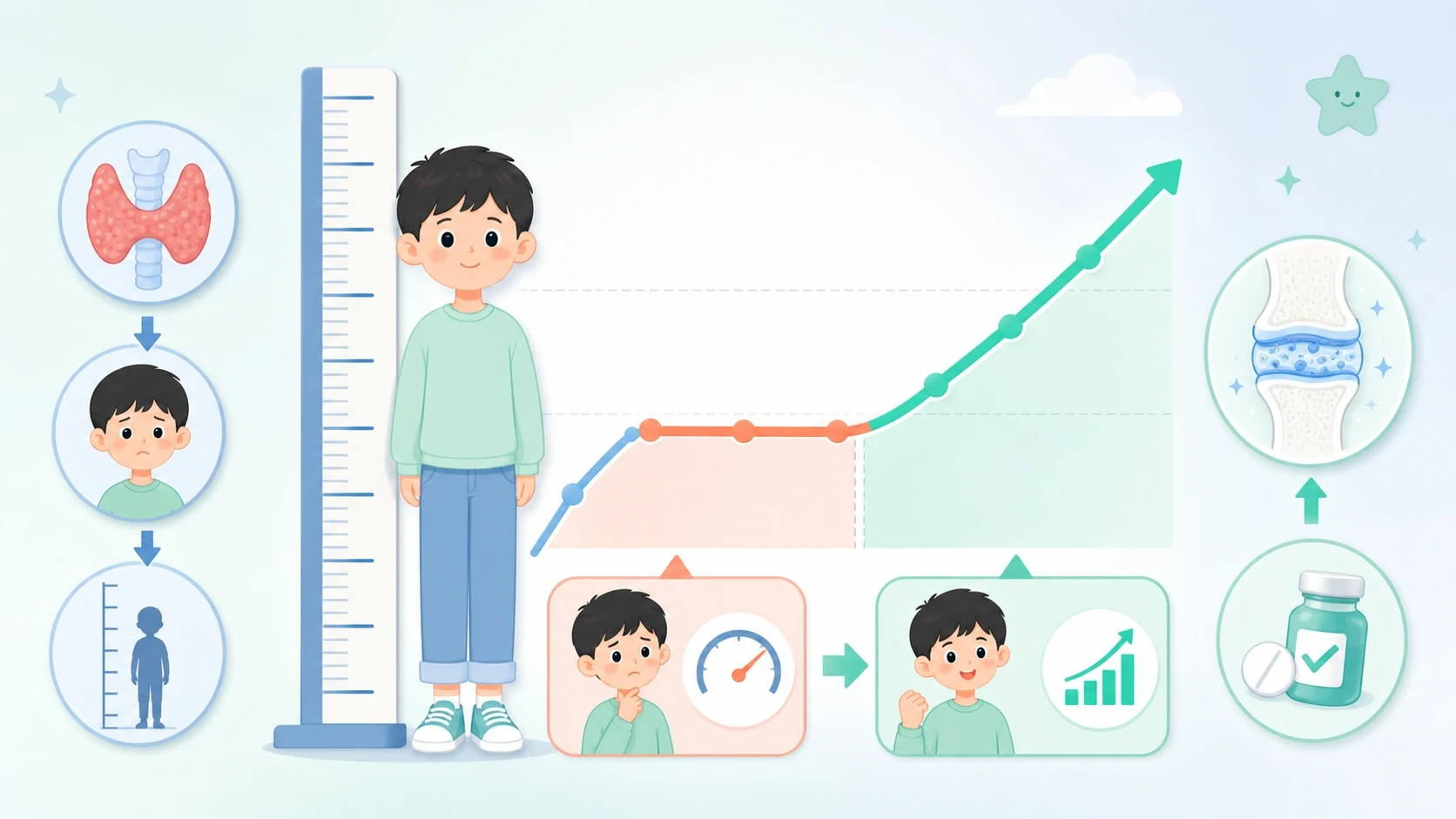
One of the challenges with hypothyroidism stunted growth child cases is that the condition often develops gradually and quietly. There is no single dramatic symptom — instead, a cluster of subtle changes accumulates over months. Parents commonly report that their child seems more tired than usual, gains weight without any major change in diet, and becomes constipated more frequently. The skin may look dry and feel rough; hair can become brittle and thin. Children may feel cold even in warm rooms and lose enthusiasm for activities they used to enjoy. At school, teachers might notice declining concentration or a drop in academic performance. On a growth chart, the curve that was once steadily climbing will flatten or fall behind. A bone age X-ray — one of the most informative tools available — will often show a skeletal age that is significantly younger than the child's actual birthday age, a hallmark feature that distinguishes thyroid-related growth delay from other causes of short stature.
A Closer Look at the Warning Signs: A Parent's Checklist
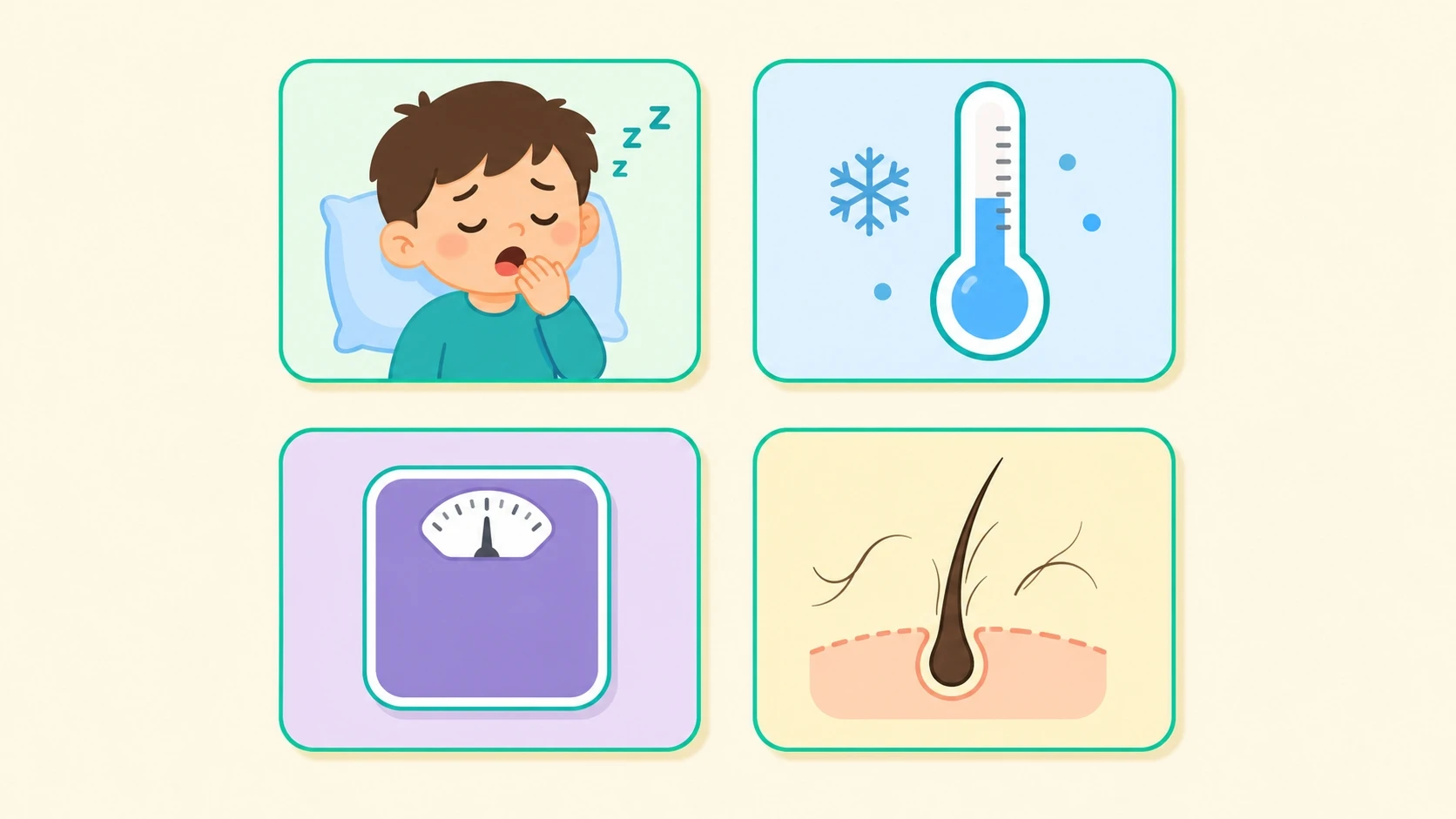
Because no single symptom is definitive, it helps to think in patterns. Consider scheduling a medical evaluation if your child shows several of the following together:
- Slowed height growth — falling behind peers or dropping on the growth chart over six to twelve months
- Persistent fatigue and low energy — sleeping more than usual, reluctant to play or move
- Unexplained weight gain — soft, puffy appearance without a change in eating habits
- Chronic constipation — sluggish digestion that does not respond to dietary adjustments
- Dry skin and brittle hair — a dull, rough texture that seems out of character for the child
- Excessive cold sensitivity — asking for extra layers when others are comfortable
- Difficulty concentrating — teachers or parents noticing a change in focus or memory
- Visible neck swelling — a rare but possible sign of an enlarged thyroid gland
None of these symptoms alone confirms a thyroid issue. Many overlap with other common childhood conditions. That is exactly why professional evaluation — including a simple blood test measuring TSH and thyroid hormone levels — is the only reliable way to find out what is actually happening.
The Importance of Early Detection and Treatment

When thyroid deficiency is identified and treated promptly, the outlook is genuinely encouraging. Children who receive appropriate thyroid hormone replacement — a daily oral medication that restores levels to the normal range — often experience a noticeable acceleration in growth rate within the first year of treatment. This catch-up growth can be substantial, particularly when the diagnosis is made before the growth plates have matured too far. The critical window matters here: the younger the child at the time of diagnosis and the sooner treatment begins, the greater the potential for recovery. Growth specialists typically combine thyroid hormone testing with bone age assessment, growth velocity tracking, and a full hormonal panel to build an accurate picture of what is driving the delay. If thyroid dysfunction is found alongside other contributing factors, treatment plans are adjusted accordingly. The relationship between thyroid and height in kids is responsive to medical intervention in a way that purely genetic factors are not — which makes early action genuinely worthwhile.
Beyond the Thyroid: A Whole-Child Approach to Growth

Addressing thyroid function is not the end of the conversation — it is often the beginning of a broader investigation. Growth specialists who evaluate children for thyroid problems and growth issues typically assess the whole picture: sleep quality and duration, nutritional adequacy, physical activity, stress load, bone age relative to chronological age, and family height history. Treating hypothyroidism restores the hormonal foundation, but optimizing growth potential also means ensuring the child has adequate protein, calcium, and vitamin D, gets sufficient deep sleep for nightly growth hormone pulses, and engages in regular physical activity that stimulates the skeletal system. Families who work with pediatric growth clinics benefit from this integrated approach — a team that looks beyond any single hormone and considers all the variables that together determine whether a child reaches their genetic height potential. If your child's growth has slowed unexpectedly, thyroid function is one of the first things worth checking, and a qualified specialist can guide the process.
FAQ
Can hypothyroidism cause permanent stunted growth in children?
If left untreated for an extended period, hypothyroidism can lead to significant growth delay and, in severe cases, some permanent loss of height potential. However, when diagnosed and treated early — particularly before the growth plates mature — most children experience meaningful catch-up growth. Early detection through blood testing is key to minimizing long-term impact.
How does a doctor test whether thyroid problems are affecting my child's growth?
The primary test is a blood panel measuring TSH (thyroid-stimulating hormone) and free T4 thyroid hormone levels. Growth specialists often combine this with a bone age X-ray to assess skeletal maturity and a review of the child's growth velocity over time. Together, these tools help determine whether thyroid dysfunction is contributing to growth delay.
Is it possible for a child to have thyroid problems without any obvious symptoms?
Yes. Subclinical hypothyroidism — where TSH is elevated but thyroid hormone levels are still within or near the normal range — can exist with very mild or no noticeable symptoms. In some children, slowed growth on the height chart is the only early indication. This is one reason pediatric growth evaluations include thyroid screening even when parents have not noticed other warning signs.
References
- Blood glucose concentrations are reduced in children born small for gestational age (SGA), and thyroid-stimulating hormone levels are increased in SGA with blunted postnatal catch-up growth. The Journal of clinical endocrinology and metabolism. 2003. PubMed · DOI
- Consensus statement on the diagnosis and treatment of children with idiopathic short stature: a summary of the Growth Hormone Research Society, the Lawson Wilkins Pediatric Endocrine Society, and the European Society for Paediatric Endocrinology Workshop. The Journal of clinical endocrinology and metabolism. 2008. PubMed · DOI
- Complex relationship between growth hormone and sleep in children: insights, discrepancies, and implications. Frontiers in endocrinology. 2024. PubMed · DOI
- Variation in methods of predicting adult height for children with idiopathic short stature. Pediatrics. 2010. PubMed · DOI
- Aromatase Inhibitors Treatment Alone or With GH Increases Final Height in Short-statured Pubertal Boys-Real-world Data. The Journal of clinical endocrinology and metabolism. 2025. PubMed · DOI