What Growth Plates Are and Why They Matter
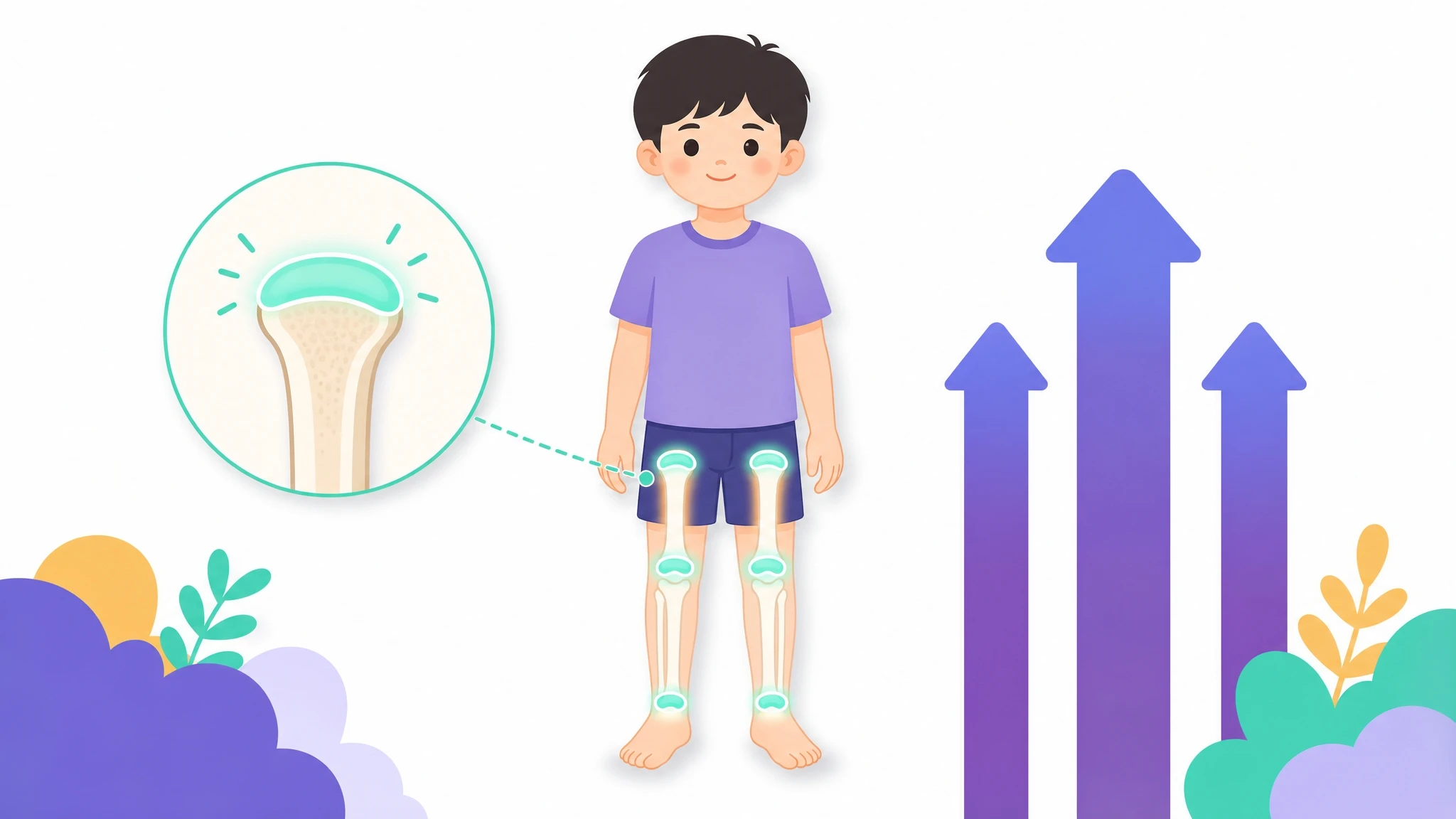
To understand how sugary foods contribute to early growth plate closure, you first need to know what growth plates do. Growth plates are cartilage tissue located at both ends of the long bones. It is here that new bone cells are formed, allowing the bone to lengthen and the child to grow taller. As puberty draws to a close, the growth plates harden into solid bone, and after that, height growth essentially stops. This is called "growth plate closure."
The period during which the growth plates remain open is precisely the window of time in which height can be increased. Once this window closes, no method can make the skeleton grow any longer. That is why helping the growth plates stay healthy and open for as long as possible becomes the key task in determining a child's final height.
The Mechanism by Which Blood Sugar Spikes Close Growth Plates Early
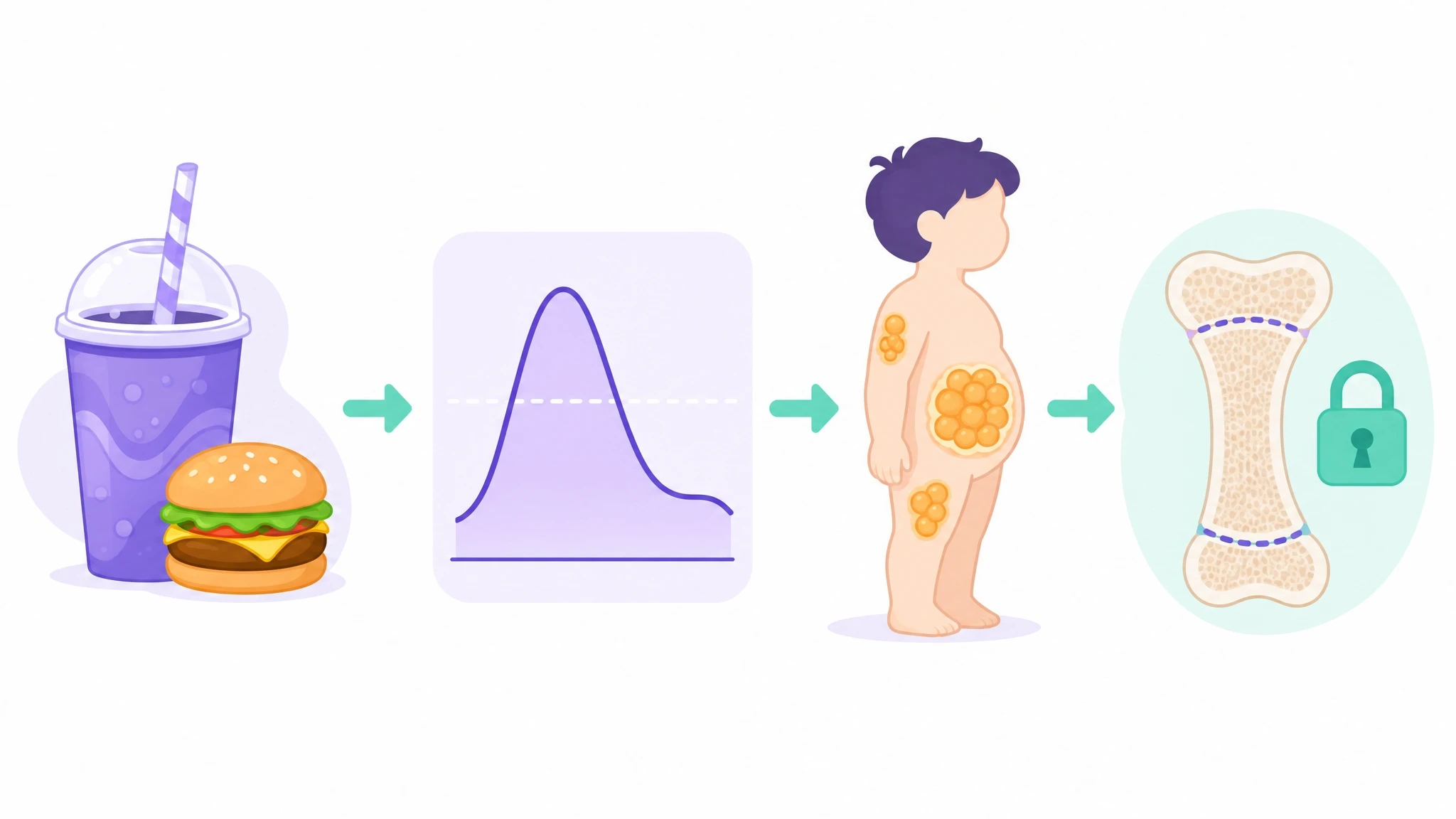
The core of how sugar affects growth plates lies in the link between insulin resistance and sex hormones. When a child frequently eats sugary and greasy foods, blood sugar surges sharply (a blood sugar spike), and insulin is repeatedly secreted in large amounts. When this state persists, insulin resistance develops and body fat accumulates rapidly.
The accumulated body fat secretes excessive amounts of a hormone called leptin. Leptin stimulates the brain's signal to release sex hormones, thereby advancing puberty. When puberty arrives early, the growth plates harden sooner than expected. This is exactly why obese children may appear taller than their peers for a while but ultimately end up with a shorter final height. It is important to remember that sugar does not close the growth plates directly; rather, it indirectly triggers early growth plate closure by way of obesity and early puberty.
Why Fast Food Interferes With Height Growth

The impact of fast food on height growth does not lie merely in excess calories. The refined sugar and high-fructose corn syrup found in hamburgers, pizza, fried chicken, and soft drinks send blood sugar soaring in an instant, while trans fats and saturated fats accelerate the accumulation of body fat.
At the same time, these foods contain extremely little of the core nutrients essential during the growth years, such as calcium, magnesium, zinc, and vitamin D. For bones to lengthen, the raw materials must be supplied in sufficient amounts, yet a fast-food-centered diet creates a state that is high in calories but empty of nutrition. This is also why the risk of junk-food-related precocious puberty rises. It is because the triple blow of high calories, high sugar, and high fat leads, in sequence, to childhood obesity, insulin resistance, and precocious puberty.
Junk Food and Precocious Puberty — What Happens to a Child
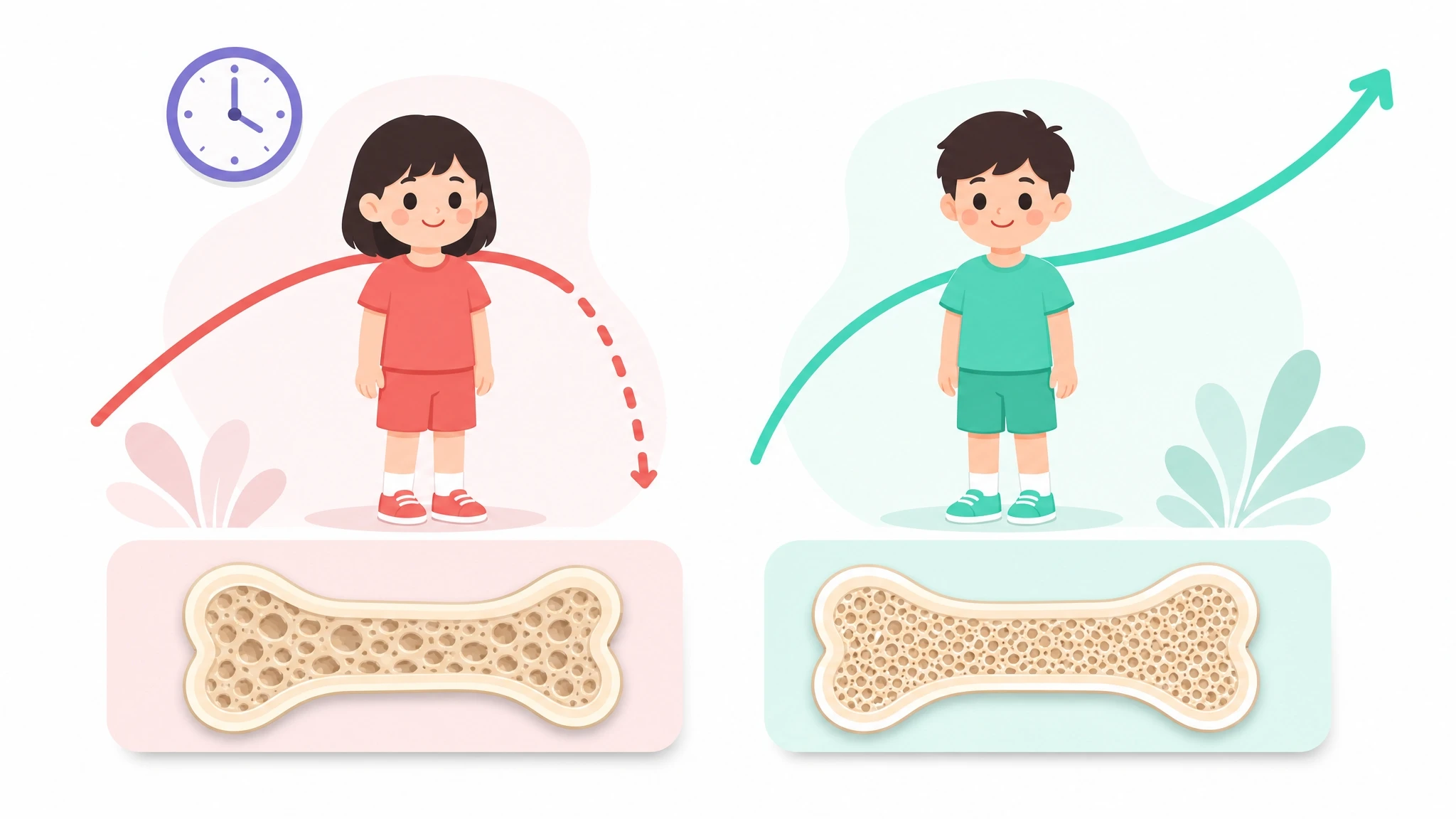
Junk-food-related precocious puberty is a phenomenon in which excessive accumulation of body fat stimulates the hypothalamic-pituitary axis, advancing the onset of puberty. In girls, breast development, and in boys, testicular growth, begins to appear noticeably earlier than in their peers.
When precocious puberty begins, growth speed temporarily increases, so parents sometimes actually feel reassured. However, bone age progresses far faster than the actual age, and the point at which the growth spurt ends is also brought forward. In the end, the growth plates close prematurely, and growth may finish with the child several centimeters shorter than the final height potential they could have reached.
Practical Ways to Manage the Diet That Protects Growth Plates
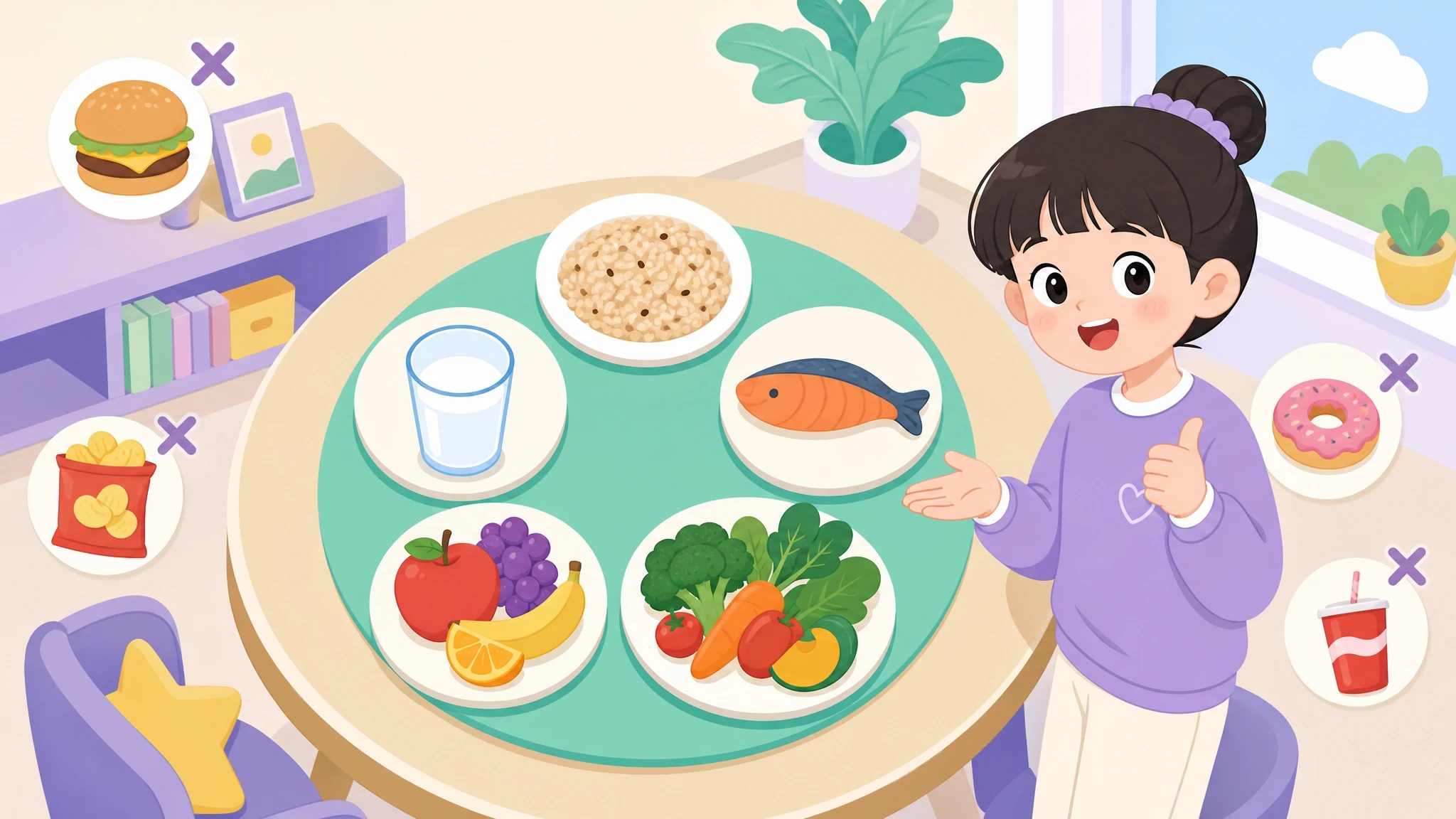
The surest way to prevent early growth plate closure caused by sugary foods is diet. Here are five key principles you can put into practice.
- Reduce refined sugar and high-fructose corn syrup: Cut back as much as possible on soft drinks, store-bought juices, and snacks, and replace them with water and unsweetened beverages.
- Lower the frequency of fast food: Limit it to no more than once a week, and when it is unavoidable, add vegetables and switch the drink to water.
- Secure protein, calcium, and vitamin D: Include lean meat, fish, tofu, milk, eggs, and dark green vegetables in a balanced way at every meal.
- Keep regular meal times: Eating at consistent times reduces blood sugar fluctuations and stabilizes insulin secretion.
- Choose whole foods over processed foods: Choose multigrain over white rice and whole-wheat bread over white bread to slow the rate at which blood sugar rises.
Dietary change does not happen overnight. What matters is starting by changing one small habit and steadily maintaining it.
The Full Picture in Daily Life — Diet Is One Piece of the Puzzle

Diet is important, but to keep the growth plates healthy for a long time, sleep, exercise, and stress management must also be in place. Because growth hormone is secreted intensively during deep sleep, securing a regular bedtime and sufficient sleep duration is just as important as improving the diet. Appropriate physical activity during the day stimulates the growth plates and helps growth hormone secretion.
If you have confirmed that your child's growth speed differs noticeably from that of their peers, or that their bone age is significantly advanced, undergoing a precise diagnosis at a pediatric growth clinic is one option. Through bone age testing and growth curve analysis, you can grasp the current state and find a direction that makes the most of the remaining growth potential.
FAQ
Does sugar directly close growth plates in children?
No — sugar does not seal growth plates directly. Instead, a high sugar diet promotes excess body fat, which elevates sex hormones through a leptin-driven pathway. Those hormones accelerate bone maturation and puberty, and it is the early arrival of puberty that causes premature growth plate closure. The good news is that this chain reaction can be interrupted by improving diet before puberty is well underway.
How much junk food is too much for a growing child?
There is no universally safe threshold, but pediatric nutrition research consistently links ultra-processed food intake above roughly 30–35 percent of total daily calories with measurable increases in early puberty risk. A practical guideline: if fast food, packaged snacks, or sweetened drinks appear at more than one meal per day, the cumulative sugar and inflammatory fat load is likely high enough to affect hormonal balance over time. Treating junk food as an occasional event rather than a dietary staple is a reasonable protective standard.
If my child has already started puberty early, is it too late to help their height?
Not necessarily. Growth plates remain partially open for some time after puberty begins, and improving nutrition during this window can still support the remaining growth potential. Dietary changes that reduce insulin spikes and support bone health are beneficial at any stage. A bone age X-ray can reveal how much growth window remains, helping parents and clinicians decide whether lifestyle changes alone are sufficient or whether additional evaluation is warranted.
References
- Effect of Nutrition on Statural Growth
. Hormone research in paediatrics. 2018. PubMed · DOI
- The Effect of Childhood Obesity on Growth: Interpretation of Growth Hormone Provocation Tests. Hormone research in paediatrics. 2026. PubMed
- Nutrition-induced catch-up growth at the growth plate. Journal of pediatric endocrinology & metabolism : JPEM. 2008. PubMed · DOI
- Secular trends in pubertal development. Hormone research. 2003. PubMed · DOI
- Early and late weight gain and the timing of puberty. Molecular and cellular endocrinology. 2006. PubMed · DOI