Why Do Parents Worry About Steroids?

Concerns about the steroid medication effect on child height are among the most common questions growth specialists hear from parents. When a pediatrician prescribes a steroid inhaler, a cortisone cream, or a short course of oral prednisone, it is natural to wonder whether the drug could interfere with your child's growth. Online forums often amplify these fears with anecdotes and outdated information. The reassuring reality is that the word "steroid" covers a wide range of medications with very different delivery methods, potencies, and systemic exposures — and those differences matter enormously when assessing any real-world growth impact.
Corticosteroids (the medical steroids used for inflammation, not the anabolic steroids misused by athletes) work by mimicking the body's own adrenal hormones. They are essential tools in treating asthma, atopic dermatitis, allergic rhinitis, and various inflammatory conditions. Understanding how each type works helps parents make informed decisions alongside their child's physician rather than refusing treatment out of fear.
Inhaled Steroids and Growth in Children: The Asthma and Allergy Question

Inhaled corticosteroids — used for childhood asthma and allergic rhinitis — are among the most studied medications in pediatric medicine. Because they are delivered directly to the airways or nasal lining, only a tiny fraction enters the bloodstream, making the risk of a systemic steroid medication effect on child height very low. Multiple large clinical trials, including long-term follow-up studies, have consistently shown that children using inhaled steroids at recommended doses reach a final adult height that is not meaningfully different from that of untreated peers.
There is, however, a subtlety worth knowing: a handful of studies found that children may grow very slightly slower during the first year of inhaled corticosteroid use, but this effect largely resolves on its own and does not translate into a shorter adult stature. Critically, inhaled steroids and growth in children must be weighed against the alternative: poorly controlled asthma disrupts sleep, reduces physical activity, and triggers chronic low-grade inflammation — all of which impair growth far more than the medication itself.
Eczema Cream and Height Growth: What Topical Steroids Actually Do
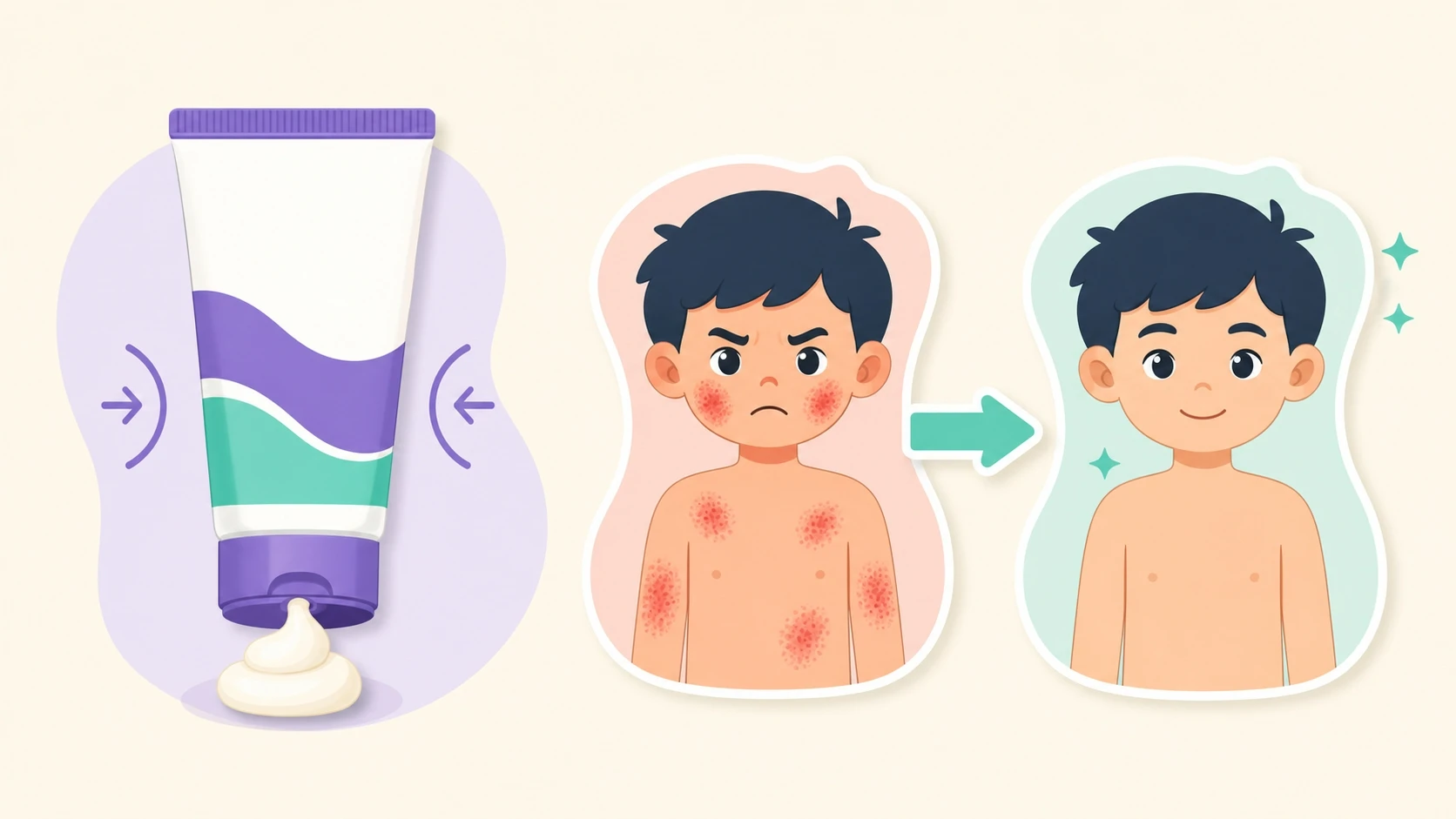
Steroid creams and ointments are prescribed for atopic dermatitis, eczema, and other inflammatory skin conditions. Parents searching for information on eczema cream and height growth will find reassurance in the pharmacology: topical corticosteroids remain largely on the skin surface, with systemic absorption rates typically below one percent when applied correctly to intact skin. Under standard pediatric dermatology guidelines, this level of absorption is far too low to suppress the hormonal pathways that govern bone growth.
There are edge cases that require more caution. Using a high-potency corticosteroid cream over a large body surface area for many consecutive months — especially on broken or inflamed skin that absorbs drugs more readily — can push systemic exposure into a range where growth monitoring becomes advisable. These scenarios are uncommon in routine practice, but they are why dermatologists prescribe the mildest effective formulation for the shortest necessary duration. If your child's skin condition is severe enough to require ongoing treatment, managing the disease itself is crucial: chronic itching, sleep disruption, and persistent inflammation from uncontrolled eczema present their own threat to healthy development.
Oral Corticosteroids: Short Courses vs. Long-Term Use
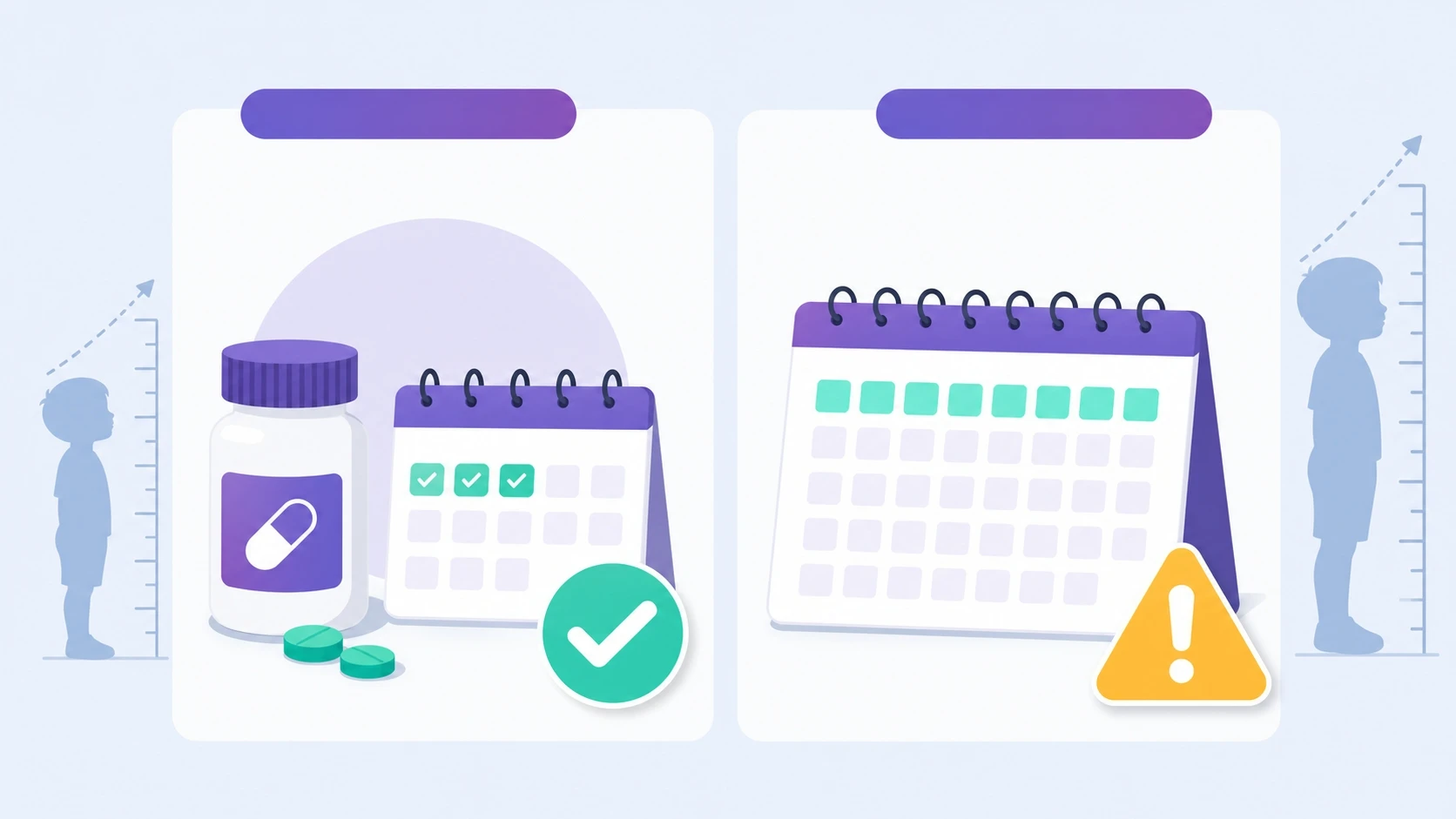
Oral corticosteroids — prednisolone, prednisone, dexamethasone — circulate throughout the entire body, making the question of corticosteroids stunt growth kids most relevant here. The key variable is duration. A short course of five to seven days prescribed for a severe allergic reaction, an acute asthma flare, or a brief inflammatory episode carries a very low risk of lasting growth impact. The body's recovery mechanisms are robust enough to handle brief systemic exposure without permanently altering the growth axis.
Long-term oral steroid use — meaning continuous treatment extending over several months for chronic diseases — is a different matter. Sustained high levels of circulating corticosteroids can suppress growth hormone secretion and slow the rate of new bone formation at the growth plates. Children with conditions such as juvenile arthritis, inflammatory bowel disease, or nephrotic syndrome who require prolonged oral steroid therapy may experience measurably slower growth velocity. Physicians managing these cases are aware of this risk and routinely use the lowest effective dose, consider alternate-day dosing schedules, and evaluate whether growth hormone therapy is appropriate to counteract growth suppression where possible.
Putting Risk in Perspective: Disease vs. Treatment

A point that gets lost in online discussions is that the untreated underlying disease is often a greater threat to a child's height potential than the steroid medication prescribed to treat it. Chronic inflammation from poorly managed asthma, atopic dermatitis, or autoimmune conditions elevates cortisol, disrupts sleep architecture, suppresses appetite, and diverts metabolic energy away from growth. Steroid therapy, when properly dosed, actually allows the body to recover its normal growth rhythm by bringing the disease under control.
The practical guidance from growth medicine is straightforward: if your child's physician has determined that a corticosteroid is the appropriate treatment, the expected growth benefit from controlling the disease nearly always outweighs the growth risk from the medication. This does not mean growth monitoring is unnecessary — it is entirely reasonable to ask your child's doctor how they plan to track height velocity during treatment, particularly for any therapy expected to last more than a few weeks.
When to Seek a Growth Specialist's Opinion

Most children on inhaled or topical corticosteroids do not need specialized growth surveillance beyond routine pediatric checkups. However, certain situations warrant a closer look. If your child has been on continuous oral corticosteroids for more than three months, if their height growth velocity has visibly slowed compared to previous years, or if a bone age X-ray reveals that skeletal maturation is lagging or accelerating unexpectedly, a pediatric growth specialist can provide a comprehensive evaluation.
Growth clinics use bone age imaging to assess where a child stands relative to their growth potential and can forecast adult height with reasonable accuracy. For children who have experienced growth suppression from prolonged corticosteroid use, there are medical options — including growth hormone therapy in selected cases — that can help restore normal growth trajectories. Seeking an expert opinion does not commit a family to any particular treatment; it simply provides a clearer picture of the child's current growth status and future outlook.
FAQ
Will my child's asthma inhaler stunt their growth?
Research consistently shows that inhaled corticosteroids at standard prescribed doses do not produce a meaningful reduction in final adult height. A very slight slowing of growth velocity may appear in the first year of use in some children, but this effect is temporary and does not persist into adulthood. Keeping asthma well controlled generally benefits growth more than leaving the condition untreated.
Can steroid eczema cream affect my child's height growth?
Topical steroid creams used according to a dermatologist's instructions — appropriate strength, correct area, and recommended duration — are absorbed into the bloodstream in such small amounts that they are very unlikely to affect height growth. Risks increase only if a high-potency cream is applied to a very large skin area continuously over many months, which is not standard practice.
My child needs long-term oral steroids for a chronic illness. What should I do about growth?
Talk openly with your child's specialist about growth monitoring. Long-term oral corticosteroid use can slow growth velocity in some children, and pediatricians managing chronic diseases are aware of this. Strategies including the lowest effective dose, alternate-day dosing, and in some cases growth hormone therapy can help protect height potential. A pediatric growth clinic can provide additional evaluation if needed.
References
- Accuracy of final height prediction and effect of growth-reductive therapy in 362 constitutionally tall children. The Journal of clinical endocrinology and metabolism. 1996. PubMed · DOI
- Variation in methods of predicting adult height for children with idiopathic short stature. Pediatrics. 2010. PubMed · DOI
- Aromatase Inhibitors Treatment Alone or With GH Increases Final Height in Short-statured Pubertal Boys-Real-world Data. The Journal of clinical endocrinology and metabolism. 2025. PubMed · DOI
- Use of Aromatase Inhibitors in Short Children and Adolescents to Increase Height Gain: A Current Practice Survey and Review of the Literature. Hormone research in paediatrics. 2025. PubMed
- Consensus statement on the diagnosis and treatment of children with idiopathic short stature: a summary of the Growth Hormone Research Society, the Lawson Wilkins Pediatric Endocrine Society, and the European Society for Paediatric Endocrinology Workshop. The Journal of clinical endocrinology and metabolism. 2008. PubMed · DOI