Why Lifestyle Habits Matter as Much as Genetics

One of the clearest signs your child is not growing normally is a noticeable gap between their actual height and what you would expect based on family background. Yet genetics only tells part of the story. Research consistently shows that lifestyle factors — including sleep quality, nutrition, physical activity, posture, and emotional well-being — can either unlock or suppress a child's growth potential. Growth hormone, the body's primary height driver, is not released in a steady stream; it surges in precise windows that daily habits either protect or disrupt. Understanding which behaviors help and which hinder allows parents to make targeted changes rather than hoping things sort themselves out. The checklist sections below are organized by lifestyle area so you can quickly identify where your child's routine may need attention.
Sleep Checklist: Is Your Child Missing the Growth Hormone Window?

Growth hormone is released most powerfully during the first deep-sleep cycle, roughly one to two hours after a child falls asleep. If your child is missing quality sleep, this window closes — and with it, a daily opportunity to grow. Run through these checkpoints:
- Does your child fall asleep at a consistent time and get 9–10 hours on school nights?
- Are screens (phones, tablets, TV) switched off at least an hour before bed?
- Does your child sleep through the night without frequent waking or restless tossing?
- Is the bedroom dark, quiet, and comfortably cool?
- Are weekend sleep times within one hour of weekday times?
If you answered no to two or more of these, disrupted sleep may be one of the red flags of stunted growth worth addressing first. Start by setting a firm, earlier bedtime and replacing screen time with a calming pre-sleep routine such as reading or a warm shower.
Nutrition Checklist: Are Growth-Essential Nutrients Getting Through?

Height growth demands a steady supply of protein for tissue building, calcium and vitamin D for bone mineralization, and a broad spectrum of micronutrients to keep hormonal pathways functioning. A common but overlooked sign your child is growing slow is not outright hunger but nutritional gaps hidden behind a diet that looks adequate on the surface. Check each point:
- Does your child eat breakfast every day without skipping?
- Are protein-rich foods — meat, fish, eggs, beans, dairy — present at most meals?
- Is dairy or a calcium-equivalent food consumed daily?
- Are fruits and vegetables eaten in variety every day?
- Is fast food, sugary soda, or heavily processed snack food limited to occasional treats?
- Does your child get regular vitamin D, either through sunlight or supplementation?
Highly processed foods are particularly problematic: excess sugar can trigger premature insulin spikes and, over time, contribute to early puberty — one of the most significant red flags for stunted growth in children. Swap snacks toward fresh fruit, nuts, and dairy wherever possible.
Exercise Checklist: Are Growth Plates Getting the Right Stimulation?

Moderate weight-bearing and impact activity stimulates the growth plates — the cartilage zones at the ends of long bones where new bone tissue forms. The key word is moderate: excessive high-intensity strength training can compress growth plates rather than stimulate them. Use this growth problems checklist for exercise:
- Is your child physically active for at least 30 minutes most days?
- Do their activities include jumping or bouncing movements, such as jump rope, basketball, or hopscotch?
- Is flexibility work — stretching, yoga, or gymnastics — part of their routine?
- Do they have time for unstructured outdoor play rather than only structured drills?
- Are they getting adequate rest days to allow bone and muscle repair?
Encouraging activities your child genuinely enjoys dramatically improves consistency. Family outdoor outings — hiking, cycling, playing catch — combine physical stimulation with emotional bonding, both of which support healthy growth.
Posture Checklist: Could Slouching Be Stealing Centimeters?
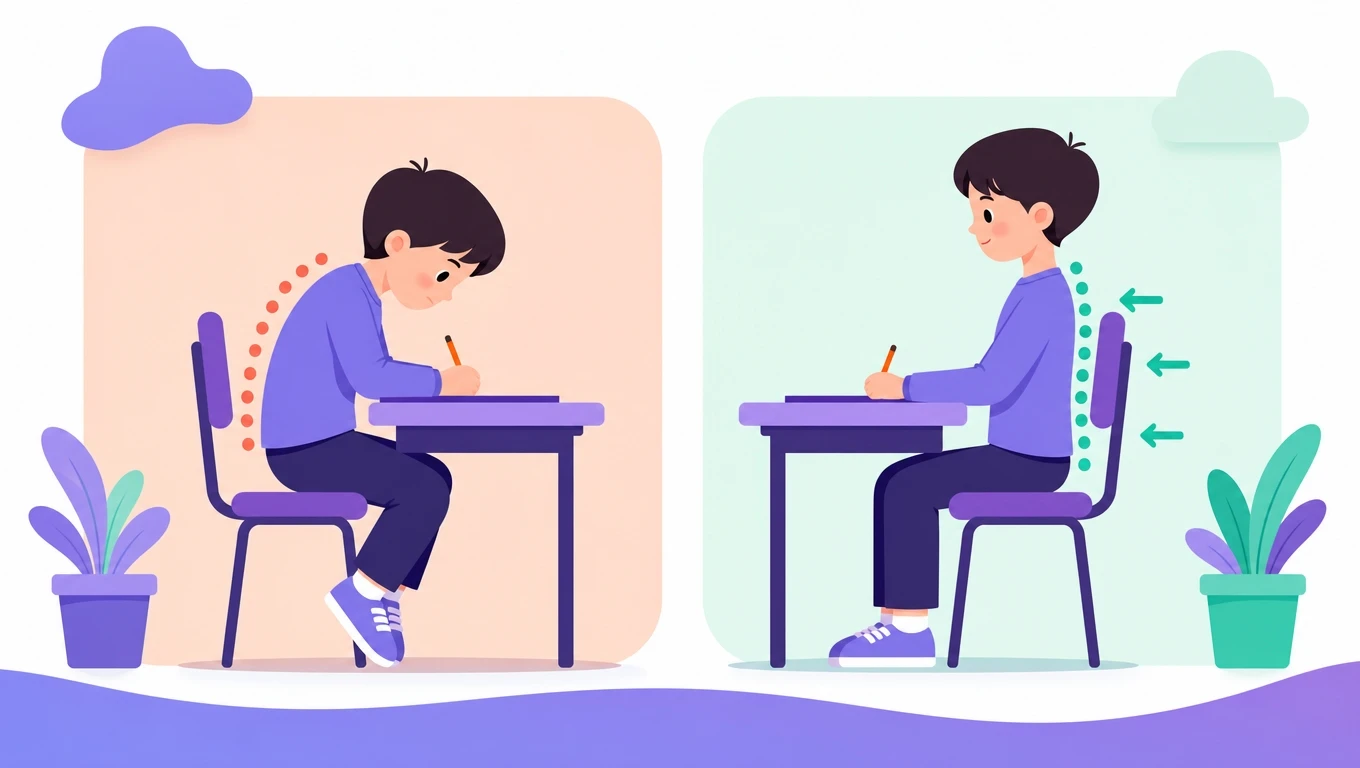
Poor posture does not merely affect appearance — chronic spinal compression from slouching distributes uneven load across the vertebrae and growth plates, potentially interfering with symmetrical bone development over time. Forward head posture from prolonged screen use is increasingly common in school-aged children and is worth monitoring. Check your child's habits:
- When seated at a desk, does your child sit with their back straight and feet flat on the floor?
- Is the screen or book held at eye level rather than causing the head to tilt down?
- Does your child stand with shoulders back and chin gently tucked, rather than jutting forward?
- Is their school bag worn as a backpack on both shoulders rather than slung to one side?
- Do they take movement breaks at least every 30 minutes during homework or screen time?
Brief daily stretching routines targeting the chest, neck, and hip flexors can counteract the effects of prolonged sitting. Reminders work best when built into existing habits — for example, stretching every time a TV show episode ends.
Emotional Well-Being Checklist: Stress Is a Hidden Growth Blocker

Chronic stress elevates cortisol, a hormone that directly suppresses growth hormone secretion and disrupts sleep architecture — creating a double blow to height potential. Is my child growing slow despite a seemingly healthy diet and routine? Emotional stress is often the missing piece parents overlook. Reflect on these points:
- Is your child experiencing persistent anxiety about school, friendships, or academic performance?
- Do they have regular, open conversations with you about their worries?
- Do they show a generally positive, resilient attitude rather than chronic worry?
- Do they have dedicated downtime for play, hobbies, or creative activities each day?
- Is the home atmosphere generally calm and supportive?
Children who feel emotionally secure tend to sleep better, eat more consistently, and engage more willingly in physical activity — creating a compounding benefit for growth. Prioritizing connection and unstructured play time is not indulgent; it is physiologically protective.
When to Move Beyond the Checklist
Working through a growth problems checklist and improving daily habits can meaningfully support a child's development — but some situations call for professional evaluation rather than lifestyle adjustments alone. Consider consulting a pediatric growth specialist if your child's height is consistently below the 3rd percentile for their age and sex, if they are gaining less than 4–5 cm per year during primary school years, if puberty signs appear before age 7–8 in girls or before 9 in boys, or if multiple red flags for stunted growth appear across the checklist above without obvious lifestyle causes. A specialist can assess bone age through a wrist X-ray, evaluate growth hormone output, and identify underlying conditions that no amount of sleep or nutrition adjustment can address on their own. Early assessment expands the treatment window significantly — which is why timing matters.
FAQ
What are the most important signs my child is not growing normally?
The clearest signs include: height consistently at or below the 3rd percentile for their age and sex, growing less than 4–5 cm per year during school-age years, puberty starting unusually early (before age 7–8 in girls or 9 in boys), and persistent fatigue or sleep problems that do not improve with routine changes. If several of these apply together, a pediatric growth evaluation is advisable.
How do I know if my child is growing slow or just a late bloomer?
A late bloomer (constitutional growth delay) typically has a normal growth velocity — they grow at a steady rate but start and finish puberty later than average. A child with a growth problem usually shows a declining growth rate over time: their height percentile drops relative to peers across multiple measurements. Tracking height every three to six months and comparing to standard growth charts is the most reliable way to distinguish the two at home.
Can fixing sleep, diet, and exercise actually make a difference to my child's final height?
Yes, meaningfully so — within the limits set by genetics and bone age. Children who consistently sleep 9–10 hours, eat a protein- and calcium-rich diet, and engage in regular impact activity tend to track closer to their genetic height potential than those who do not. Lifestyle changes cannot override a medical growth disorder, but they ensure that potential is not wasted by preventable daily habits.
References
- Parental stress and growth outcome in growth-deficient children. Pediatrics. 1995. PubMed · DOI
- A case-comparison study of the characteristics of children with a short stature syndrome induced by stress (Hyperphagic Short Stature) and a consecutive series of unaffected "stressed" children. Journal of child psychology and psychiatry, and allied disciplines. 1999. PubMed · DOI
- Auxology - an update 2025. Growth hormone & IGF research : official journal of the Growth Hormone Research Society and the International IGF Research Society. 2026. PubMed
- Emotional Deprivation in Children: Growth Faltering and Reversible Hypopituitarism. Frontiers in endocrinology. 2021. PubMed · DOI
- Effect of Nutrition on Statural Growth
. Hormone research in paediatrics. 2018. PubMed · DOI