Screen Time Before Bed Stunts Growth: The Nightly Habit Most Parents Overlook
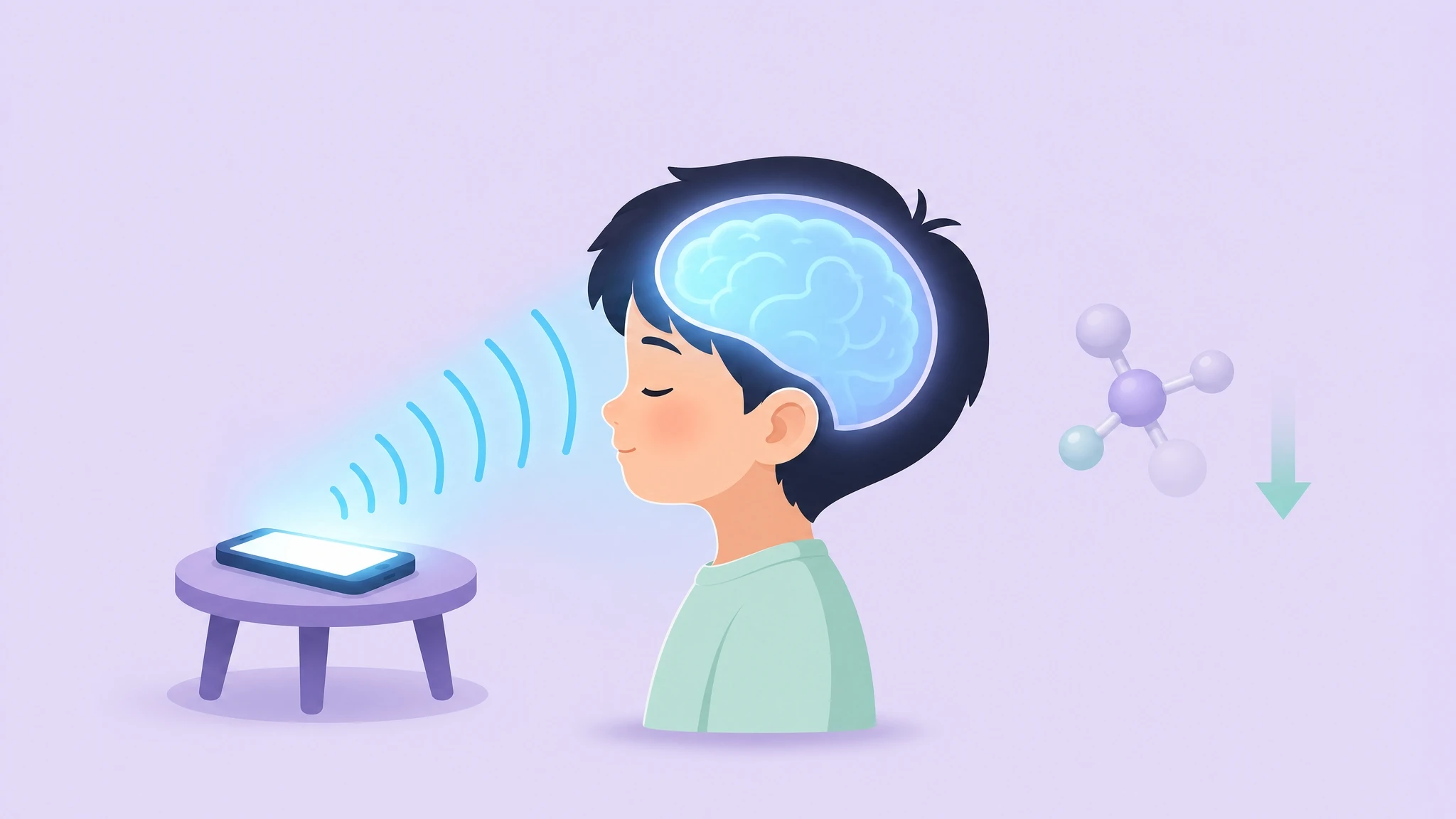
Screen time before bed stunts growth not through a single dramatic event, but through a quiet, nightly disruption that compounds over months and years. Most parents know that sleep matters for children. Far fewer realize that the glow of a smartphone, tablet, or TV in the hour before bed can meaningfully reduce the amount of growth hormone a child secretes overnight. Growth hormone is not released evenly throughout the day — the largest pulse comes during the first cycle of deep, slow-wave sleep, typically within one to two hours of falling asleep. When a child's brain is still buzzing from a screen, that critical first sleep cycle is delayed or shallower than it should be, and the hormonal payoff shrinks accordingly.
Blue Light Melatonin Children Sleep: How the Chain Breaks
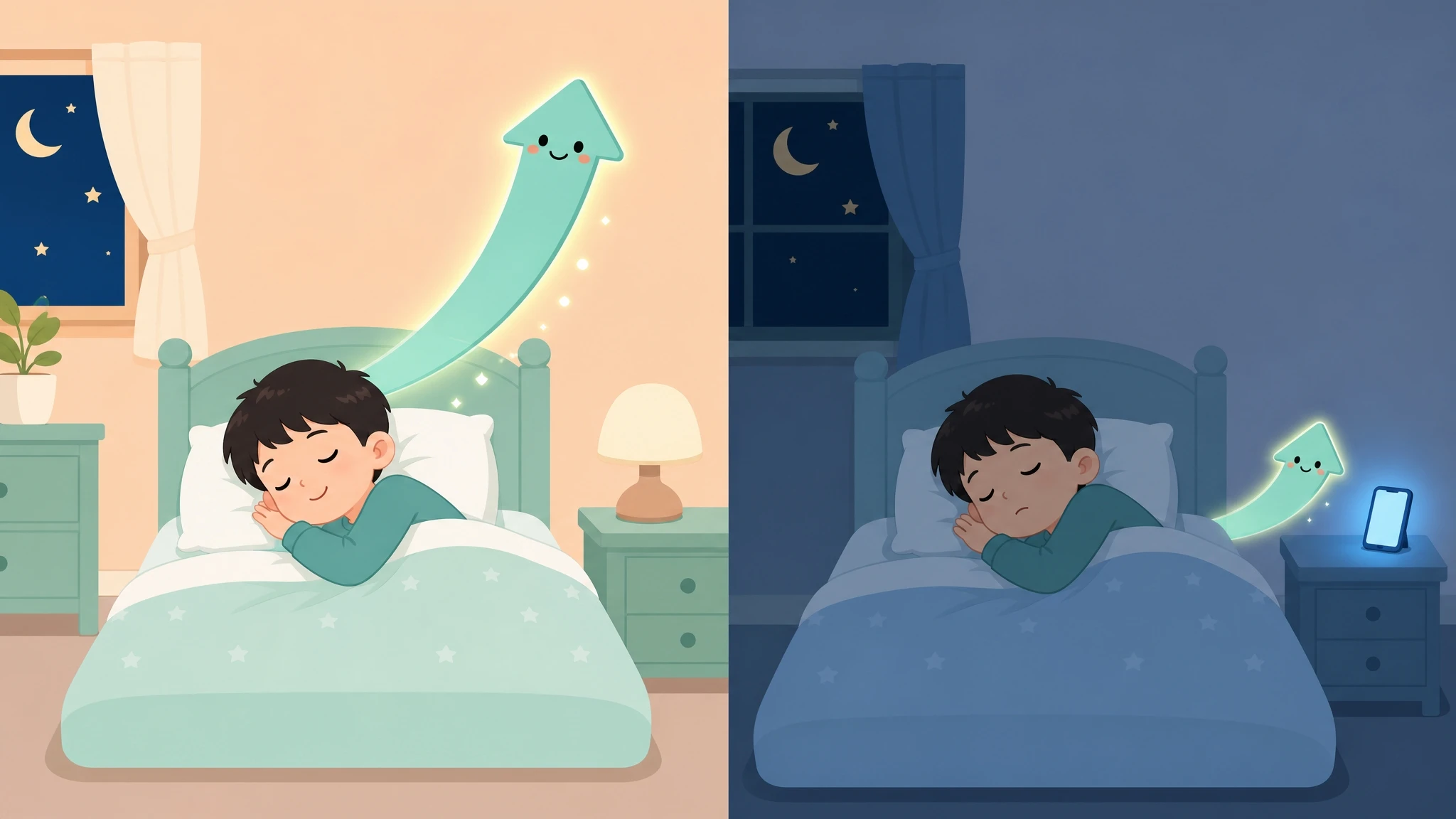
The mechanism is well documented. Screens emit blue-spectrum light — wavelengths in the 460–480 nm range — that the retina interprets as daylight. This signal travels to the suprachiasmatic nucleus, the brain's master clock, which then suppresses melatonin production. Melatonin is the chemical signal that tells the body it is dark, it is safe to rest, and the nightly repair cycle can begin. The relationship between blue light, melatonin, and children's sleep is especially significant because children's lenses are clearer than adults', allowing more blue light to reach the retina and producing a stronger suppression effect at the same screen brightness.
Without adequate melatonin, children take longer to fall asleep, spend less time in deep sleep, and wake more easily during the night. Each of those outcomes reduces the total window in which growth hormone can be secreted. Pediatric sleep researchers have observed that even 30 to 60 minutes of evening screen exposure can shift a child's melatonin onset by 40 minutes or more — a meaningful loss on a school night when morning alarms are fixed.
Phone Before Bed Affects Height: What Clinical Observation Tells Us
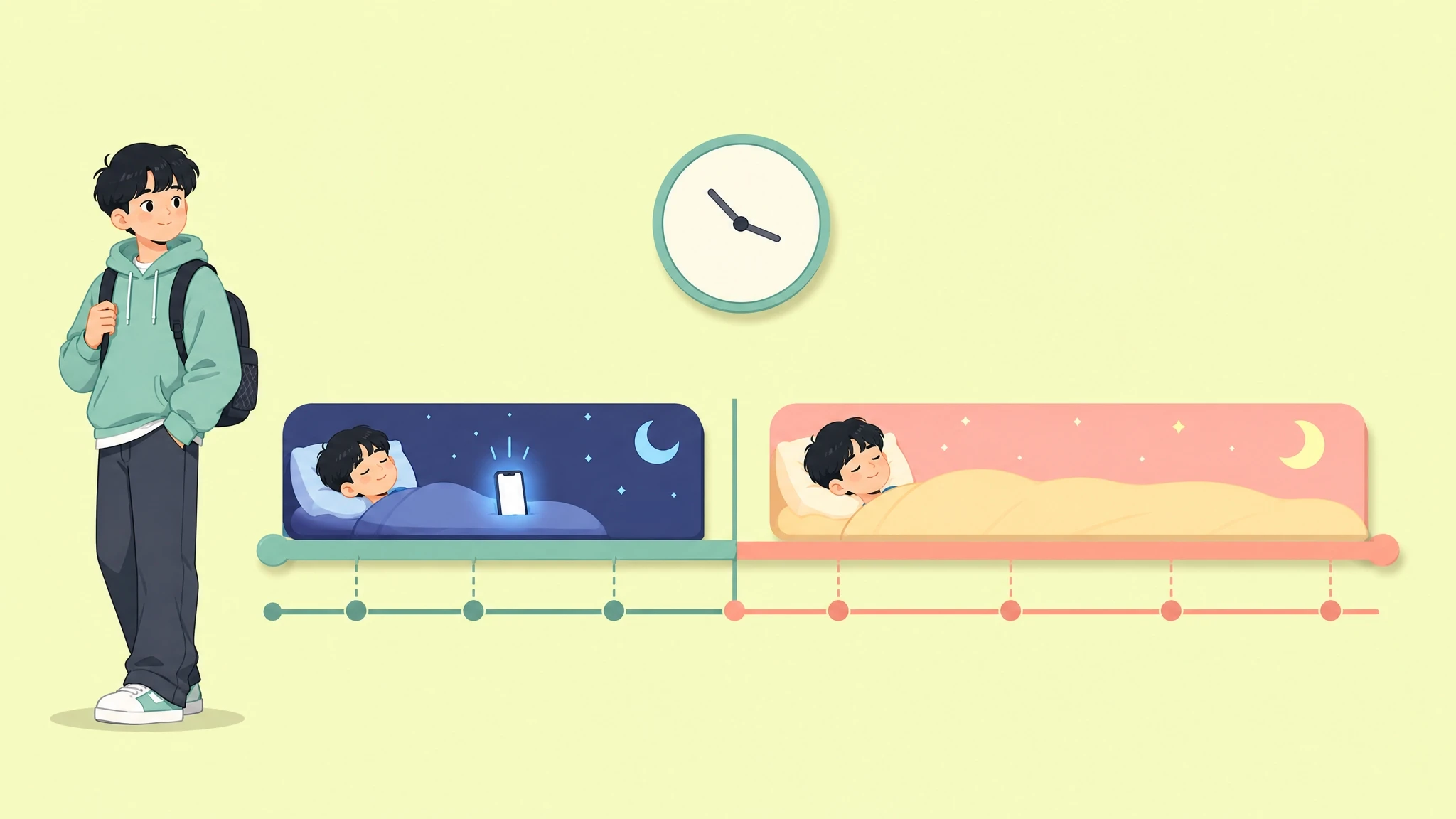
A phone before bed affects height through the same chain: disrupted melatonin leads to disrupted deep sleep, which leads to reduced overnight growth hormone output. In clinical practice, children referred to growth specialists for unexpectedly slow height velocity are often found to have poor sleep hygiene — including habitual late-night screen use — alongside other factors. Addressing sleep quality is therefore one of the first lifestyle recommendations a growth-focused clinician will make, precisely because it costs nothing and can begin tonight.
It is important to frame this accurately: no single behavior is solely responsible for a child's height trajectory, which is shaped by genetics, nutrition, activity level, stress load, and overall health. But growth hormone secretion is acutely sensitive to sleep architecture, and sleep architecture is acutely sensitive to evening light exposure. Phone use before bed sits at the top of that chain — a modifiable habit with a measurable downstream effect.
Screen Time Growth Hormone Suppression: How Much Does It Actually Matter?
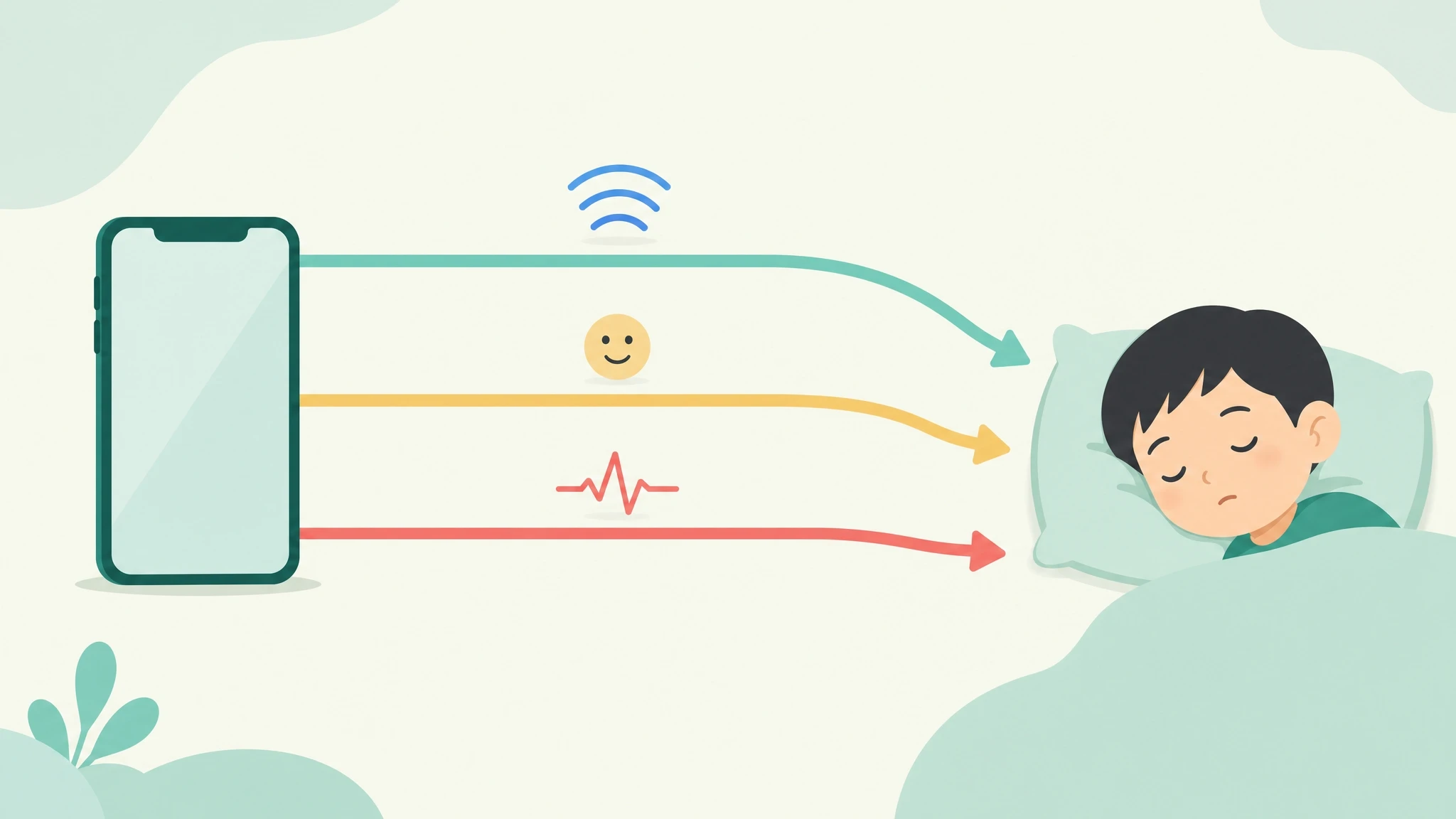
Screen time growth hormone suppression is not hypothetical. Research on sleep restriction in children consistently shows that reduced slow-wave sleep correlates with lower overnight growth hormone area-under-the-curve — meaning less total hormone exposure per night. Studies also show that experimentally delaying sleep onset by 60 to 90 minutes reduces growth hormone secretion in adolescents even when total sleep time is partially compensated by sleeping later in the morning. This matters because school schedules rarely allow for that compensation: the alarm goes off at the same time regardless of when the child finally fell asleep.
Over weeks and months, chronically blunted overnight growth hormone pulses may contribute to a slower height velocity than the child's genetic potential would otherwise allow. The effect size is difficult to isolate in the real world, but the biological mechanism is clear enough that most pediatric sleep and growth specialists agree on the recommendation: screens should be removed from the sleep environment at least 60 minutes before bedtime.
Practical Steps to Protect Your Child's Sleep and Growth
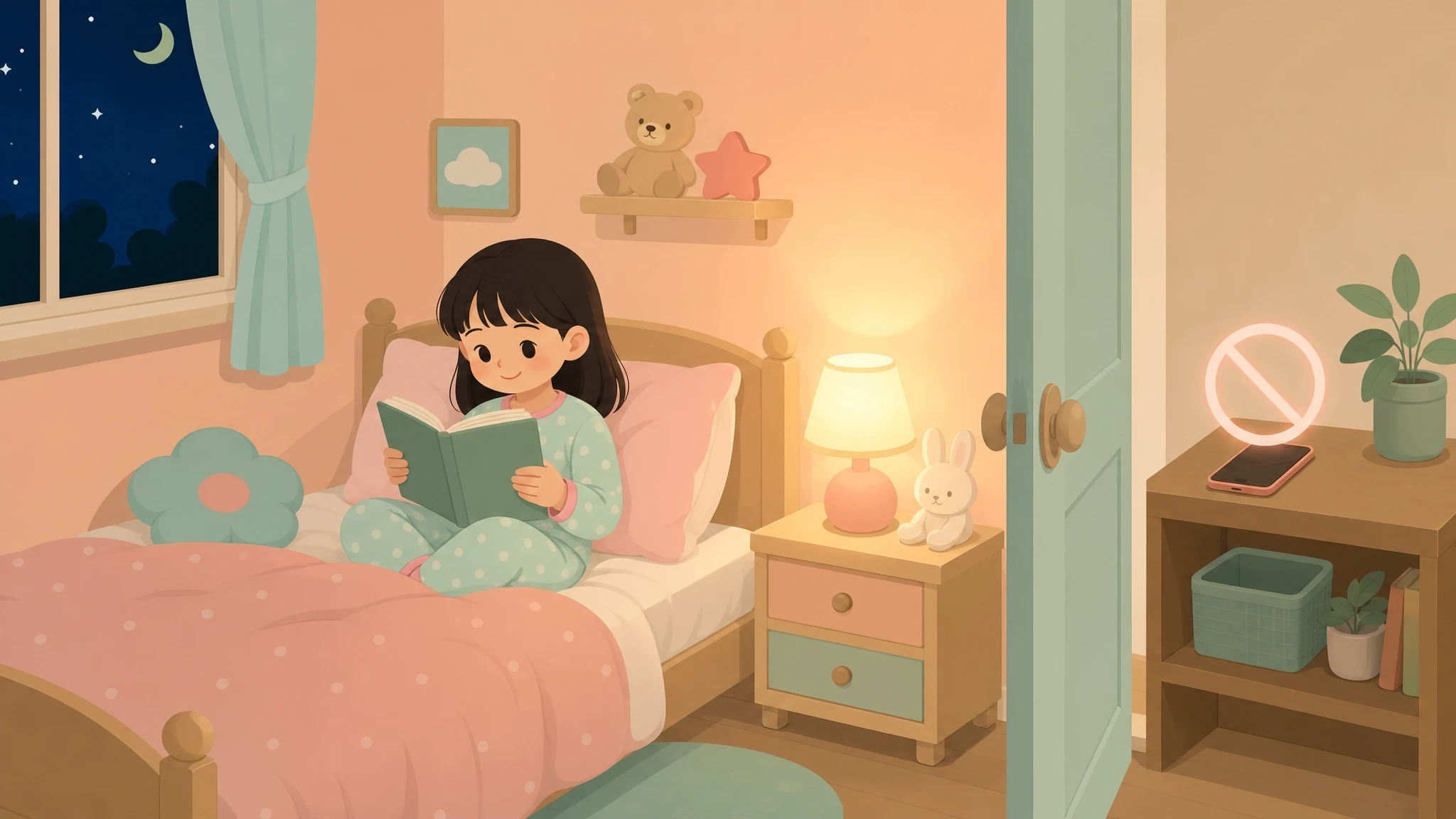
Changing a household screen habit is often harder in practice than in principle, so concrete, stepwise strategies help.
- Set a firm screen-off time 60 to 90 minutes before bed. This is the most impactful single change. Replace the wind-down period with reading, light conversation, or quiet play.
- Move devices out of the bedroom. If the phone is not in the room, it cannot be reached in the middle of the night either. A simple charging station in the hallway solves two problems at once.
- Use night-mode or blue-light-filter settings as a backup, not a primary fix. These filters reduce — but do not eliminate — blue-spectrum emission and are best understood as a partial safeguard rather than permission to use screens right up until lights-out.
- Keep a consistent sleep schedule, including on weekends. The circadian rhythm that governs melatonin secretion is set by regularity. Sleeping in by more than an hour on weekends can shift the clock enough to delay Monday's melatonin onset.
- Dim ambient lighting in the home during the final hour before bed. Overhead lights also emit blue-spectrum light. Switching to warm-toned lamps in the evening reinforces the body's transition toward sleep.
When to Seek Professional Guidance on Your Child's Growth
Good sleep hygiene addresses one part of the growth equation, but height is the product of many interacting factors. If your child's height has been falling on their growth curve over multiple check-ups, if they are growing less than five to six centimeters per year during childhood, or if you have noticed signs of early puberty, those are reasons to consult a healthcare professional who specializes in children's growth. A specialist can assess bone age relative to chronological age, evaluate growth hormone status if indicated, and provide a personalized roadmap that looks at sleep, nutrition, activity, and any underlying medical factors together — rather than optimizing each in isolation.
The bedtime screen habit is one of the fastest and most accessible levers a family can pull. It costs nothing, has no side effects, and supports not just height but overall sleep quality, mood, and cognitive performance. Starting tonight is both possible and worthwhile.
This article is intended for general educational purposes. Individual outcomes vary and this content does not constitute medical advice.
FAQ
How much screen time before bed is too much for a growing child?
Most pediatric sleep specialists recommend eliminating screen use at least 60 minutes before bedtime for school-age children and adolescents. Even 30 minutes of blue-light exposure in the hour before sleep can delay melatonin onset by 30 to 40 minutes, which in turn delays the onset of deep sleep — the stage when the largest pulse of growth hormone is released. There is no established safe minimum; the safest approach is to remove screens from the sleep environment entirely after the agreed wind-down time.
Does a night-mode or blue-light filter on a phone make it safe to use before bed?
Blue-light filter settings and night-mode displays reduce the intensity of short-wavelength light but do not eliminate it. Research suggests they lower — rather than prevent — melatonin suppression. They are a useful partial measure if screen use cannot be fully avoided in the evening, but they should not be treated as permission to use devices right up until lights-out. The arousal effect of engaging content also keeps the brain alert independently of the light spectrum, so the filter only addresses part of the problem.
If my child gets enough total sleep hours, does it matter when they fall asleep?
Timing matters alongside total duration. The first cycle of slow-wave (deep) sleep is the richest period for growth hormone secretion, and this cycle is anchored to the body's circadian clock rather than simply to elapsed time in bed. A child who falls asleep late due to screen use and then compensates by sleeping later in the morning may still miss the optimal growth hormone window — particularly on school days when the morning alarm cuts sleep short. Regular, early bedtimes aligned with the child's natural melatonin rhythm provide a better hormonal environment than the same number of hours shifted later in the night.
References
- Overnight growth hormone secretion in short children: independence of the sleep pattern. The Journal of clinical endocrinology and metabolism. 1994. PubMed · DOI
- Complex relationship between growth hormone and sleep in children: insights, discrepancies, and implications. Frontiers in endocrinology. 2024. PubMed · DOI
- Morning vs. evening growth hormone injections and their impact on sleep-wake patterns and daytime alertness. Frontiers in endocrinology. 2025. PubMed · DOI
- Growth hormone release during sleep in growth-retarded children with normal response to pharmacological tests. Archives of disease in childhood. 1978. PubMed · DOI
- Growth hormone secretory patterns in children with short stature. The Journal of pediatrics. 1987. PubMed · DOI