How Poor Posture Affects a Child's Measured Height
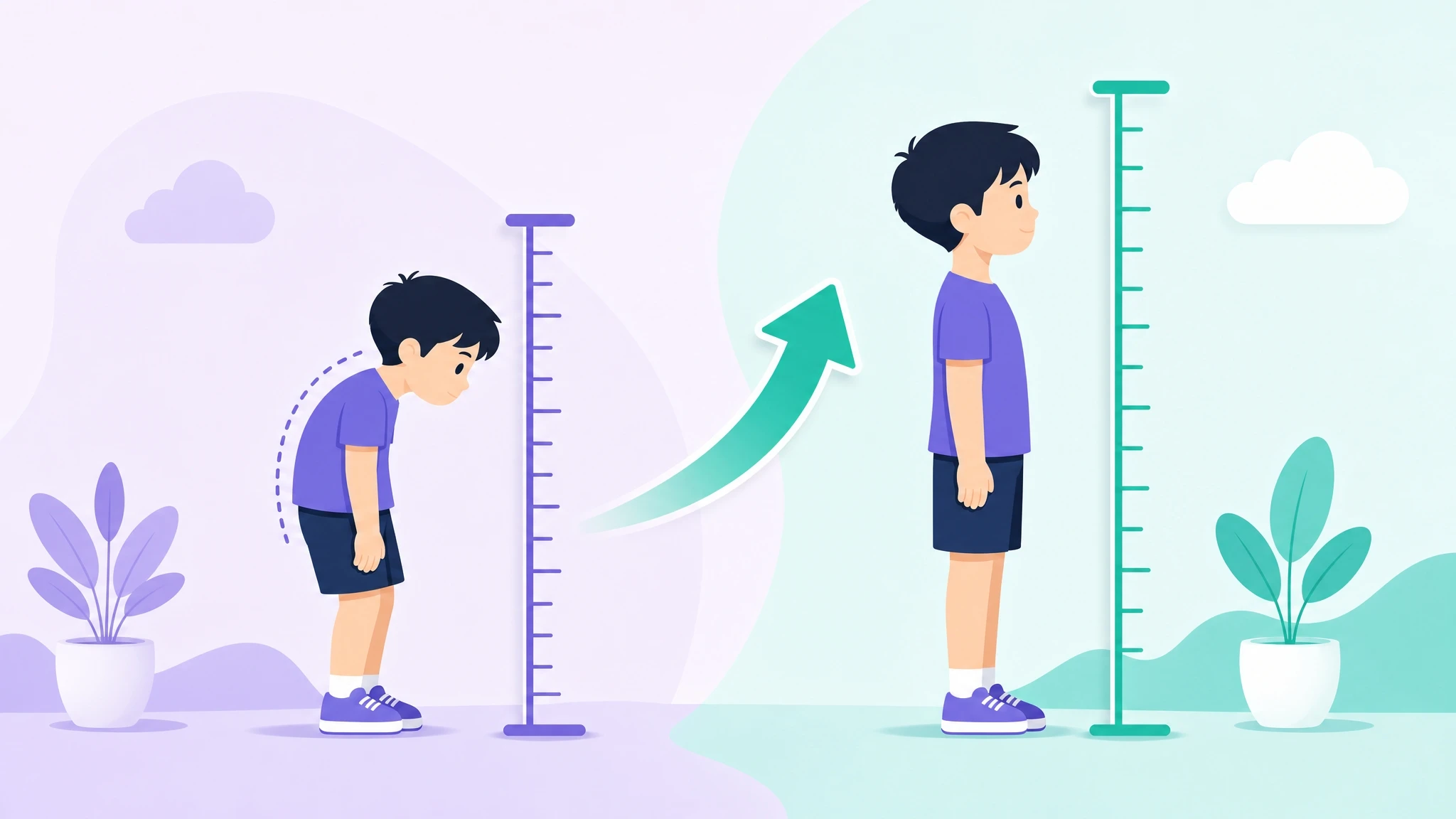
Poor posture can genuinely affect height in children — not by changing bone length, but by preventing kids from reaching the full stature they already have. When a child chronically slouches, the spine's natural alignment collapses, and a standard stadiometer measurement will record a height that is shorter than the child's true skeletal length. Research on spinal mechanics shows that forward head posture and thoracic rounding can reduce standing height by 1–3 centimeters in school-age children. That gap is invisible on a growth chart but very real in daily life. The practical implication is encouraging: correcting posture does not add bone, but it reliably restores measured height to its accurate value. Parents who are concerned about a child reading small on growth charts should observe posture before drawing conclusions about bone growth itself.
Three Ways Slouching Slows Actual Growth (Beyond Appearance)
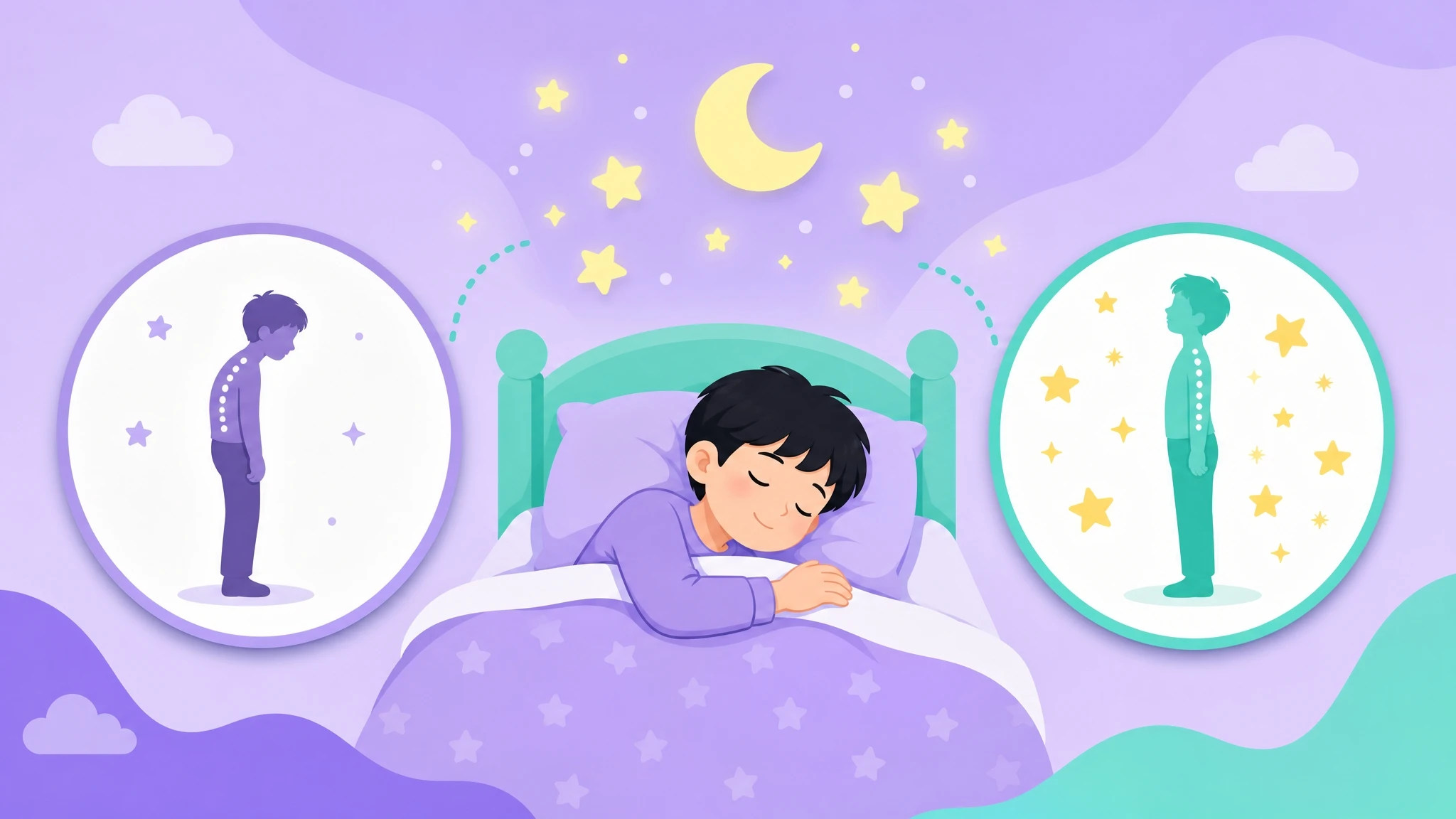
Beyond the measurement effect, forward head posture and chronic slouching can interfere with the biological processes that drive real bone growth during childhood.
Sleep quality and growth hormone. Growth hormone is secreted most abundantly during deep, slow-wave sleep. Children with pronounced forward head posture often develop neck muscle tightness that fragments sleep, while a rounded thoracic spine reduces lung expansion, making it harder to settle into the deep sleep stages where growth hormone peaks. Any consistent reduction in sleep quality during the growth years carries compounding costs.
Circulation and fatigue. Slouching compresses the vessels and muscles of the neck and shoulders, reducing blood flow to the head and upper extremities. Children in this pattern frequently report neck aches and low energy — both of which reduce physical activity, the third major stimulus for growth hormone release.
Confidence and activity level. Habitual slouching children height outcomes are also shaped indirectly through reduced participation in sports and play. A child who experiences chronic shoulder and back discomfort tends to move less, further blunting the growth-stimulating effects of exercise.
Quick Self-Check: Does Your Child Have Forward Head Posture?
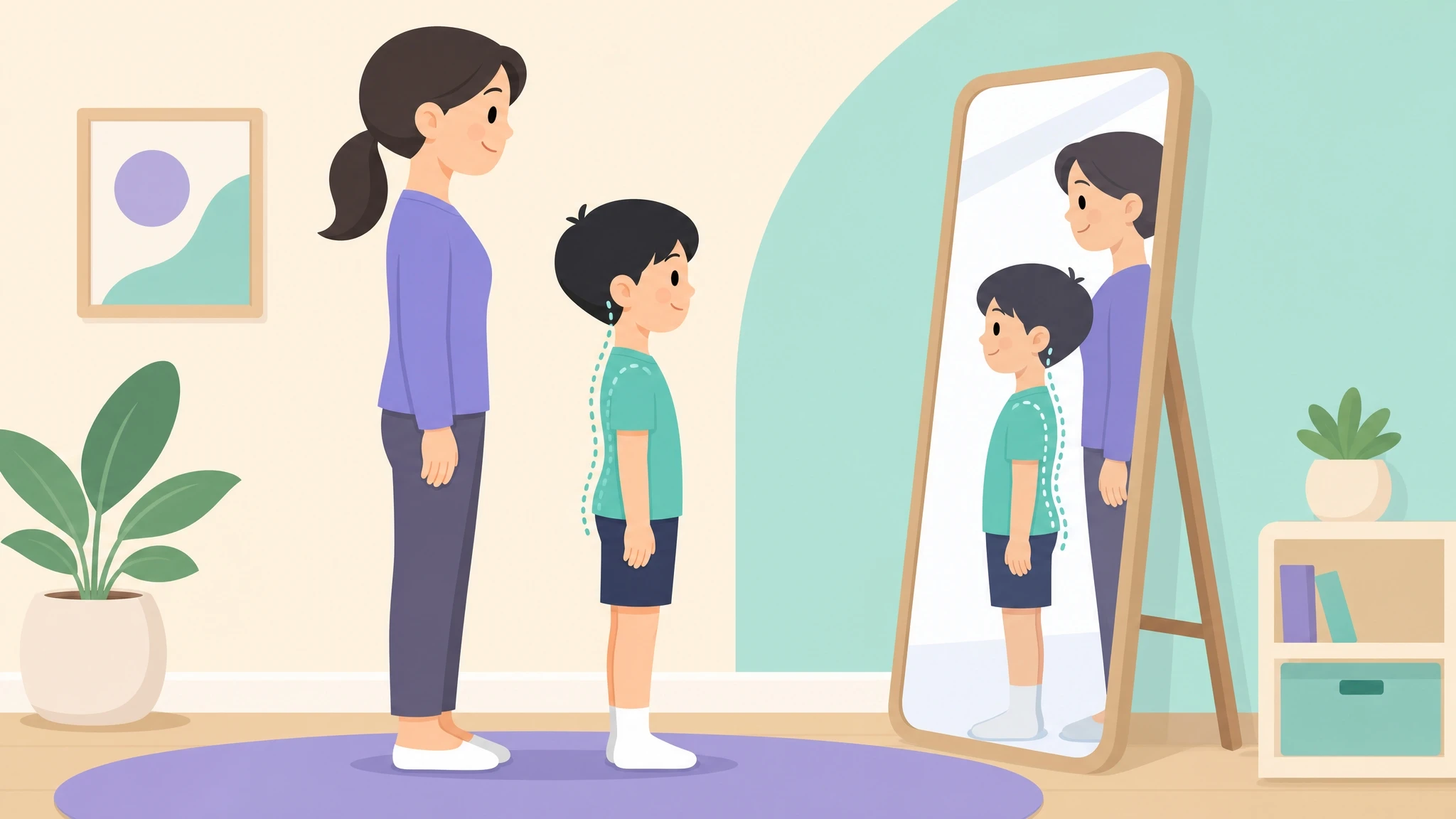
Identifying forward head posture in kids takes only a wall and 60 seconds. Have your child stand with heels, buttocks, and upper back touching a flat wall. Ask them to stand naturally — without forced correction. Then check:
- Head gap: Is there more than a fist-width of space between the back of the head and the wall? This suggests forward head posture.
- Shoulder rounding: Are the backs of both hands closer to the thighs than to the wall? This indicates rounded shoulders and a forward-rolling chest.
- Ear-shoulder line: Viewed from the side, the ear should sit directly above the mid-shoulder. If the ear is ahead of the shoulder, slouching children height issues are likely already compounding.
If your child cannot comfortably rest their head against the wall while their back is flat, or if they display two or more of the signs above, daily postural correction habits are worth starting immediately. Three or more signs present consistently warrants a professional evaluation to rule out structural causes such as mild scoliosis.
Daily Habits for Correcting Posture to Appear (and Grow) Taller
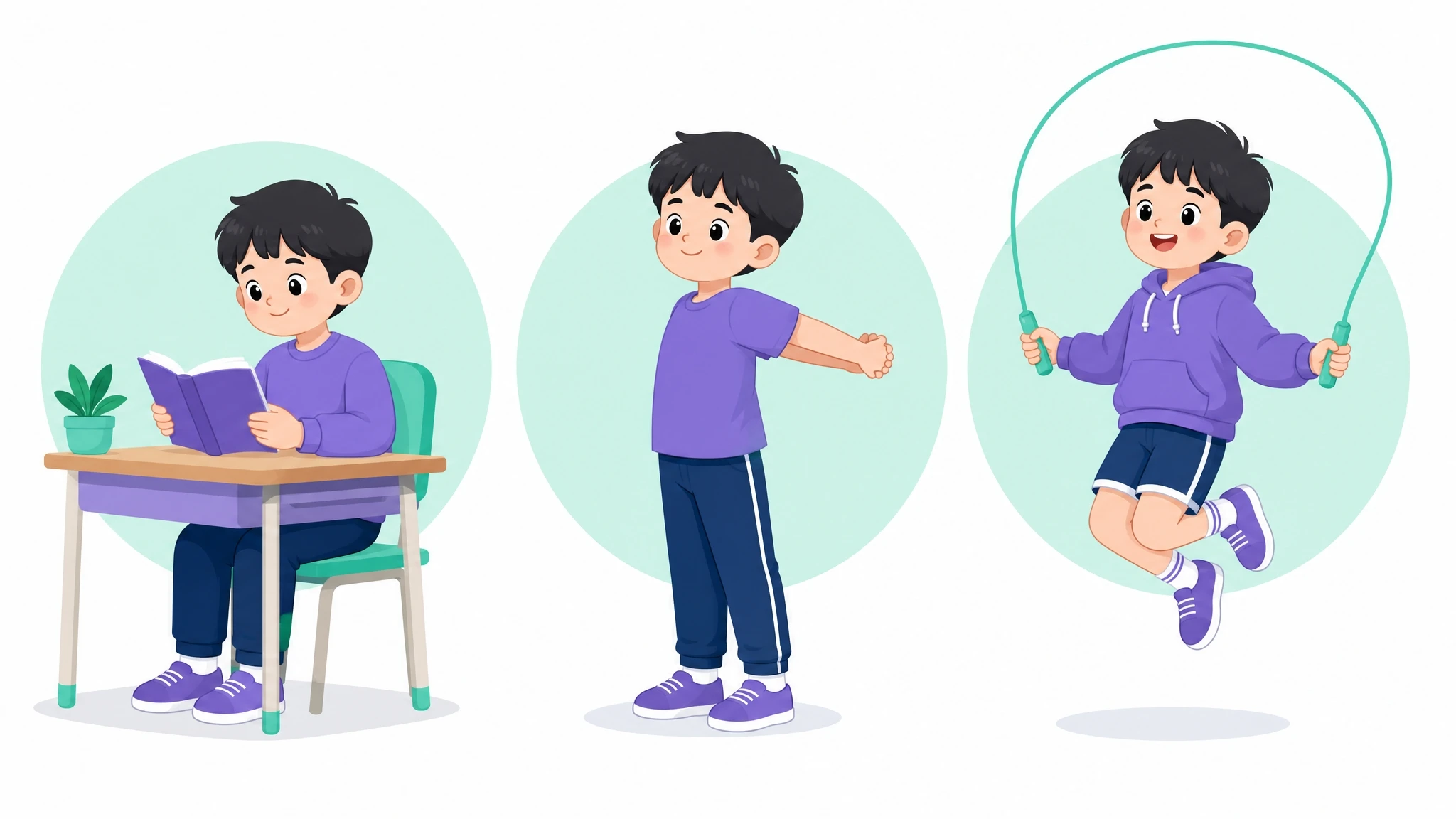
Correcting posture to appear taller is the short-term payoff; supporting healthy spinal growth is the long-term one. The following evidence-informed habits address both.
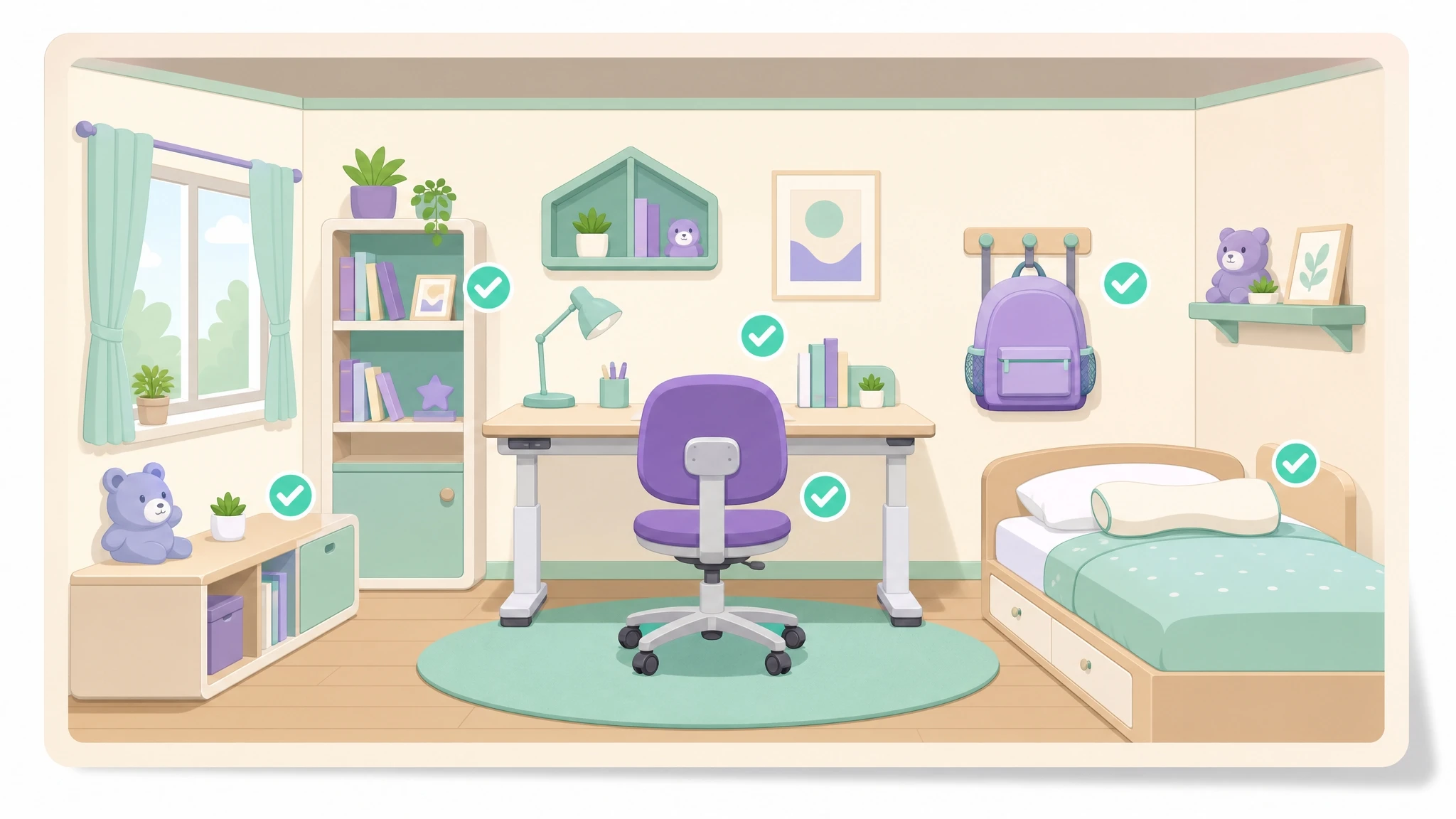
Seated posture. Hips should be pushed to the back of the chair so the lower back contacts the backrest. Knees rest at 90 degrees with feet flat on the floor. Screens and books should be at eye level — a simple book stand costs almost nothing and eliminates the most common trigger of forward head posture in children.
Smartphone rules. Children who hold phones in their laps generate up to 27 kg of effective force on the cervical spine. The rule is simple: raise the device to eye level, or set it down. A 10-second neck retraction stretch (chin gently tucked, head slid straight back) after every 20 minutes of screen time reverses much of the accumulated tension.
Backpack weight. Bags exceeding 10–15% of body weight force compensatory forward lean. Distribute weight evenly between both straps and tighten them so the bag sits high and close to the body.
Sleep position and pillow height. A pillow that fills the natural cervical curve without propping the head forward preserves alignment overnight — the longest single daily posture period most children experience.
Stretches and Exercises That Target Slouching in Growing Children
Targeted movement is the most efficient way to reverse forward head posture in kids because it both releases the tight structures pulling the body forward and strengthens the muscles that hold it upright.
Chin tuck (cervical retraction). Standing or seated, the child gently pulls the chin straight back — not down — creating a slight double-chin. Hold five seconds, repeat 10 times. This resets the deep cervical flexors and is appropriate from age six onward.
Doorway chest opener. Arms at 90 degrees, forearms resting against a door frame, the child gently leans forward until a mild stretch is felt across the pectorals. Hold 20–30 seconds, twice daily. This directly counteracts the rounded-shoulder pattern underlying slouching children's height concerns.
Wall angel. Back flat against a wall, arms raised to a goal-post position with elbows and wrists touching the wall. Slowly slide arms upward. If the wrists leave the wall, stop. This exercise strengthens the lower trapezius and rhomboids — the muscles most responsible for sustained upright posture.
Growth-stimulating aerobic activity. Jump rope, swimming, and basketball combine mechanical loading on the long bones (which stimulates growth plates) with cardiovascular demands that naturally extend the spine during movement. Thirty minutes of these activities at least four days per week is a well-supported target for school-age children.
When to Seek a Professional Evaluation
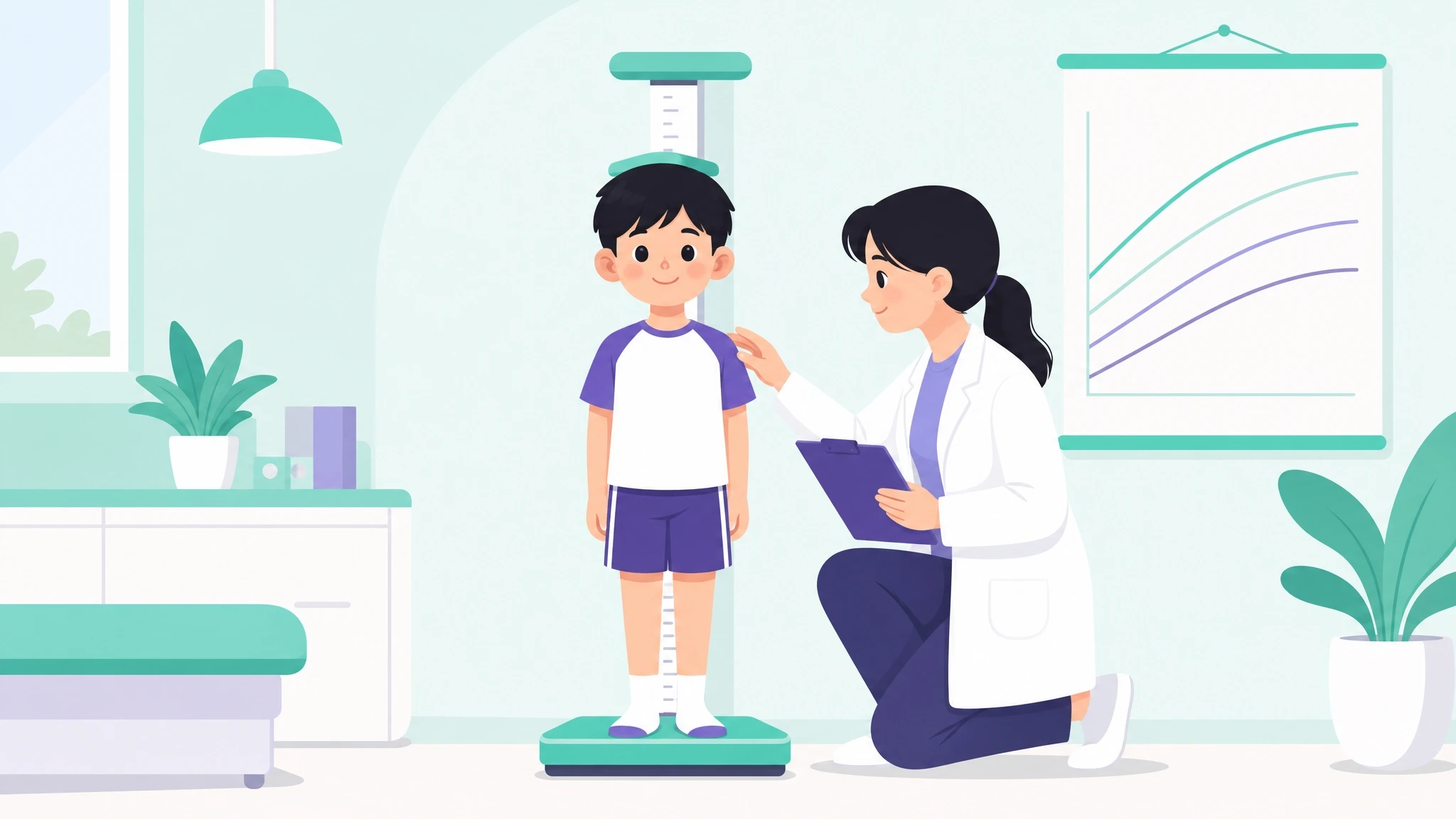
Home exercises and lifestyle adjustments resolve the majority of postural issues that develop from sedentary habits and screen exposure. However, some presentations suggest an underlying structural or hormonal component that parents should not manage alone.
Consider a specialist consultation if your child's forward head posture does not improve after 6–8 weeks of consistent daily correction exercises, if the shoulders appear visibly uneven when viewed from behind (a possible early sign of scoliosis), or if height measurements over a six-month period show growth well below the expected 5–6 cm per year during the primary school years.
A growth specialist evaluates posture as one part of a broader picture that includes bone age assessment via X-ray, growth velocity tracking, and hormonal screening where indicated. This integrated view helps distinguish between postural habits that are fully correctable with lifestyle changes and structural or endocrine issues that benefit from medical support. For families with access to a specialized pediatric growth clinic, a single comprehensive consultation is usually enough to determine which category a child falls into and to create a specific plan — whether that means targeted exercises, ergonomic adjustments, or further diagnostic steps.
FAQ
Can fixing my child's posture actually make them taller?
Correcting posture restores the height a child already possesses but cannot express due to spinal rounding. A slouch-related height deficit of 1–3 cm is common and fully recoverable through consistent postural work. This is different from interventions that influence bone growth itself — postural correction reveals true height rather than creating new height.
How long does it take to see improvement in a child's posture?
Most children show noticeable improvement in standing posture within 4–6 weeks of daily targeted exercises and environmental changes such as raising screen height and adjusting seating. Full muscle rebalancing — where upright posture begins to feel natural rather than effortful — typically takes 3–4 months of consistent practice.
Is forward head posture in children serious enough to need medical attention?
Mild-to-moderate forward head posture caused by screen habits and sedentary behavior usually responds well to home-based correction. Medical evaluation is recommended if the posture does not improve after 6–8 weeks of consistent effort, if one shoulder sits noticeably higher than the other, or if the child's annual height gain is below the age-expected range — as these patterns can signal structural or growth-related issues that benefit from specialist assessment.