Why a Sleep Doctor Decided to Experiment on His Own Kids

This pediatrician sleep routine experiment for child growth started not in a clinic, but in a very ordinary family living room at 10 p.m., when two six-year-old boys still hadn't fallen asleep. As a growth specialist and father of twins, I'd spent years explaining to parents why deep, consistent sleep is one of the most powerful levers for height potential — yet I hadn't enforced a rigorous routine in my own home. That gap bothered me. So I decided to treat my family the way I would counsel a patient: set clear rules, track results, and report honestly. What followed was thirty days of sometimes difficult but ultimately illuminating data.
The Science Behind Sleep and Height Growth

Before detailing the experiment, it helps to understand why sleep matters so much. The body releases the majority of its daily growth hormone during slow-wave (deep) sleep — the first and most restorative stage that occurs roughly 30 to 90 minutes after falling asleep. If a child goes to bed late, stares at screens beforehand, or sleeps in short fragmented bursts, that critical deep-sleep window shrinks. The result is less growth hormone circulating at night, and over months and years, that deficit quietly limits how tall a child can grow. Clinical sleep routine guidance for children therefore focuses not just on total hours but on the timing and quality of each sleep cycle. Children between ages 6 and 12 typically need 9 to 11 hours; teens need 8 to 10. Getting those hours in a consistent, screen-free environment is what distinguishes sleep that builds height from sleep that merely rests the body.
The 30-Day Protocol: Four Simple Rules
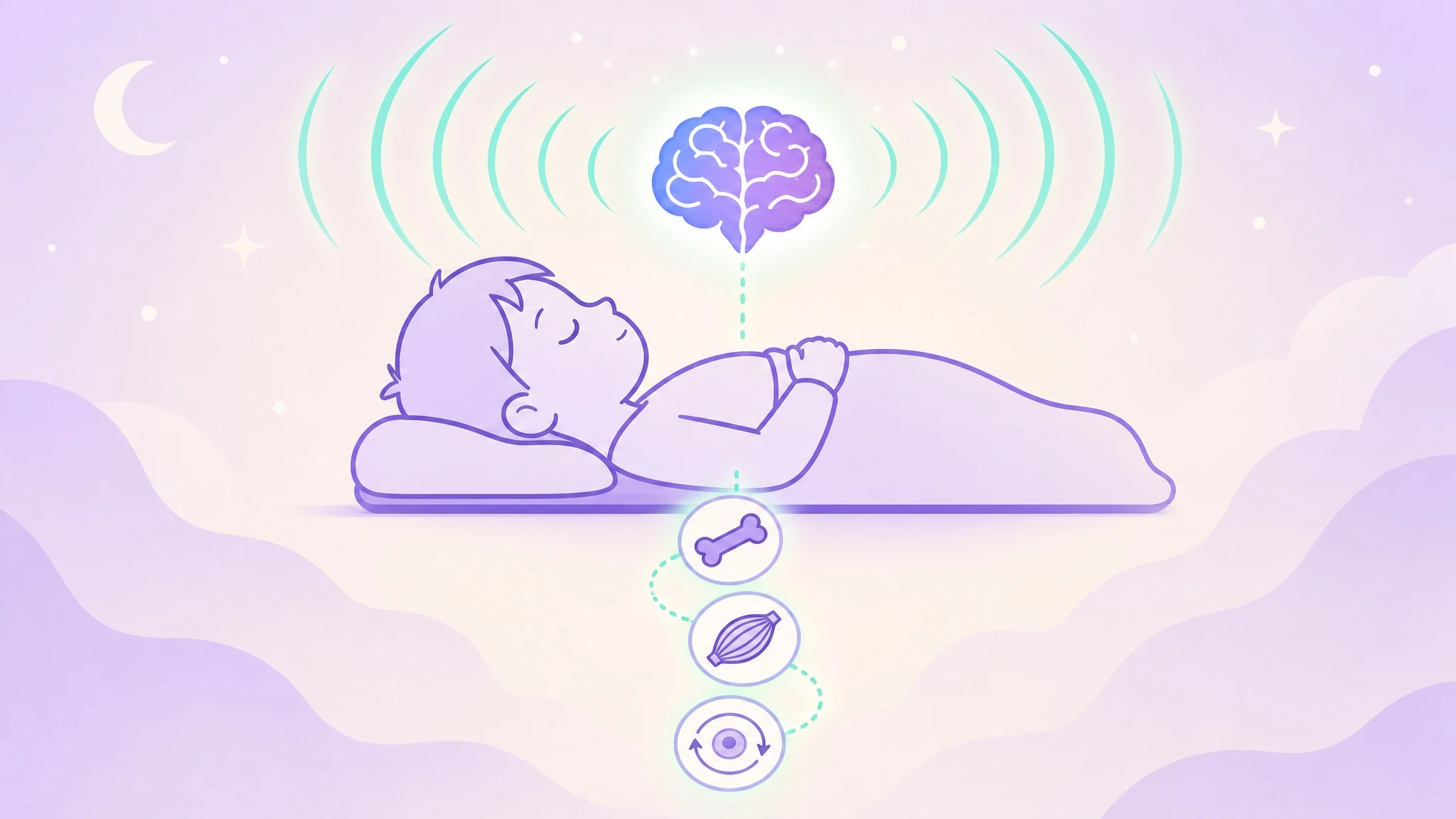
A doctor who tries a sleep schedule for child growth quickly learns that simplicity is everything — complicated systems collapse under the reality of family life. I settled on four non-negotiable rules applied every single night, including weekends.
- Fixed bedtime and wake-up time. Both twins in bed by 9 p.m., lights out, awake by 7 a.m. No exceptions for holidays or sleepovers during the trial.
- One-hour screen cutoff. All tablets, phones, and televisions off by 8 p.m. Blue light from screens suppresses melatonin production and delays sleep onset — a well-documented mechanism, not a parenting myth.
- A calming wind-down ritual. A warm shower, followed by 20 minutes of reading together or quiet play, signaled to the boys' nervous systems that the day was ending.
- A cool, dark, quiet bedroom. Room temperature around 18–20°C, blackout curtains, and white noise to mask street sounds.
Consistency was the hardest part. The first week involved real resistance — one twin struggled to disengage from play, the other took longer to fall asleep alone. But I held the line, just as I advise parents in clinic to do.
What Changed After 30 Days
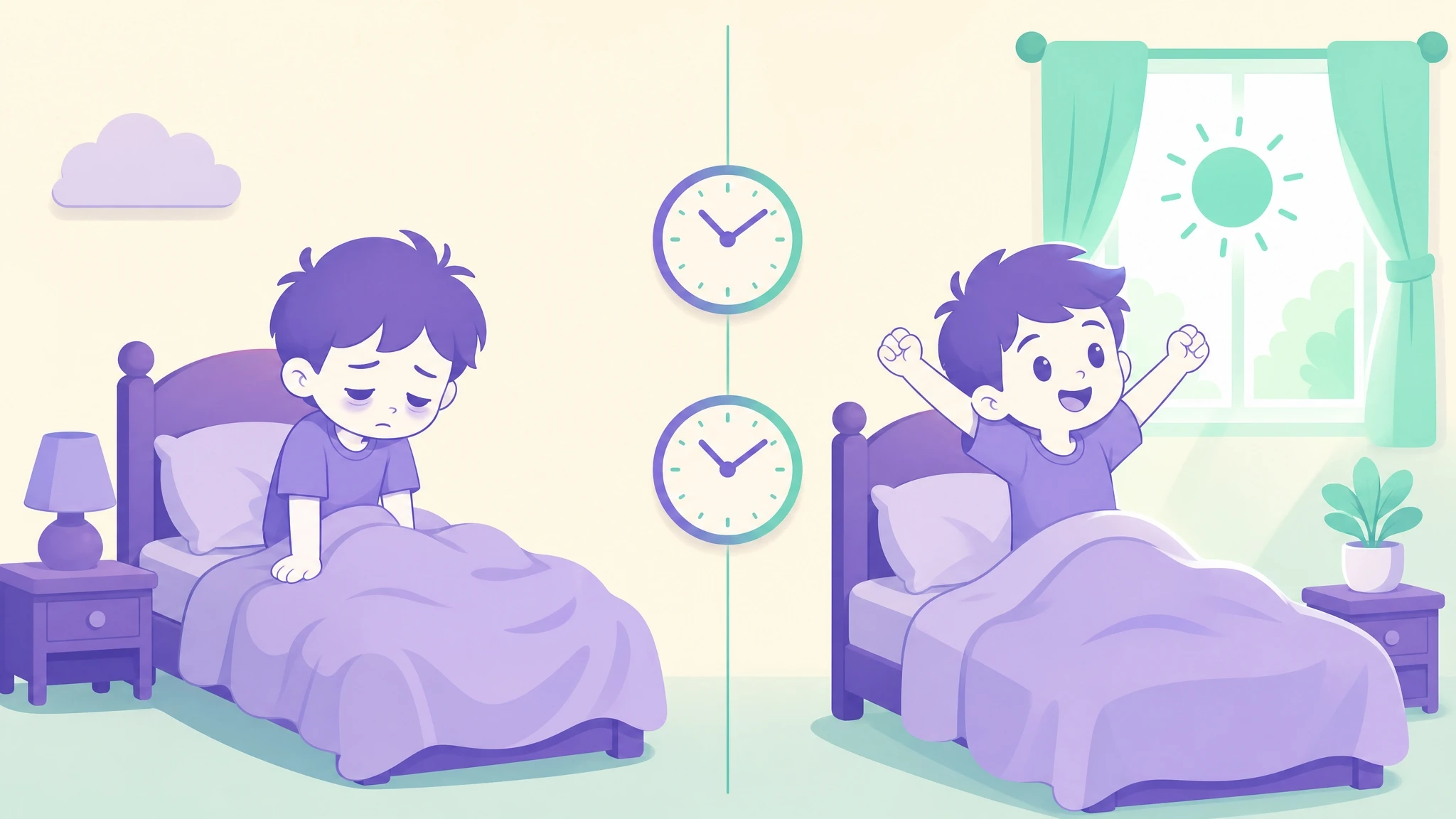
By day ten, both boys were falling asleep within fifteen minutes of lights-out — a notable shift from the forty-five-plus minutes typical before the experiment. By day twenty, waking during the night had all but stopped. By the end of the month, the changes extended well beyond bedtime. Both children woke without complaint, were more alert during the morning, and showed measurably better moods through the afternoon. The twin who had historically been the more anxious of the two seemed noticeably calmer. As a father, watching that shift was more meaningful than any growth-chart number.
Can thirty days of better sleep produce visible height gains? Not in a way that a tape measure would confirm — height changes over months, not weeks. What a clinical sleep routine for height in children achieves in one month is something more fundamental: it resets the body's growth rhythm. Growth hormone secretion becomes more regular, cortisol (the stress hormone that suppresses growth hormone) drops at night, and the physiological conditions that allow the body to grow are steadily rebuilt. The experiment confirmed, through personal experience, what the research already shows.
How to Build a Sleep Routine That Actually Sticks
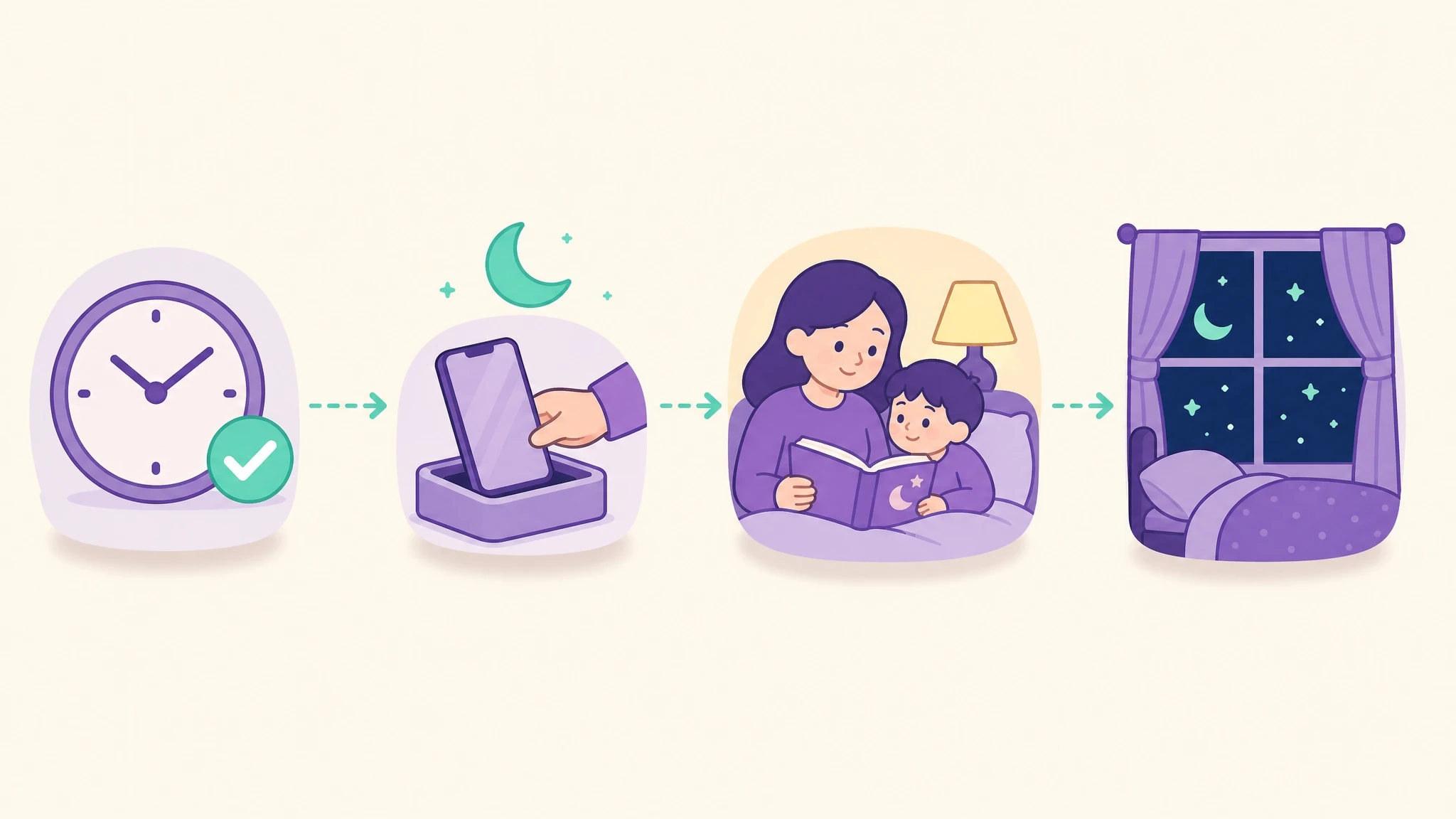
The doctor parent sleep experiment for children produced one lesson above all: routine only works when the adults around the child are consistent. Here is a practical framework any family can adapt.
- Start with the wake-up time, not the bedtime. Fix when your child wakes each morning, then count backwards the required hours of sleep to set the target bedtime.
- Create a visual cue for wind-down. Young children respond better to a picture chart of bedtime steps than to verbal instructions alone.
- Limit daytime naps strategically. For children under seven, a short afternoon nap (30–45 minutes) can improve overnight sleep quality rather than disrupt it. For school-age children, naps after 3 p.m. tend to delay sleep onset.
- Use natural light as a circadian anchor. Morning sunlight within the first hour of waking helps lock in the body clock, making sleep onset easier that night.
- Don't aim for perfection on day one. Shift bedtime by fifteen-minute increments over a week if the current schedule is far from the target.
Sleep as Part of a Bigger Growth Picture

Sleep is one pillar of healthy growth, but it works in concert with nutrition and physical activity. A child who sleeps well but skips meals or sits indoors all day will still leave growth potential on the table. Conversely, a child with excellent nutrition and daily outdoor exercise but chronic late nights is working against their own biology every night. The most effective approach integrates all three: consistent sleep, balanced meals rich in protein and micronutrients, and regular weight-bearing activity that gently stresses the growth plates in a healthy way. If, despite consistent effort across all three areas, a child still seems to be growing more slowly than expected for their age or family height background, a consultation with a pediatric growth specialist can help identify whether there are underlying hormonal or nutritional factors worth investigating. Early evaluation typically offers the most options.
FAQ
Does a 30-day sleep routine actually make a child grow taller?
Thirty days is not long enough to measure height changes accurately — height grows over months and years. However, a consistent sleep routine within that timeframe can meaningfully improve the quality and regularity of growth hormone secretion during deep sleep, setting the biological conditions that support healthy long-term height development.
What time should my child go to bed to maximize growth hormone release?
Growth hormone is released during the first deep-sleep cycle, regardless of the exact clock time. What matters most is that your child falls asleep in a dark, quiet environment without recent screen exposure. For most school-age children, a bedtime between 8:30 p.m. and 9:30 p.m. aligns the first deep-sleep stage with the body's natural hormonal rhythm.
When should I consider seeing a growth specialist about my child's sleep and height?
If your child is sleeping the recommended hours for their age, following a consistent routine, eating a balanced diet, and getting regular physical activity — yet is still growing notably slower than peers or their growth curve has flattened over 6 to 12 months — it is worth speaking with a pediatric growth specialist. They can assess bone age, hormone levels, and other factors that may be limiting growth.
References
- Overnight growth hormone secretion in short children: independence of the sleep pattern. The Journal of clinical endocrinology and metabolism. 1994. PubMed · DOI
- Complex relationship between growth hormone and sleep in children: insights, discrepancies, and implications. Frontiers in endocrinology. 2024. PubMed · DOI
- Morning vs. evening growth hormone injections and their impact on sleep-wake patterns and daytime alertness. Frontiers in endocrinology. 2025. PubMed · DOI
- Growth and biochemical markers of growth in children with snoring and obstructive sleep apnea. Pediatrics. 2002. PubMed · DOI
- Growth hormone release during sleep in growth-retarded children with normal response to pharmacological tests. Archives of disease in childhood. 1978. PubMed · DOI