Are Growing Pains a Sign Your Child Is Actually Growing Taller?
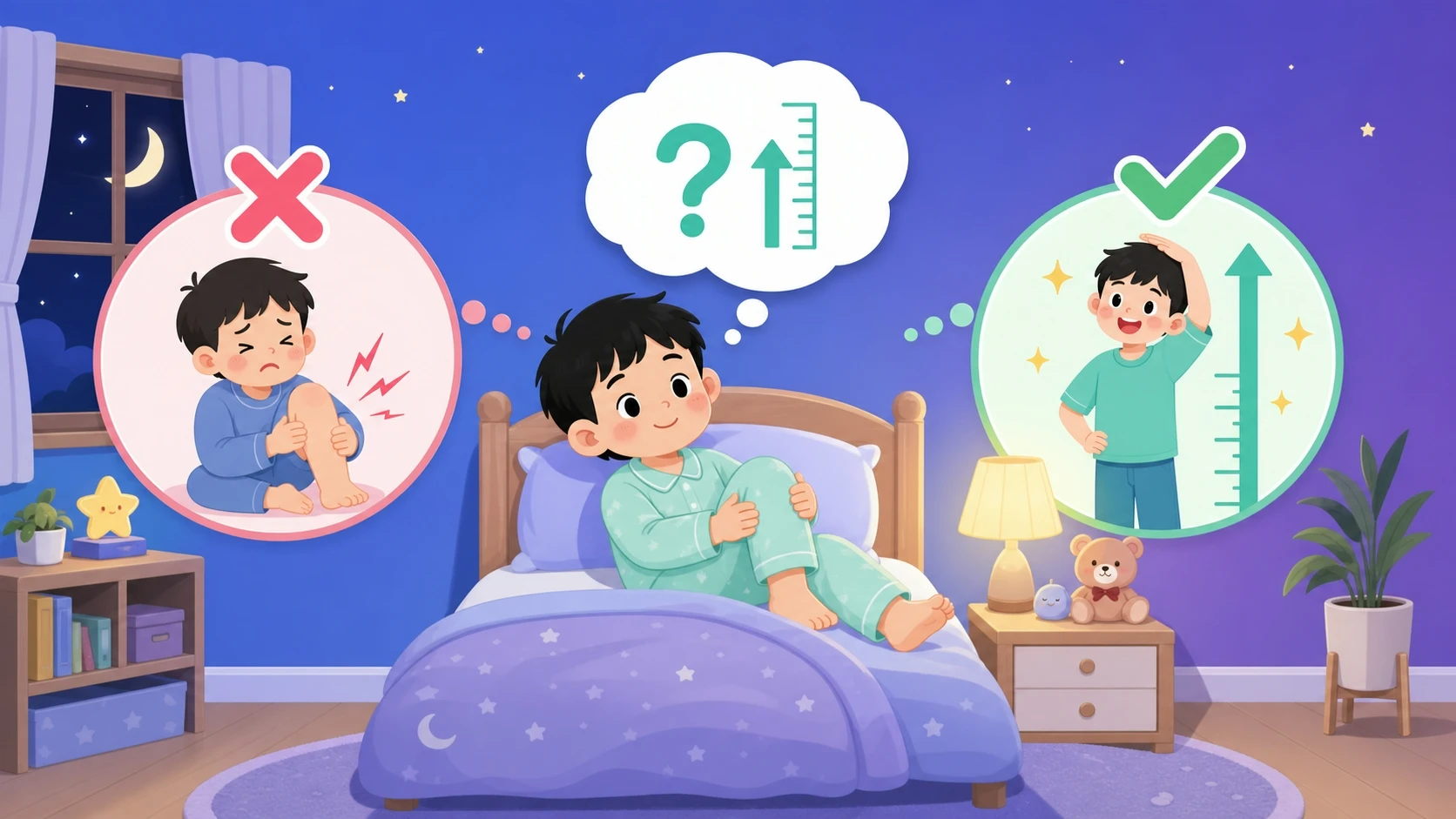
Growing pains in children are one of the most common concerns parents bring to pediatricians — and one of the most misunderstood. The popular belief is straightforward: if your child's legs ache at night, their bones must be stretching upward. It feels intuitive, especially when the pain seems to peak right during a growth spurt.
In reality, medical evidence does not support a direct link between aching legs and bone elongation. Bones contain very few pain-sensitive nerve fibers, which means bone growth itself is rarely the source of discomfort. What we call "growing pains" is better understood as a cluster of symptoms that happen to coincide with the childhood growth years — not a reliable signal that your child is about to gain an inch. Understanding this distinction helps parents respond more effectively and stay alert to symptoms that deserve closer attention.
What Actually Causes Growing Pains? Four Leading Theories
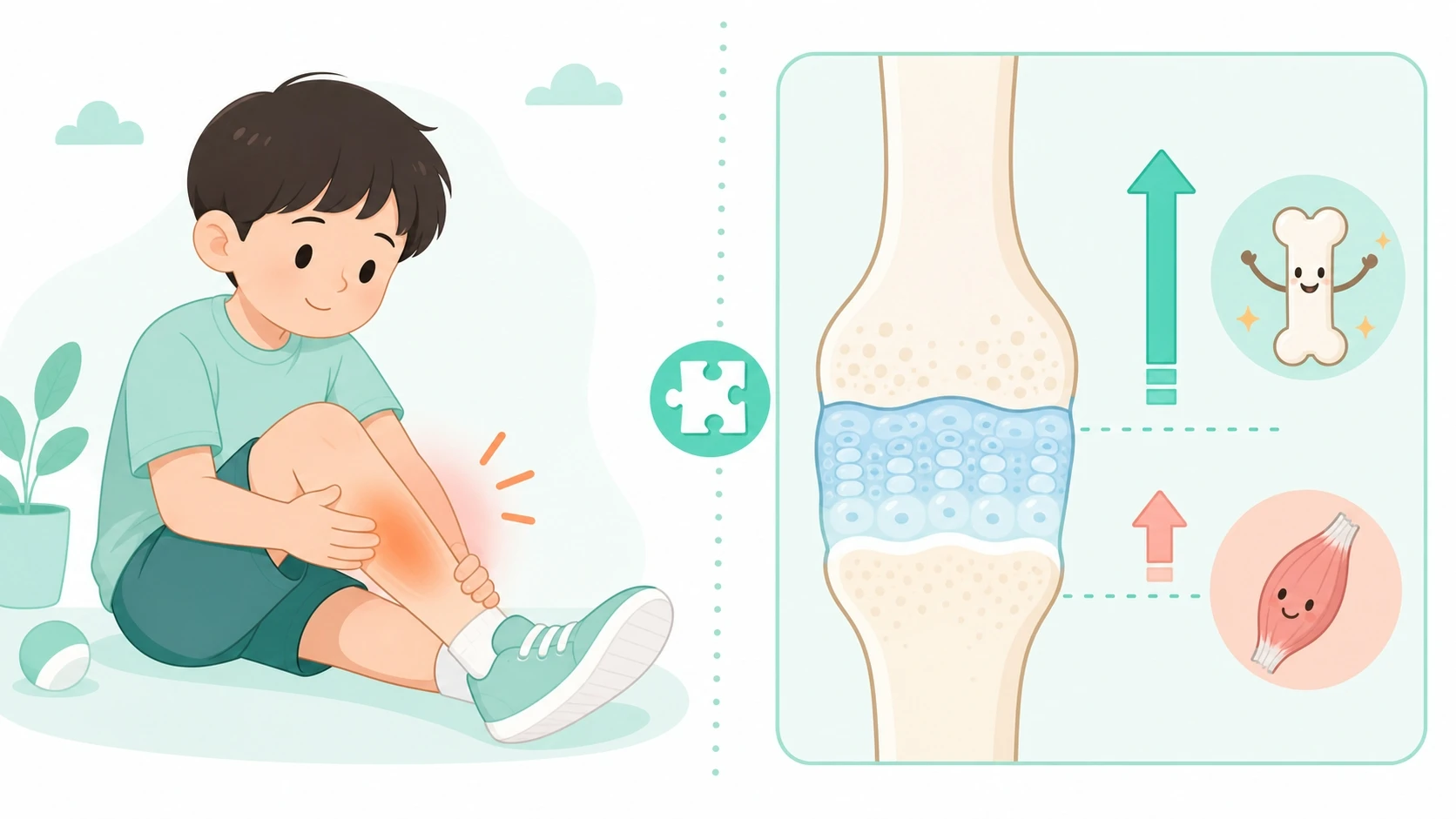
Pediatric researchers have proposed several overlapping explanations for why children experience nighttime leg pain during their growth years. No single cause accounts for every case, and most children are likely affected by a combination of factors.
- Muscle fatigue from daily activity. Active children accumulate significant leg-muscle fatigue over the course of a day. By evening, metabolic byproducts build up in the muscle tissue, producing the deep, dull ache that many children describe. This is the most widely accepted explanation for growing pains at night in the legs.
- Uneven growth between bone and soft tissue. During rapid growth phases, bones can lengthen faster than the surrounding tendons and muscles can adapt, creating temporary tension — particularly in the large muscle groups of the thighs and calves.
- Vascular and nerve adaptation. Blood vessels and nerves must also lengthen as the skeleton grows. Some researchers believe this process causes transient changes in pain sensitivity, though the evidence remains preliminary.
- Psychological and emotional factors. Children's pain thresholds vary considerably. Stress, anxiety, or simply a strong need for parental attention can amplify physical discomfort, making the perception of pain more intense even when the underlying stimulus is mild.
How to Recognise Growing Pains vs. Joint Pain in Children
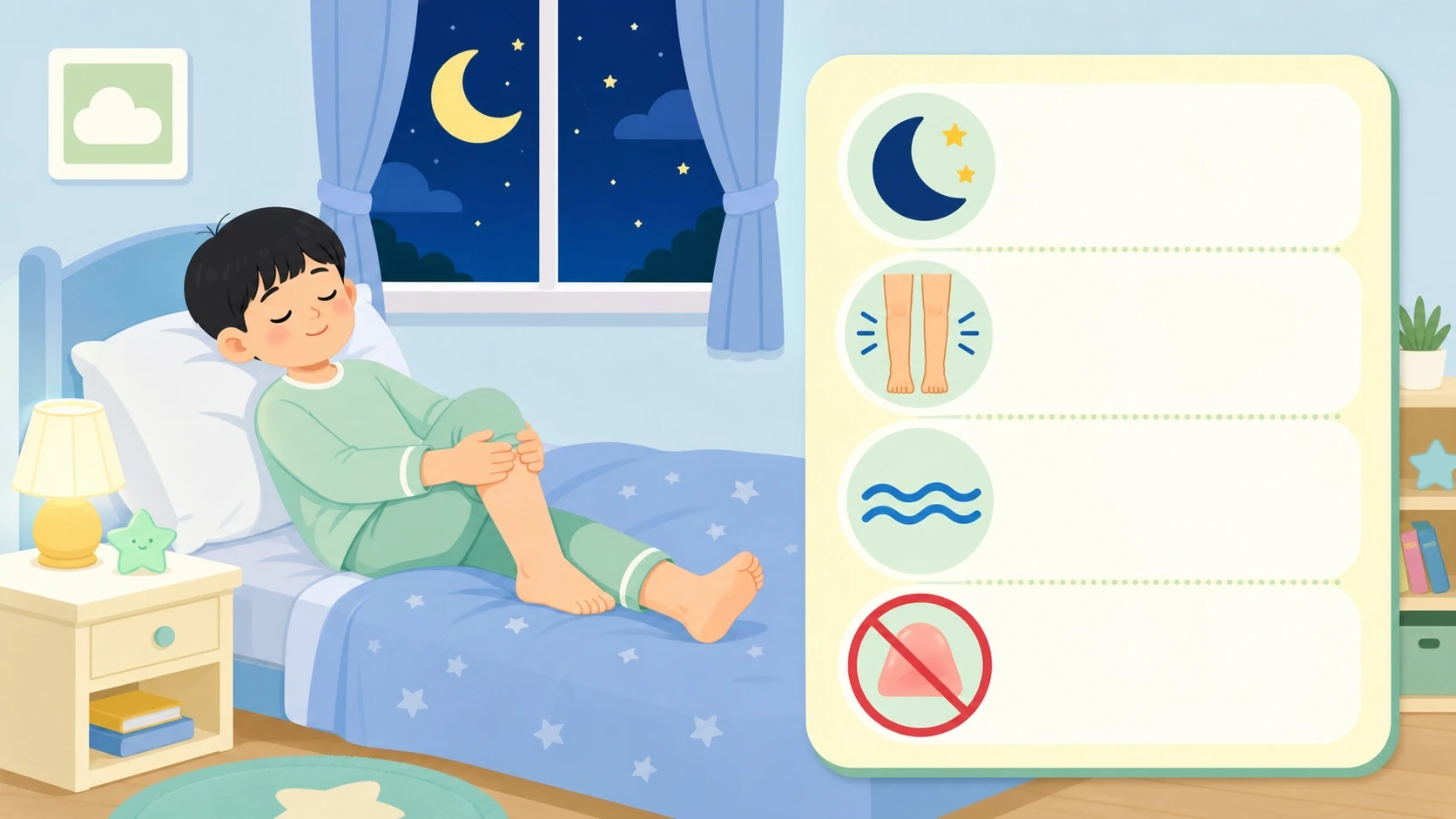
Knowing how to distinguish growing pains from joint pain in children is one of the most practical skills a parent can have. Classic growing pains share a consistent pattern that sets them apart from more serious conditions.
- Location: The pain is almost always deep in the muscle — shins, calves, or thighs — rather than at a joint. Both legs are often affected, and the location may shift from night to night.
- Timing: Discomfort typically appears in the late afternoon or evening and often wakes children from sleep. During the day, children usually run and play with no difficulty at all.
- Character: Described as throbbing, aching, or cramping — not sharp or stabbing.
- No visible inflammation: There is no swelling, redness, warmth, or tenderness when the area is pressed.
- No limping: Despite the pain, children with growing pains walk normally during daylight hours.
- Intermittent pattern: Pain comes and goes over days or weeks rather than persisting continuously.
- Response to comfort measures: Gentle massage, warmth, and parental reassurance typically bring noticeable relief within minutes.
If your child's leg pain does not fit this pattern — especially if it involves joints, causes daytime limping, or is accompanied by fever — it warrants professional evaluation.
7 At-Home Strategies That Actually Help
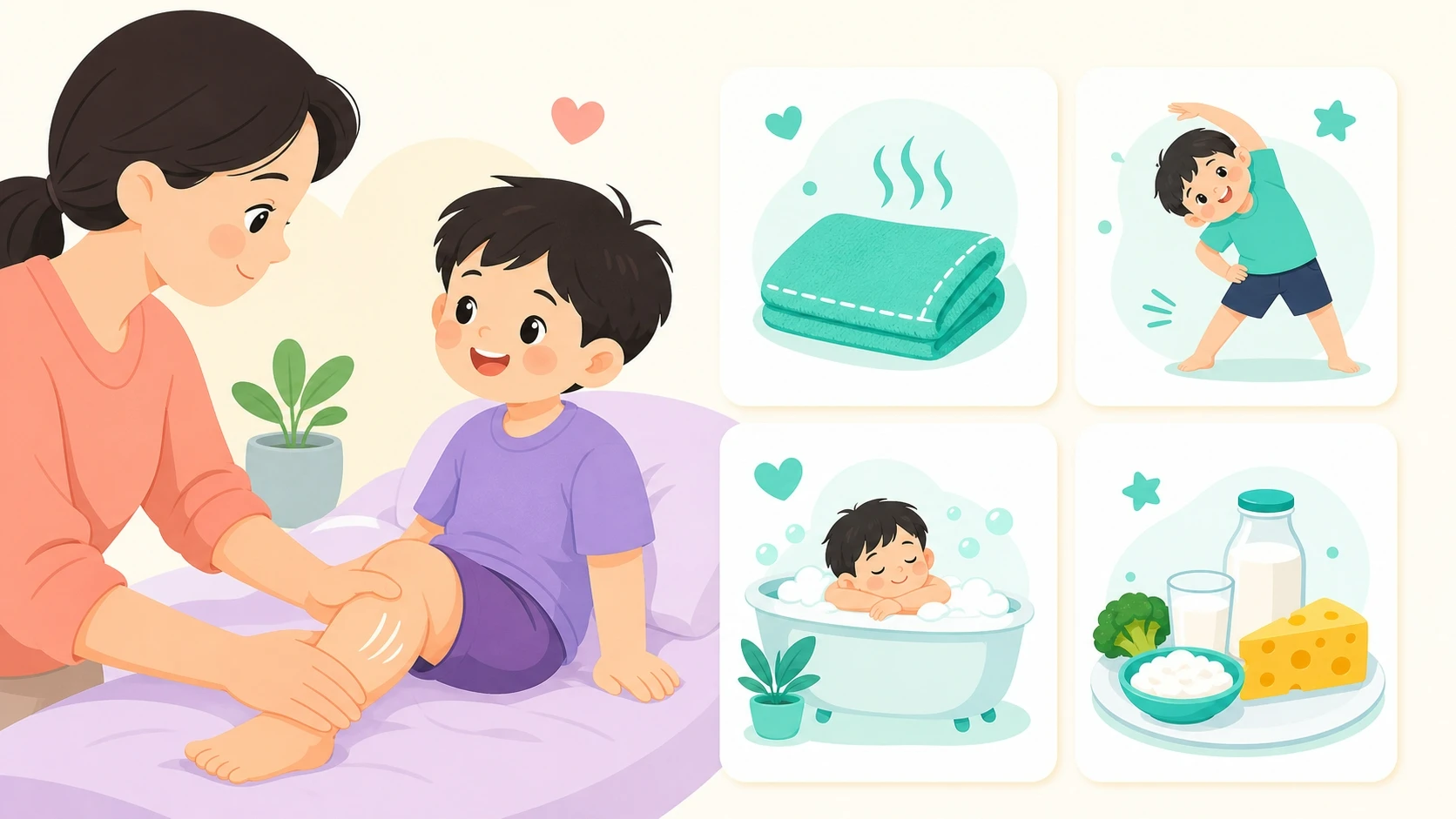
Most children find meaningful relief from growing pains at night through simple measures at home. The following approaches are supported by both clinical observation and common sense.
- Warm massage. Apply a warm towel or heating pad to the affected area and gently massage the muscle. Heat increases circulation and reduces muscle tension — and the physical contact itself has a calming effect that can lower pain perception.
- Stretching before bed. After a warm bath or shower, guide your child through gentle calf and thigh stretches. Avoid forceful stretching if pain is already intense.
- Consistent sleep schedule. Quality sleep supports growth hormone secretion and allows muscles to repair. An irregular schedule can compound fatigue and make nighttime pain more frequent.
- Balanced nutrition. Adequate protein, calcium, and vitamin D support healthy muscle and bone development. Prioritise whole foods — vegetables, dairy or fortified alternatives, and lean proteins — over processed snacks.
- Emotional validation. Instead of dismissing the pain with "you're just growing," try "tell me where it hurts — let me help." Children who feel heard often experience less severe pain.
- Moderate activity levels. If pain is recurring frequently, consider whether daily physical activity is well-balanced with rest. Overly intense training without recovery days can aggravate muscle fatigue.
- Pain relief as a last resort. If pain prevents sleep despite the measures above, age-appropriate acetaminophen or ibuprofen may be considered after consulting a pharmacist or physician. These should not become a routine response.
Warning Signs: When to Seek Professional Help
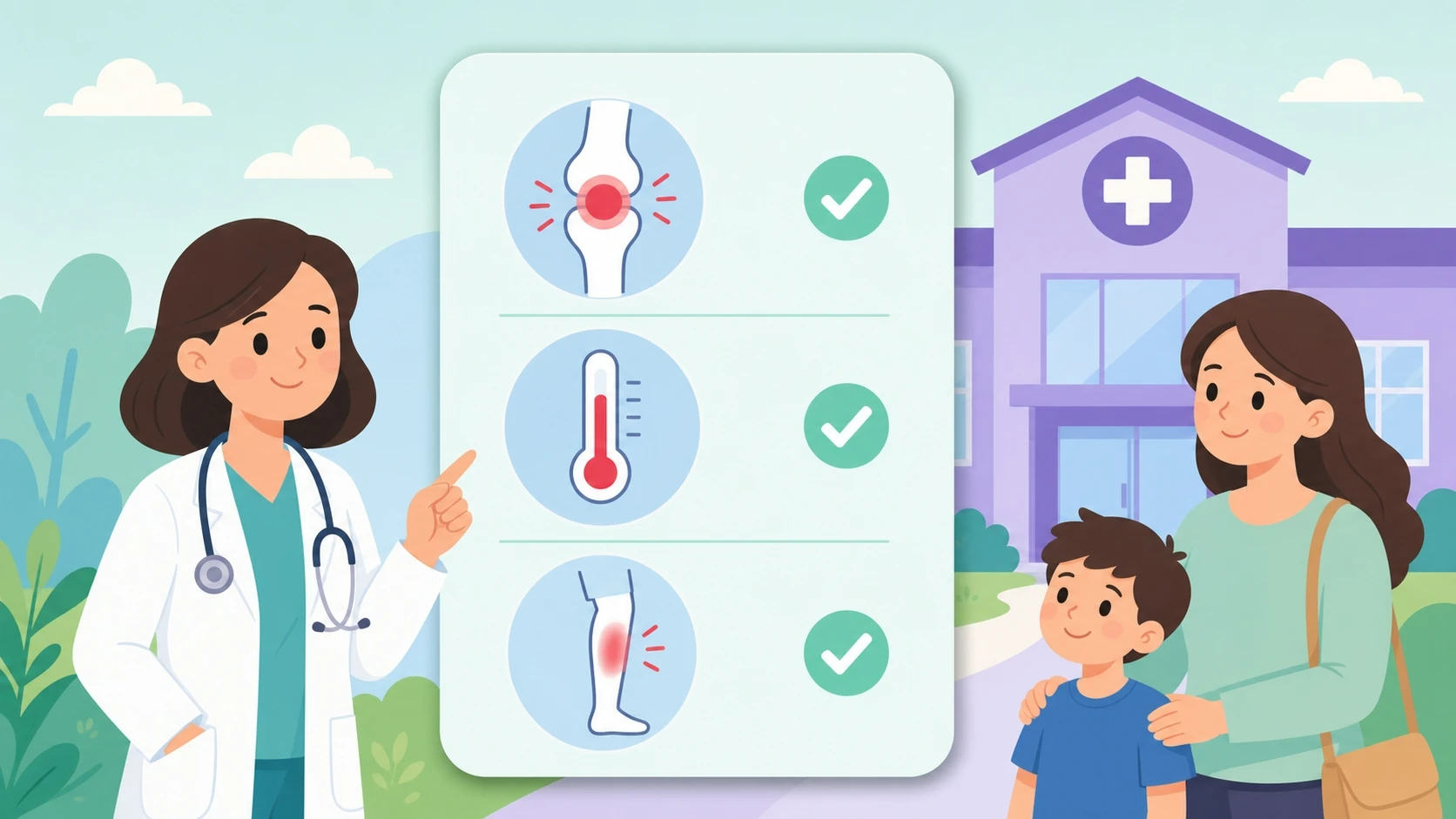
Most cases of growing pains in children resolve on their own without treatment. However, certain signs suggest the pain may not be growing pains at all — and should prompt a visit to a pediatrician or pediatric growth specialist.
- Joint pain: Pain centred on the knee, ankle, or hip rather than in the muscle belly may indicate juvenile arthritis or another joint condition.
- Visible swelling, redness, or warmth: These are signs of inflammation that do not belong to the growing-pains picture.
- Persistent daytime pain: Growing pains rarely interfere with daytime activity. Pain that limits walking, running, or school participation needs evaluation.
- Limping: Any gait disturbance caused by leg pain warrants prompt assessment.
- Pain in only one leg: Classic growing pains are bilateral. Unilateral pain that persists should raise the possibility of a structural or infectious cause.
- Systemic symptoms: Unexplained fever, weight loss, fatigue, or reduced appetite alongside leg pain may signal a more serious underlying condition.
- Pain following an injury: Trauma-related pain should be evaluated for fracture or soft-tissue damage, not attributed to growth.
- No response to home care: If massage, warmth, and rest consistently fail to provide relief, or if pain is intensifying over weeks, professional assessment is appropriate.
A pediatric growth specialist can assess not only your child's height trajectory but also the broader health context of their development, providing reassurance or an early diagnosis when it matters most.
FAQ
Are growing pains a reliable sign that my child is getting taller?
Not directly. Growing pains in children occur during the growth years, but there is no scientific evidence that the pain is caused by bones lengthening. The most likely cause is muscle fatigue from active play, combined with the physical strain of soft tissue adapting to a rapidly growing skeleton. Think of growing pains as a coincidental companion to growth, not a measurement of it.
How can I tell the difference between growing pains and something more serious like joint pain?
Growing pains vs joint pain in children can usually be distinguished by location, timing, and associated symptoms. Growing pains are felt deep in leg muscles (not at joints), appear mostly at night, cause no swelling or redness, and do not affect daytime walking. Joint pain tends to be localised to a specific joint, may persist through the day, and is often accompanied by visible swelling or warmth. If you observe any of these red-flag differences, consult a pediatrician.
What helps growing pains at night in children when they wake up crying?
The most effective immediate steps are warm massage and gentle heat applied to the aching muscle, followed by slow, gentle stretching if the child can tolerate it. Emotional reassurance — letting your child know you take the pain seriously and are there to help — has a measurable calming effect that reduces perceived pain. Establishing a bedtime routine that includes a warm bath and light stretching can help prevent episodes from occurring in the first place.