Why Diet Is One of the Biggest Levers for Height
A well-designed diet plan to help your child grow taller can make a meaningful difference in how close a child gets to their genetic ceiling. Genetics sets the upper boundary, but research consistently shows that nutrition accounts for roughly 20–40 % of the variation in height that genetics alone cannot explain. In practice, what your child eats every day shapes how efficiently their growth plates function, how much growth hormone their body releases, and how well their bones mineralize during the years they cannot get back.
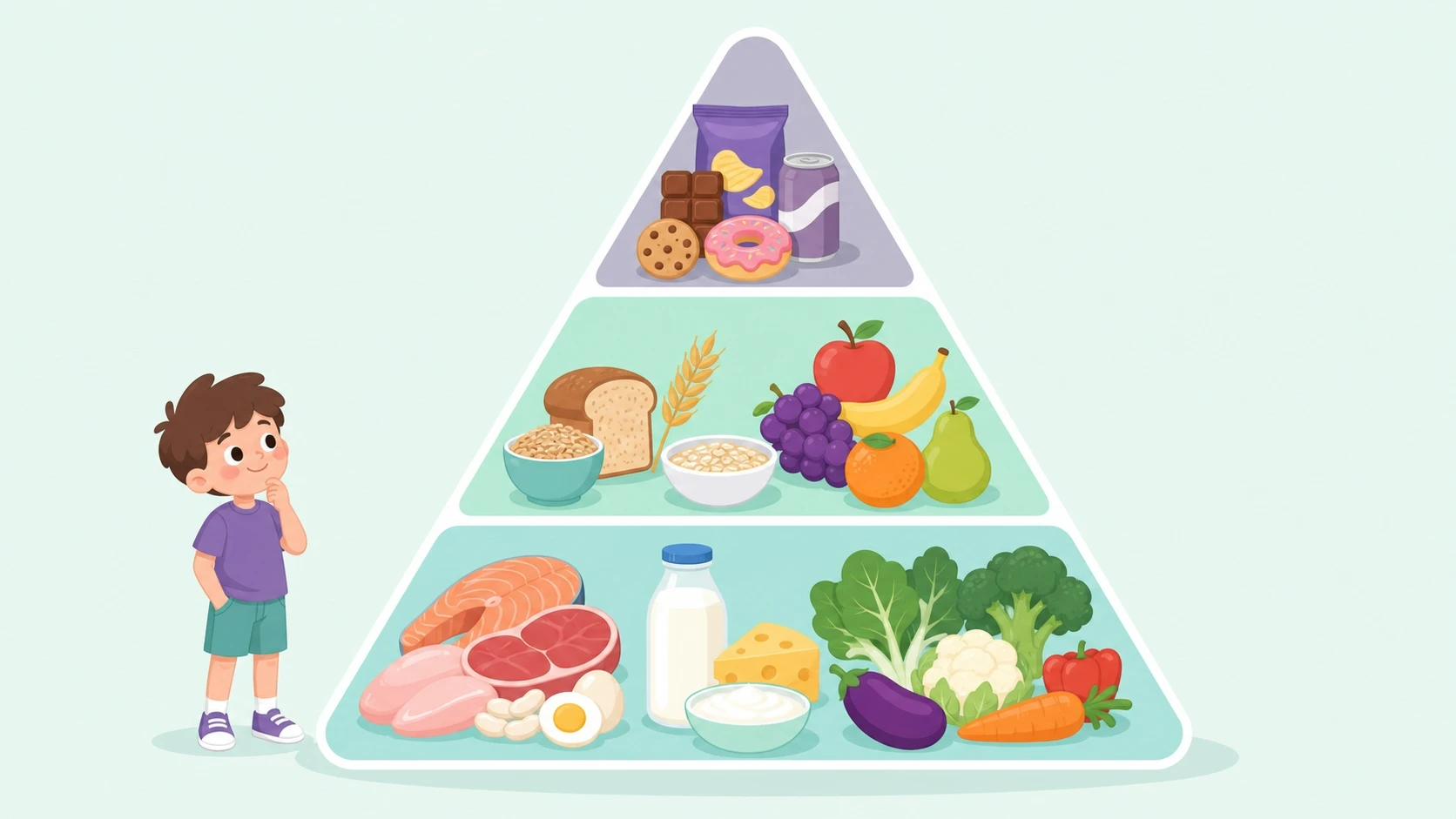
As a pediatric growth specialist, I think of a child's height growth nutrition plan as a pyramid: the wide base is made up of nutrients that must be eaten in abundance every single day, while the narrow top holds the foods to minimize as much as possible. This article walks through both ends of that pyramid with concrete, actionable guidance.
The Foundation: Key Nutrients for a Height Growth Nutrition Plan

When thinking about what to eat to grow taller as a child, these seven nutrient groups form the non-negotiable base of every meal plan.
- Protein — the raw material for cells, muscle, and bone tissue. Adequate high-quality protein also supports smooth growth-hormone secretion. Lean meats, fish, eggs, dairy, tofu, and legumes should appear at every main meal. Balance animal and plant sources for the broadest amino-acid profile.
- Calcium and Vitamin D — calcium builds bone density while Vitamin D acts as the gatekeeper that determines how much calcium actually reaches the skeleton. Dairy, small dried fish, leafy greens (spinach, kale), fatty fish (salmon, mackerel), and mushrooms cover both bases well.
- Zinc — promotes growth-hormone secretion and drives healthy cell division. Deficiency can measurably slow linear growth. Oysters, beef, pork, legumes, and nuts are the richest sources.
- Iron — delivers oxygen to growing tissues. Iron-deficiency anemia causes fatigue, reduced concentration, and growth faltering. Red meat, liver, spinach, and lentils supply iron well; pairing them with Vitamin C boosts absorption significantly.
- Vitamins A, B-complex, C, and K, plus magnesium and phosphorus — collectively fine-tune bone formation, collagen synthesis, and nutrient co-transport. Eating a rainbow of vegetables and fruit daily is the most practical way to cover this group.
- Complex carbohydrates — steady fuel for active, growing bodies. Choose whole grains, brown rice, oats, and sweet potato over refined options to keep blood sugar stable and energy consistent.
- Water — every cellular and transport process depends on adequate hydration. Growing children should aim for 6–8 cups daily.
Foods That Stunt Growth in Children: The Top of the Pyramid

Understanding foods that stunt growth in children is just as important as knowing what to add. The narrow peak of the dietary pyramid is reserved for items that actively interfere with your child's growth machinery.
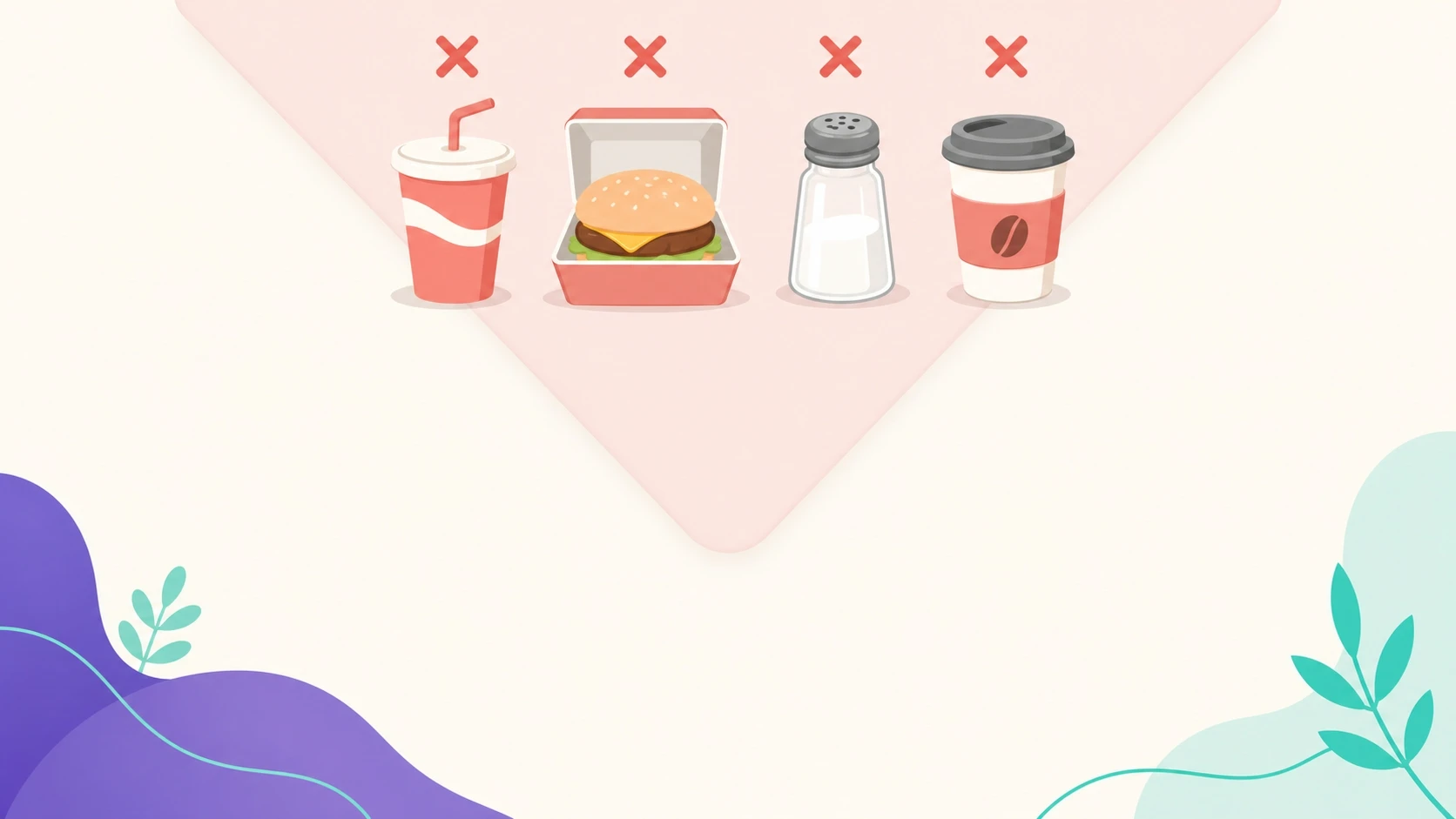
- High-sugar foods and sweet drinks — a rapid spike in blood sugar triggers a surge of insulin that temporarily suppresses growth-hormone release. Over time, excess sugar promotes weight gain, which raises the risk of early puberty and premature growth-plate closure. Sodas, fruit-flavored juices, candy, and packaged pastries are the main culprits.
- Ultra-processed and fast food — burgers, fried chicken, instant noodles, and pizza are dense in sodium, saturated fat, and trans fat while providing almost none of the micronutrients needed for skeletal development. Frequent consumption crowds out the nutritious meals that drive height growth.
- Excess salt — high sodium intake forces the kidneys to excrete more calcium in the urine, directly undermining the bone-building process. Processed snacks, instant soups, and heavily seasoned dishes are the biggest sodium traps.
- Caffeine — found not only in coffee and energy drinks but also in colas and chocolate. Even modest caffeine intake can disrupt deep sleep (when growth hormone peaks) and interfere with calcium absorption. Children should avoid caffeine-containing products whenever possible.
Building a Practical Daily Meal Plan for Height Growth
Translating these principles into a real height growth nutrition plan kids can follow every day does not require exotic ingredients. The goal is consistency and variety over perfection.
Breakfast anchors the day with protein and calcium: eggs with whole-grain toast, a glass of milk or a yogurt cup, and a piece of fruit. Lunch should include a lean protein (fish, chicken, or legumes), a large portion of vegetables in at least two colors, and a serving of complex carbohydrate such as brown rice or whole-wheat bread. Dinner mirrors lunch in structure but can be slightly lighter, prioritizing calcium-rich foods like dairy or small fish as the meal closest to sleep, where growth-hormone release is highest.
Snacks between meals are an easy opportunity to sneak in nutrients: a handful of nuts, a slice of cheese, fresh fruit, or a small yogurt are all excellent choices. Replace vending-machine habits with these portable options gradually rather than all at once — small sustainable changes outlast dramatic overhauls.
One practical household rule that pays outsized dividends: eat meals at the table without screens. Distracted eating leads to both overconsumption and under-tasting, making it harder for children to tune into hunger and fullness cues and to enjoy variety.
Six Habits That Make the Nutrition Plan Actually Work

Even the most carefully designed diet plan stalls if daily habits undermine it. These six reinforcing behaviors help a diet plan to help your child grow taller deliver consistent results over months and years.
- Eat at regular times. Consistent meal timing stabilizes circadian rhythms, which influences when the body allocates resources to growth versus other processes.
- Reduce selective eating gradually. For every disliked vegetable, try a different preparation — roasted, blended into sauces, or paired with a favorite dip — rather than removing it from the menu entirely.
- Choose nutrient-dense snacks by default. Keeping fruit, yogurt, cheese, and nuts visible and accessible makes healthy choices the path of least resistance.
- Make mealtimes enjoyable, not stressful. Pressure to finish plates increases food aversion over time. A relaxed, social table setting improves both appetite and dietary variety.
- Limit screen time at the table. Screens reduce meal awareness, making it easier to overeat low-quality foods without noticing the nutritional trade-off.
- Hydrate consistently throughout the day. Keep a water bottle within reach; the habit of sipping steadily is more effective than trying to catch up in one sitting.
When Diet Alone Is Not Enough

Nutrition is a powerful tool, but it is not the only factor that determines a child's final height. If you have been following a thoughtful diet plan to help your child grow taller for several months and still notice that your child is consistently shorter than peers their age, falling below the 3rd percentile on a standard growth chart, or growing less than 4–5 cm per year during their primary-school years, it may be time to look beyond diet alone.
A pediatric growth specialist can evaluate bone age through a simple X-ray of the wrist, assess whether growth-hormone output is adequate, and check for underlying conditions — such as thyroid dysfunction, food-absorption issues, or early puberty signs — that limit what any nutrition plan can achieve on its own. Early evaluation widens the window of available options and avoids the regret of waiting too long.
The goal of a height growth nutrition plan is not perfection at every meal but a consistent foundation of growth-supporting habits that accumulates quietly, year after year, until the growth plates close. Start with one or two changes from this article and build from there.
This article is provided for educational purposes only and does not constitute medical advice. Individual results vary. If you have specific concerns about your child's growth, consult a qualified healthcare professional.
FAQ
What foods should children eat every day to grow taller?
A daily diet plan to help your child grow taller should center on high-quality protein (eggs, fish, lean meat, dairy, legumes), calcium-rich foods (milk, yogurt, leafy greens), and zinc sources (nuts, beef, seeds). Pair these with a wide variety of colorful vegetables and whole grains to supply the full spectrum of vitamins and minerals that bone growth requires. Consistency across all three meals matters more than any single superfood.
Which foods most stunt growth in children?
The main foods that stunt growth in children are those high in added sugar (sodas, candy, sweetened juices), ultra-processed fast food (instant noodles, fried snacks, packaged pastries), and high-sodium items (processed meats, salty chips, instant soups). These foods disrupt insulin and growth-hormone balance, promote early weight gain linked to earlier puberty, and crowd out the nutritious meals a growing skeleton actually needs.
How long does it take for diet changes to affect a child's height?
Height is a slow, cumulative outcome, so do not expect measurable changes in weeks. A well-structured height growth nutrition plan for kids typically takes 6–12 months of consistent implementation before a difference in growth velocity becomes visible on a standard growth chart. The younger the child when changes begin, the longer the runway of growth remaining — making early, sustained dietary improvement the highest-value investment parents can make.
References
- Effect of Nutrition on Statural Growth
. Hormone research in paediatrics. 2018. PubMed · DOI
- Effects of Dairy Product Consumption on Height and Bone Mineral Content in Children: A Systematic Review of Controlled Trials. Advances in nutrition (Bethesda, Md.). 2020. PubMed · DOI
- Milk and dairy consumption is positively associated with height in adolescents: results from the Israeli National Youth Health and Nutrition Survey. European journal of nutrition. 2022. PubMed · DOI
- Association between noncow milk beverage consumption and childhood height. The American journal of clinical nutrition. 2017. PubMed · DOI
- Effects of Milk and Milk-Product Consumption on Growth among Children and Adolescents Aged 6-18 Years: A Meta-Analysis of Randomized Controlled Trials. Advances in nutrition (Bethesda, Md.). 2020. PubMed · DOI