Why Sleep Is the Golden Time for Height Growth

Building your child's sleep routine is the starting point of height growth management. A significant portion of the daily secretion of growth hormone is released all at once during the deep sleep (slow-wave sleep) stage, within one to two hours after falling asleep. Simply sleeping for a long time is not enough. A regular sleep routine—going to bed and waking up at the same time every day—stabilizes the very rhythm of growth hormone secretion. Irregular sleep disrupts this rhythm, resulting in less growth hormone being released even for the same amount of sleep. Since sleep is also directly linked to strengthening immunity and brain development, it is the most cost-effective way to raise your child's overall growth potential.
Resetting the Biological Clock with Morning Sunlight

Among the ways to reset the biological clock, the most powerful one—and one that costs absolutely nothing—is morning sunlight. The moment your child opens their eyes and you throw open the curtains, the brain receives the signal that 'the day has begun,' immediately suppressing the sleep hormone melatonin and boosting the alertness hormone cortisol. This process determines the timing and amount of melatonin secretion that night. In other words, a child who has properly received morning sunlight can fall asleep faster and more deeply at night. Even on cloudy days, natural light by the window is far stronger than indoor lighting, so simply making a habit of opening the curtains can produce results. Make basking in the sunlight by the window for 10 to 15 minutes after waking the fixed first step of the morning routine.
The 4-Step Evening Bedtime Routine for Growth
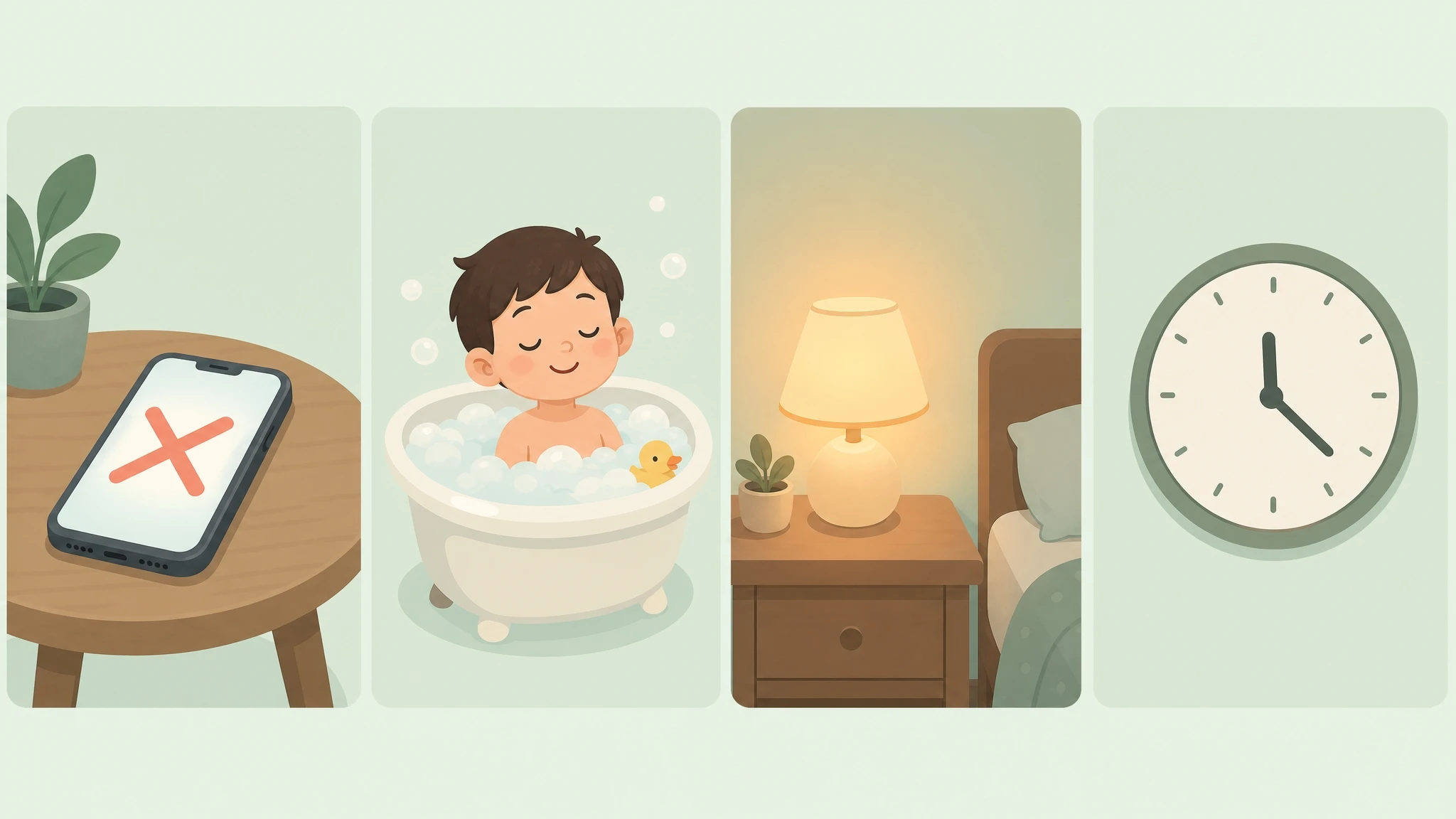
The growth benefit of a bedtime routine is determined in the one to two hours of preparation before lying down. If you repeat the following four steps in the same order every day, the brain learns that 'it is now time to sleep.'
- Block Devices (60 minutes before bed): The blue light from smartphones, tablets, and TVs suppresses melatonin secretion. Turn off all screens one hour before bed and switch to calm activities such as reading or drawing.
- A Warm Bath (60–90 minutes before bed): After warming the body with warm water, the natural drop in body temperature that follows induces drowsiness. If a full bath is difficult, a foot bath alone can produce a similar effect.
- Dim the Lights (30 minutes before bed): Dim the room's lighting or switch to warm-toned indirect lighting. Strong white light interferes with melatonin production.
- Keep a Consistent Bedtime: Lying down at the same time regardless of weekday or weekend is the key to resetting the biological clock. The first two weeks are the hardest, but after that the child begins to feel drowsy on their own.
The Sleep Environment: Conditions That Maximize Growth Hormone
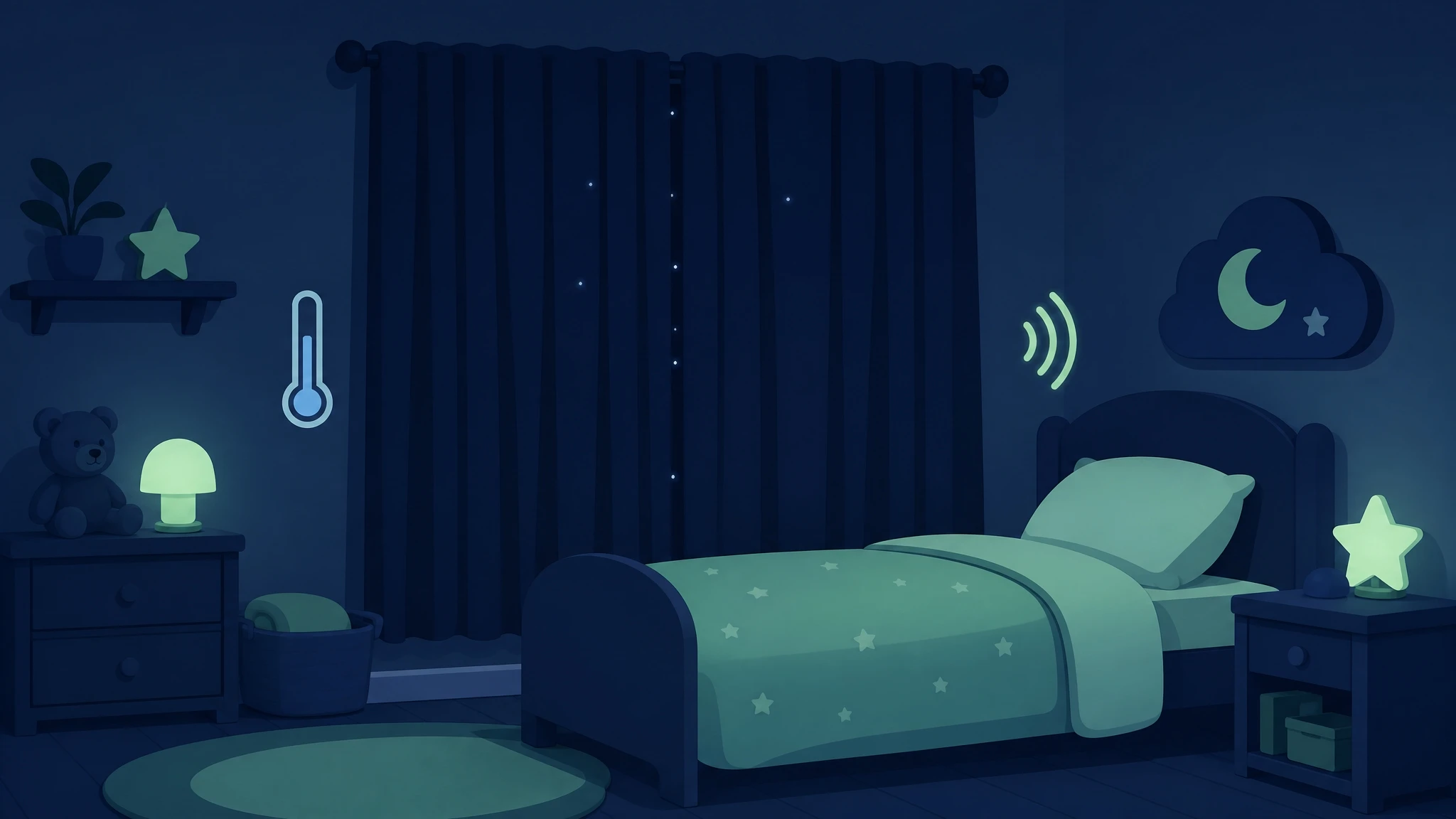
Without the right sleep environment, building a sleep routine is only half complete. Meeting three environmental conditions optimizes the conditions for growth hormone secretion.
- Complete Darkness: Light interferes with melatonin secretion even during sleep. Use blackout curtains or a sleep mask. It is best to turn off even a small night light if possible.
- A Comfortable Room Temperature (18–22°C): An environment where the body temperature drops slightly induces deep sleep. Adjust the temperature with a fan or air conditioner in summer, and by layering several thin blankets in winter.
- Blocking Out Noise: If the environment has severe external noise, a white noise app or noise-blocking earplugs can help. A consistent background sound is actually known to help maintain sleep.
The Morning Wake-Up Routine: A Fresh Start Makes That Night's Sleep
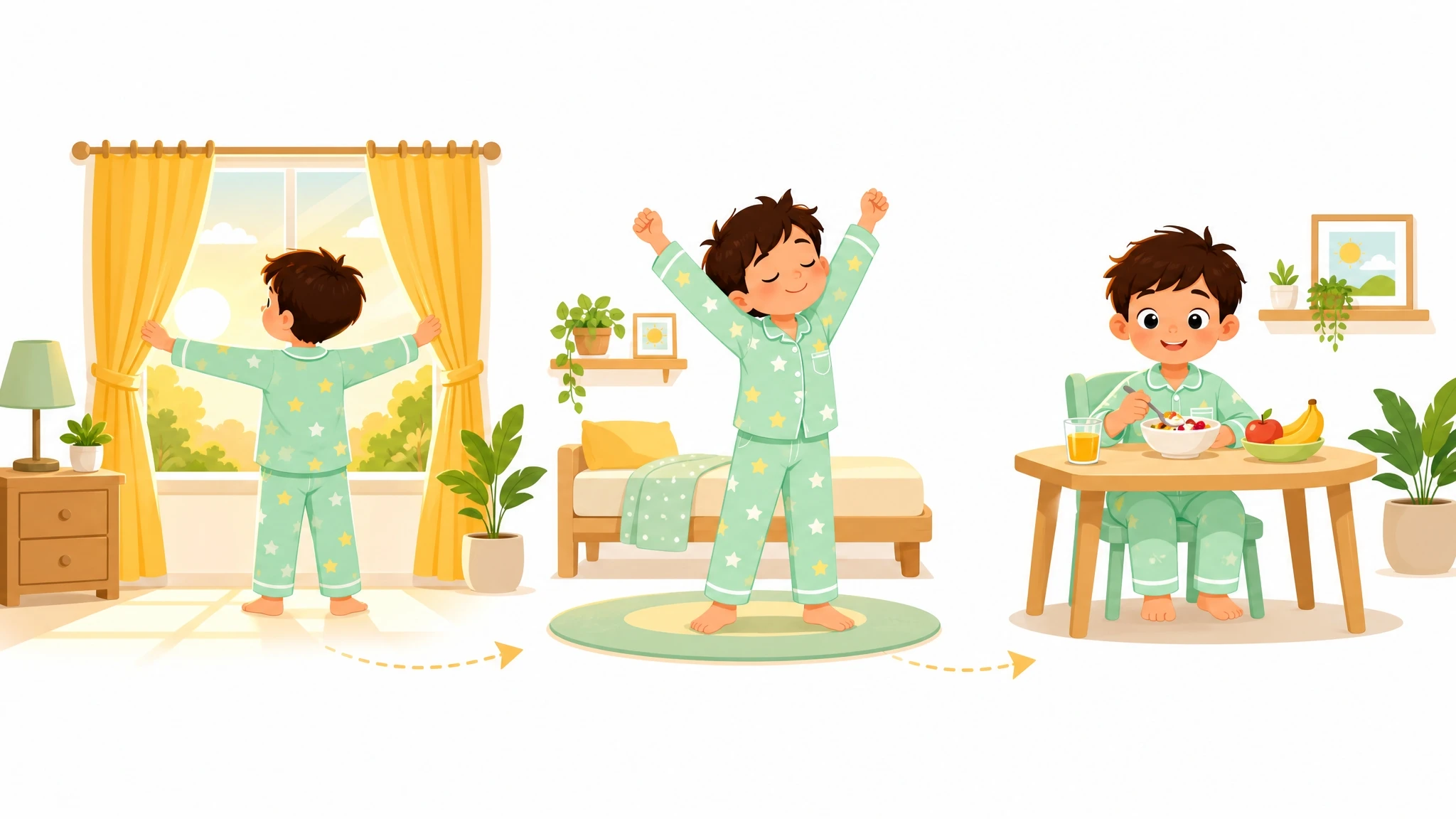
In building your child's sleep routine, morning wake-up habits are as important as nighttime sleep. To maintain a regular sleep routine for height growth, the wake-up time must also be fixed. Waking up more than two hours late on weekends causes 'social jet lag,' throwing off the biological clock on Monday morning. After waking up, follow this order.
- Open the curtains → 10 minutes of sunlight by the window
- Light full-body stretching (5 minutes): Aids blood circulation and wakes up the spine.
- Breakfast within one hour of waking: Kick-starts the metabolism and supplies energy for daytime activity.
If you practice these three steps in the same order every day, your child's brain learns that 'the morning routine = entering daytime mode,' and a cycle of naturally feeling drowsy in the evening is formed.
Why You Must Keep It Even on Weekends — Consistency Is Key
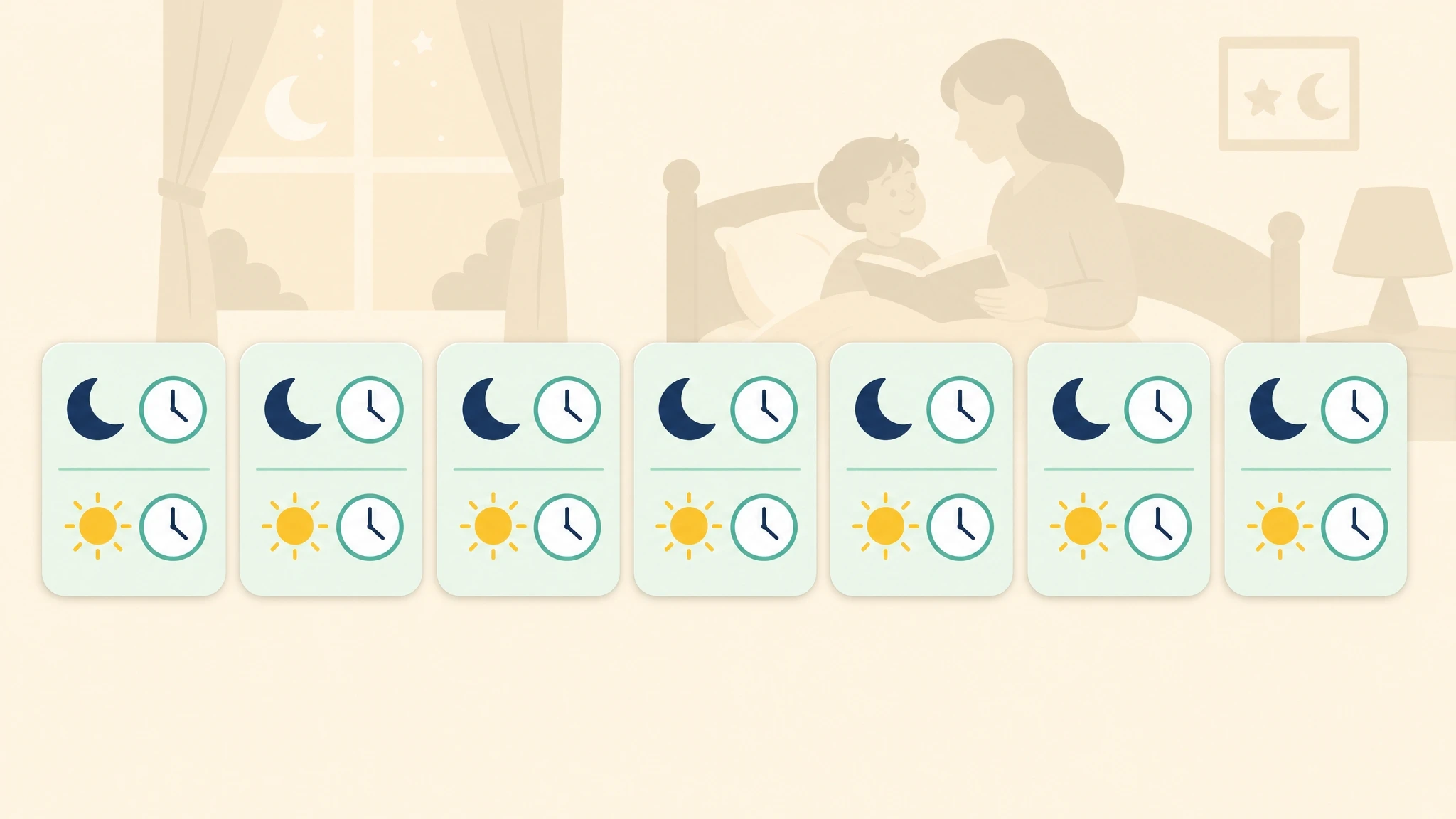
Among the ways to reset the biological clock, the point that breaks down most often is the weekend. Even if you keep the bedtime routine perfectly on weekdays, sleeping in two to three hours on the weekend throws the biological clock off again. According to research, when the weekend sleep pattern differs from weekdays by more than 90 minutes, the rhythm of growth hormone secretion is disrupted along with it. At first the child may resist, but if you maintain it consistently for three to four weeks, sleep pressure forms in which they feel drowsy at the set time on their own. The most effective approach for forming your child's habits is for the parent to set an example by practicing the same routine first. Using a small reward system (such as a sticker chart) can help reduce the initial reluctance.
Signs That Professional Help Is Needed After the Routine Is Established
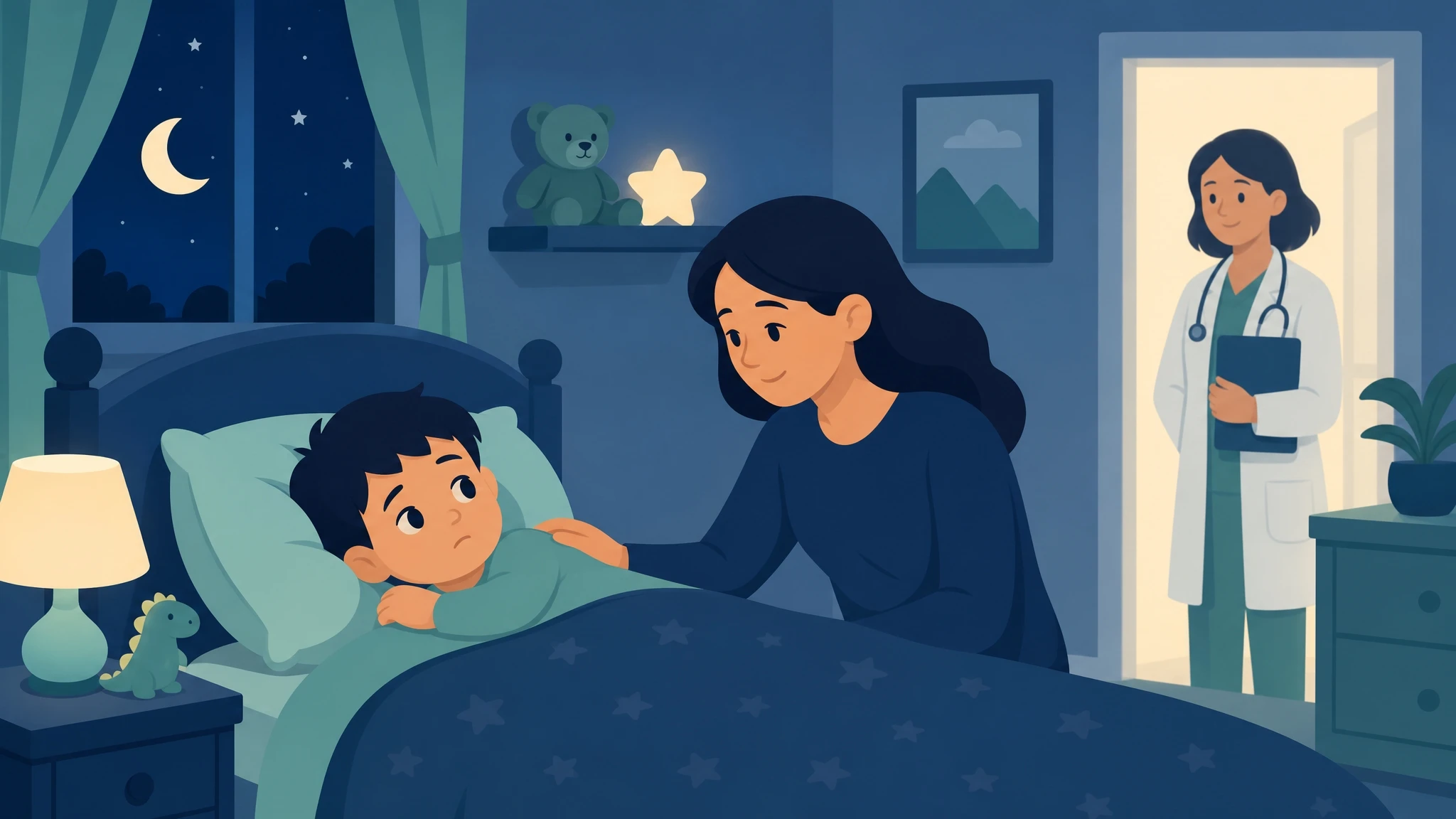
If, even after consistently practicing your child's sleep routine for more than four weeks, your child still takes more than an hour to fall asleep, wakes up frequently during the night, or is extremely drowsy during the day no matter how much they sleep, you may need to suspect a sleep disorder or another growth-related factor. Particular caution is needed if snoring or sleep apnea is present. This is because if the quality of sleep remains low for a long time, the height growth benefit of regular sleep is also cut in half. In such cases, it can be helpful to consult a pediatric growth specialist to check whether the sleep problem is linked to growth delay.
FAQ
What is the connection between circadian rhythm and child growth?
The circadian rhythm controls when growth hormone is released. The largest burst of growth hormone occurs during the first deep-sleep cycle of the night, so a well-calibrated body clock — anchored by consistent bedtimes and morning light — ensures this release happens at full intensity rather than being blunted by a disrupted schedule.
How does morning light help children grow taller?
Natural light in the morning resets the brain's internal clock, suppresses morning melatonin, and starts a countdown that allows melatonin to rise again at the correct time in the evening. This precise timing brings the child into deep sleep earlier in the night, when growth hormone secretion is at its peak.
Does sleeping in on weekends hurt a child's growth routine?
Consistently sleeping in by more than an hour on weekends shifts the body clock later — a pattern researchers call social jet lag. This delays the onset of deep sleep on school nights, which can compress the growth hormone window. Keeping weekend wake times within 30 to 60 minutes of the weekday schedule preserves the routine's benefits.
References
- Complex relationship between growth hormone and sleep in children: insights, discrepancies, and implications. Frontiers in endocrinology. 2024. PubMed · DOI
- Overnight growth hormone secretion in short children: independence of the sleep pattern. The Journal of clinical endocrinology and metabolism. 1994. PubMed · DOI
- Morning vs. evening growth hormone injections and their impact on sleep-wake patterns and daytime alertness. Frontiers in endocrinology. 2025. PubMed · DOI
- Growth hormone release during sleep in growth-retarded children with normal response to pharmacological tests. Archives of disease in childhood. 1978. PubMed · DOI
- Growth hormone secretory patterns in children with short stature. The Journal of pediatrics. 1987. PubMed · DOI