Eating well and absorbing well are two different things

Before searching for the reasons why your child eats well but does not grow taller, there is one misconception we must first clear up. Eating a lot and having nutrients absorbed well into the body are entirely different matters. When a child eats meals well, enjoys meat, and even eats vegetables readily yet is still shorter than peers, many parents become bewildered. They worry, "What could be lacking?" but in fact, the problem often lies in 'absorption efficiency' rather than in the 'amount eaten.'
If the digestive organs cannot properly draw the ingested nutrients into the bloodstream, then no matter how good the food is, it cannot be utilized for growth. If you are a parent of a child who eats but does not grow, examining step by step what obstacles exist in this absorption process should come first.
Gut health issues — the first gateway of absorption
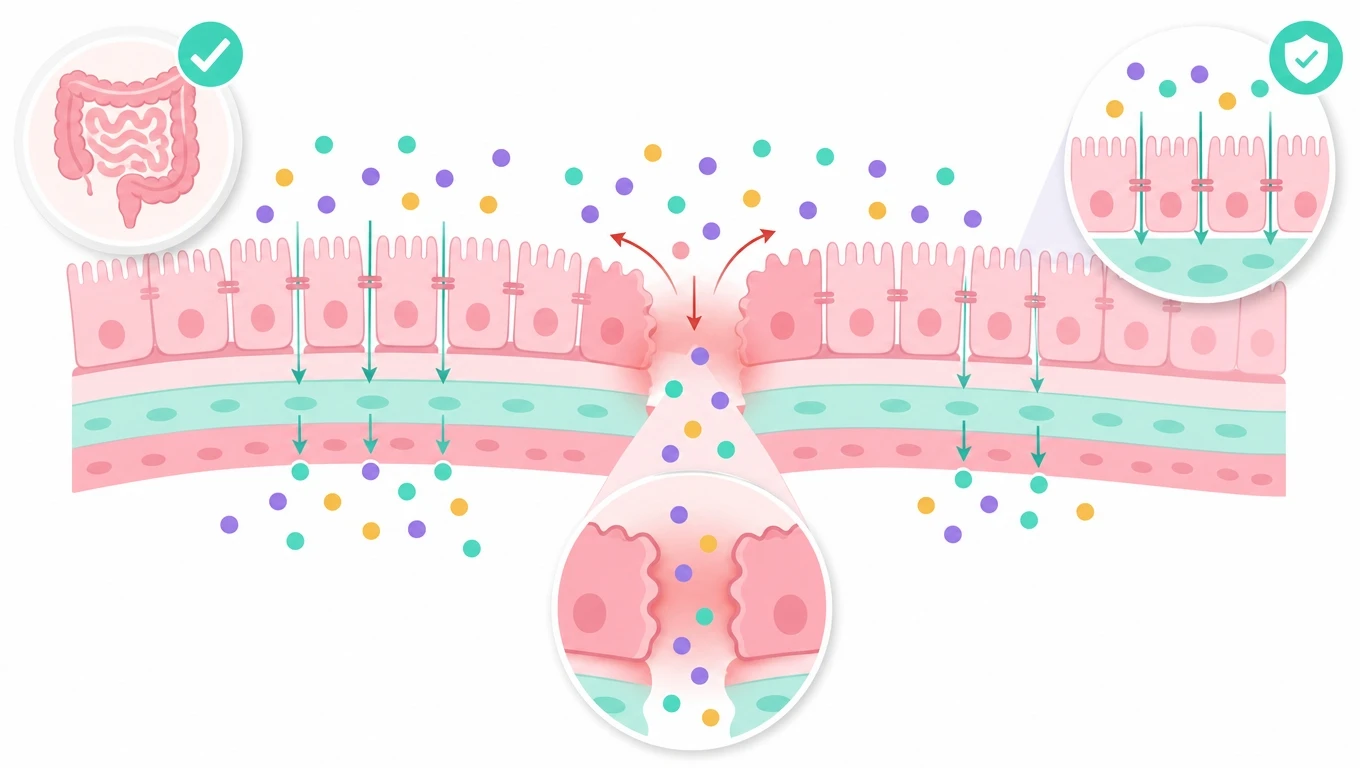
The most common cause in children with nutrient absorption problems is diminished intestinal mucosal function. A child who frequently has an upset stomach, alternates between constipation and diarrhea, and often complains of abdominal pain may have a damaged intestinal mucosa. The intestinal mucosa must be healthy for nutrients in food to pass into the bloodstream, but when this gateway weakens, nutrients pass right through, and instead toxins or microorganisms more easily penetrate the body.
When there is chronic intestinal inflammation, the body ends up pouring the energy that should be used for growth into fighting the inflammation. Irritable bowel syndrome and leaky gut syndrome are not uncommon even in children, so it is important to consistently observe the state of your child's gut health.
Food allergies and intolerances — the hidden saboteurs

In examining the causes of stunted height, food allergies and intolerances are items that must not be left out. Representative examples include lactose intolerance, in which the child cannot digest the lactose in milk, and celiac disease, in which the child reacts hypersensitively to gluten in flour. Every time these children eat the relevant food, a repeated inflammatory reaction occurs in the intestines, and as a result, the absorption of other nutrients is also hindered.
The problem arises when symptoms are not obvious. Even without severe diarrhea or hives, there are many cases involving only chronic, mild abdominal discomfort. If your child feels more fatigued or their condition worsens after eating a particular food, it can be helpful to identify the culprit food through a food allergy test.
Chronic illness and medication use — factors that steal energy away

In a child suffering from a chronic inflammatory disease such as atopic dermatitis, asthma, or allergic rhinitis, the energy needed for growth is spent on the ongoing immune response. Because the body is constantly in a state of fighting inflammation, the resources it can allocate to growth are reduced. On top of this, when a child takes a particular medication over a long period, medication side effects can further diminish nutrient absorption function.
If a child who eats but does not grow has a chronic allergic disease, it is more effective to approach the growth problem and allergy management in an integrated way rather than viewing them separately. When allergy treatment goes well, there is a greater likelihood of reclaiming growth energy.
Essential nutrient deficiency — quality matters more than quantity

No matter how much a child eats, if key growth nutrients such as calcium, vitamin D, zinc, and iron are lacking, height growth slows. Vitamin D plays a role in helping calcium actually deposit into the bones, while zinc is directly involved in growth hormone secretion and immune function. These nutrients are only properly absorbed when certain conditions are met.
For example, calcium's absorption rate drops significantly without vitamin D, and iron must be consumed together with vitamin C for its absorption efficiency to increase. When examining a child with nutrient absorption problems, one must go beyond simply 'whether they ate' to check 'in what combination and under what conditions they ate.' Confirming actual blood concentrations through a blood test is the most accurate approach.
Lack of sleep and stress — enemies of growth hormone

Among the reasons a child eats well but does not grow taller, lifestyle factors are by no means minor. Growth hormone is secreted intensively when a child is in deep sleep. If sleep is insufficient or sleep quality is poor, growth hormone is not released adequately, so even if nutrients are consumed in abundance, they cannot be used for growth.
Stress is the same. A child under considerable stress from schoolwork or peer relationships experiences elevated cortisol levels, which suppresses growth hormone secretion. This is why, when examining the causes of stunted height, it is important to look not only at diet but also at sleep duration, bedtime routines, and the child's psychological state together.
When and how can you receive professional help

Examining the above factors on your own is the first step, but when the causes are complex, a professional evaluation is far more accurate. By confirming growth potential through a bone age (skeletal age) test and analyzing nutritional status and hormone levels through a blood test, the reasons why a child eats well but does not grow taller can be revealed more concretely.
At a clinic specializing in pediatric growth, we comprehensively assess eating habits, sleep patterns, gut health, allergy history, and more, and then propose a management direction tailored to each individual child. Please remember that accurate identification of the cause should come before vague worry. For a child who eats but does not grow, change often appears when the approach is oriented toward improving absorption efficiency.
FAQ
My child has a great appetite but is in the bottom 5th percentile for height. Should I be worried?
A healthy appetite is reassuring, but height percentile and appetite do not always move together. If your child has consistently eaten well and still sits in the lowest height percentiles — especially if they have dropped percentile lines over time rather than simply tracking at a low level — that pattern warrants evaluation by a pediatric growth specialist. The cause could be impaired nutrient absorption, a micronutrient deficiency, chronic low-grade inflammation, or another underlying factor that a standard diet alone cannot correct.
Could a food intolerance really affect my child's height?
Yes, it can. Food intolerances such as lactose intolerance or non-celiac gluten sensitivity trigger recurring gut inflammation each time the offending food is consumed. Over months and years, that chronic intestinal irritation damages the intestinal lining, reducing the efficiency with which all nutrients — not just those in the trigger food — are absorbed. Children with unrecognized food intolerances often show otherwise unexplained growth faltering alongside intermittent digestive symptoms.
Is there a specific age at which nutrition absorption problems have the greatest impact on final height?
The impact is significant throughout childhood, but the consequences are most pronounced during the two major growth windows: early childhood (roughly ages two to five) and the pre-pubertal growth spurt (typically ages eight to twelve for girls and nine to thirteen for boys). Absorption problems during these windows reduce the raw material available precisely when the body is trying to grow fastest. Identifying and correcting them before growth plates begin to close tends to yield the most meaningful gains in eventual adult height.
References
- Parental stress and growth outcome in growth-deficient children. Pediatrics. 1995. PubMed · DOI
- Effect of Nutrition on Statural Growth
. Hormone research in paediatrics. 2018. PubMed · DOI
- Nutritional Status of Children with Short Stature Is Oppositely Associated with Growth Hormone Peak in Stimulation Tests and Insulin-like Growth Factor-1 Concentration. Journal of clinical medicine. 2026. PubMed
- Most Short Children with Cystic Fibrosis Do Not Catch Up by Adulthood. Nutrients. 2022. PubMed · DOI
- Association between noncow milk beverage consumption and childhood height. The American journal of clinical nutrition. 2017. PubMed · DOI