What Are Bowlegs, and Why Do They Occur?

To understand the relationship between bowleg correction and height growth, you first need to accurately understand what bowlegs are. In medical terms it is called 'genu varum,' and it refers to a leg shape where, when standing with both ankles together, the knees are spread apart, making the legs look like the letter O.
It is physiologically common in infants under the age of two, and in most cases it corrects naturally in the course of growth. This is part of the normal developmental process children go through as they emerge into the outside world after spending time curled up in the womb. However, if the leg bowing worsens even after the age of two, appears in only one leg, or is accompanied by pain, you need to consider pathological causes such as vitamin D deficiency (rickets), Blount's disease, or fracture sequelae. In such cases, an accurate diagnosis by a specialist is important.
Does Bowleg Correction Directly Increase Height?
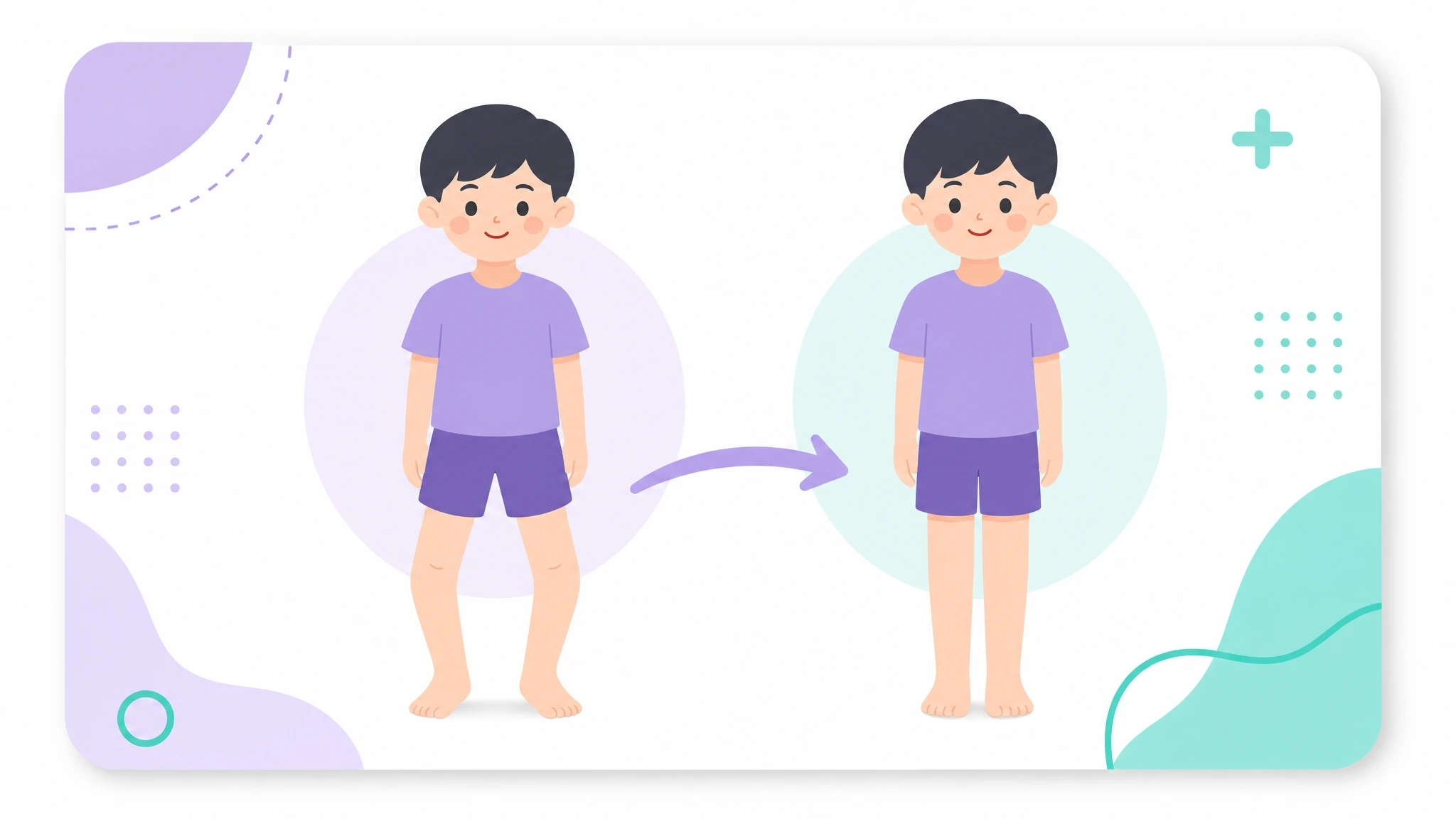
To get straight to the point, the difference in height from bowleg correction does not occur by increasing the length of the bone itself. Many parents hope that 'if the legs become straight, won't the child grow that much taller,' but this is not the case.
A child's height growth occurs through the process of new bone cells being created at the growth plates located at the ends of the bones. Bowleg correction, on the other hand, straightens the direction and alignment of bone that has already formed. In other words, correction does not increase bone length; rather, as the bent legs straighten out, the leg length the child originally had is fully expressed. There is an effect of the legs looking longer visually and body proportions improving, but this must be understood as distinct from actual bone-length growth.
Why Knee Correction Still Improves the Growth Environment
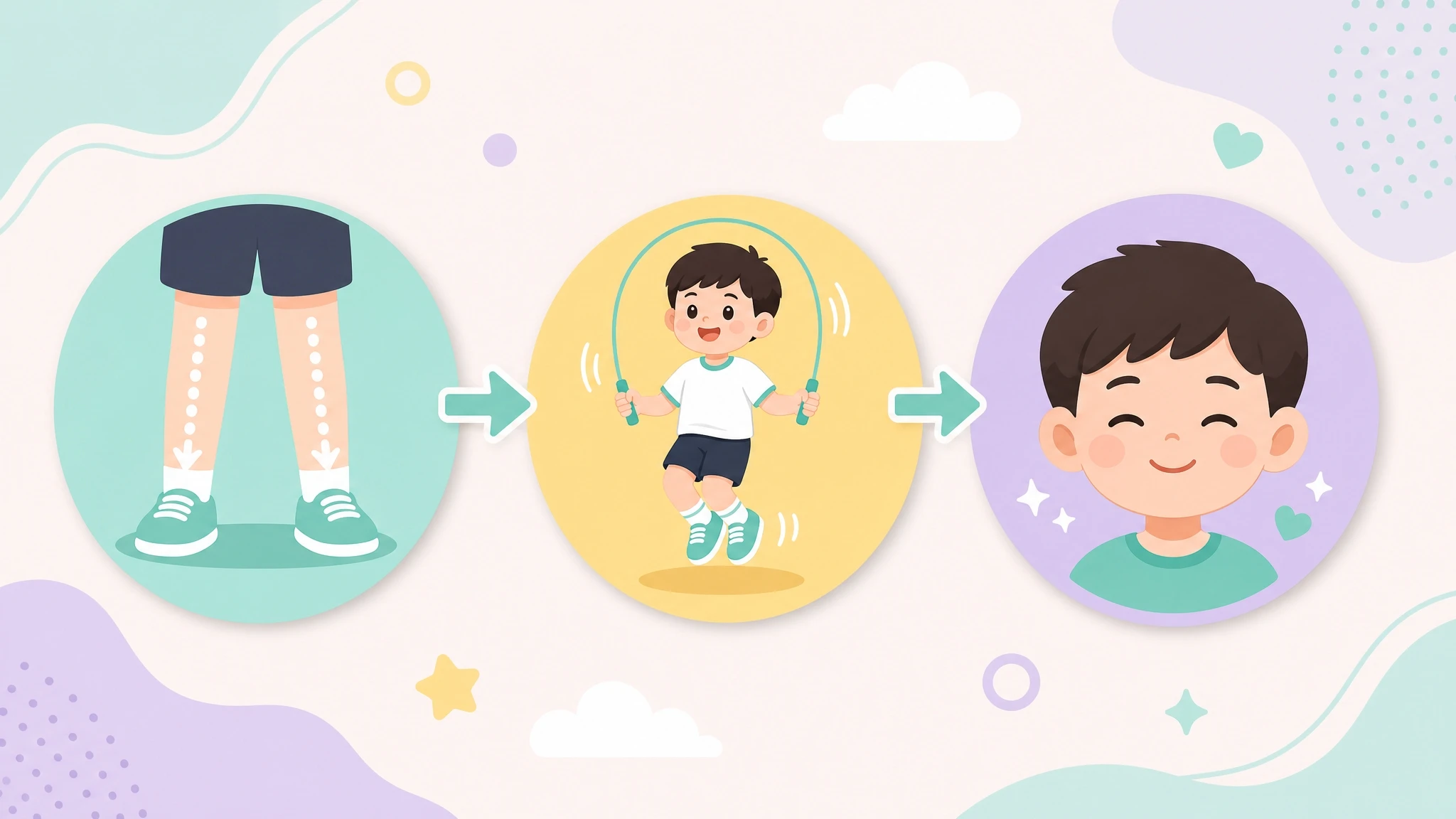
The growth benefit of knee correction clearly exists through indirect pathways. First, there is posture and growth-plate pressure. When leg alignment is off, abnormal load concentrates on the knee joint, which leads to pelvic and spinal imbalance. If even pressure is not applied to the growth plates, it is difficult to draw out 100% of the growth potential. When even stimulation is restored through correction, the growth plates can operate more efficiently.
Second, there is activity level and growth hormone secretion. Severe bowlegs can cause knee pain and fatigue, making a child reluctant to engage in running activities. Exercises that stimulate the growth plates—such as jump rope, running, and basketball—are key factors in promoting growth hormone secretion. When pain decreases after correction, the child moves more actively, and this works positively for growth.
Third, there is emotional stability. For a child at an age sensitive to differences in appearance, a physical complex can be a source of stress. Since the stress hormone (cortisol) suppresses growth hormone secretion, emotional stability also contributes to improving the height growth environment.
Methods and Timing for Correcting Bent Legs
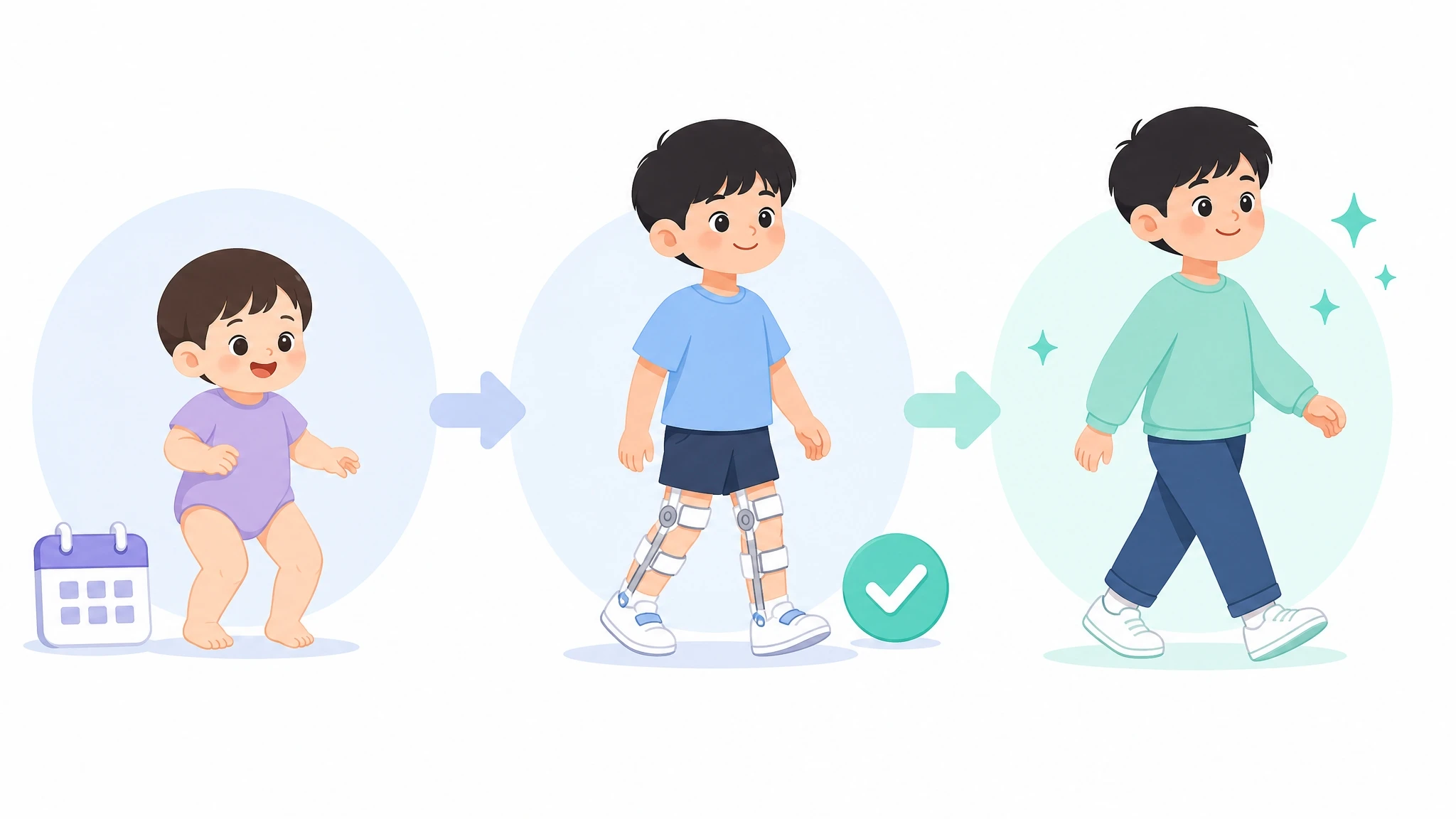
Methods for correcting bent legs vary depending on the cause and severity. In the case of physiological bowlegs before the age of two, regular observation alone is sufficient in most cases. However, professional evaluation and treatment are needed in the following situations.
- When the bowing worsens or does not improve even after the age of two
- When it appears asymmetrically in only one leg
- When the child complains of pain in the leg or knee
- When it is observed together with poor height growth
- When the gait is noticeably abnormal or the child falls frequently
Treatment methods include improving lifestyle habits, corrective exercises, and wearing orthotic devices, and in severe cases surgical correction is also considered. The principle is to comprehensively evaluate the child's growth stage, cause, and severity, and to establish a tailored plan. You can receive professional help at a pediatric orthopedic clinic or a growth specialty clinic.
The Essence of Height Growth: Beyond Bowleg Correction

Bowleg correction is one element in creating a healthy growth environment, but it is not the core determining factor of height growth. To draw out your child's growth potential to the maximum, the following lifestyle habits are far more important.
- Balanced nutrition: Ensure sufficient intake of essential growth nutrients such as protein, calcium, and vitamin D.
- Sufficient and regular sleep: Growth hormone is secreted most vigorously during deep sleep.
- Growth-plate-stimulating exercise: Maintain appropriate physical activity that aids bone growth, such as jump rope, basketball, and swimming.
- Stress management: Emotional stability is directly linked to growth hormone secretion.
- Regular growth check-ups: Periodically check the growth-plate condition, bone age, and hormone levels to detect growth delay early.
A growth specialist comprehensively evaluates not only physical features including bowlegs, but also the overall growth environment such as nutrition, sleep, exercise, and psychology, and proposes a strategy tailored to the child.
FAQ
If my child's bow legs are corrected, will they gain centimeters in height?
Bow leg correction does not directly lengthen bones or add measurable height. What it can do is allow your child to fully express the height their genetics have programmed — by improving posture, enabling more active play, and reducing the kind of chronic stress that suppresses growth hormone. Think of correction as removing a ceiling, not raising the floor.
At what age should I stop waiting and see a doctor about my child's bow legs?
Mild bowing in children under two is almost always physiological and self-correcting. If the bowing persists, worsens, or is asymmetrical after age two — or if it is accompanied by pain, an unusual gait, or slow height gain — it is appropriate to consult a pediatric orthopedic specialist or growth clinic for an evaluation.
Can genu varum affect growth plates and slow height growth?
Severe, untreated genu varum can place uneven mechanical stress on the growth plates near the knees and along the spine. Chronic asymmetric loading may limit optimal growth plate stimulation over time. This is one reason specialists recommend evaluation when bow legs are significant — catching the issue early preserves the best conditions for healthy height development.
References
- Adult height in constitutionally tall stature: accuracy of five different height prediction methods. Archives of disease in childhood. 1993. PubMed · DOI
- Inhibition of estrogen biosynthesis with a potent aromatase inhibitor increases predicted adult height in boys with idiopathic short stature: a randomized controlled trial. The Journal of clinical endocrinology and metabolism. 2006. PubMed · DOI
- Accuracy of final height prediction and effect of growth-reductive therapy in 362 constitutionally tall children. The Journal of clinical endocrinology and metabolism. 1996. PubMed · DOI
- Letrozole Monotherapy in Pre- and Early-Pubertal Boys Does Not Increase Adult Height. Frontiers in endocrinology. 2020. PubMed · DOI
- Final adult height in long-term growth hormone-treated achondroplasia patients. European journal of pediatrics. 2018. PubMed · DOI