Why Parents Worry About ADHD Medication and Height
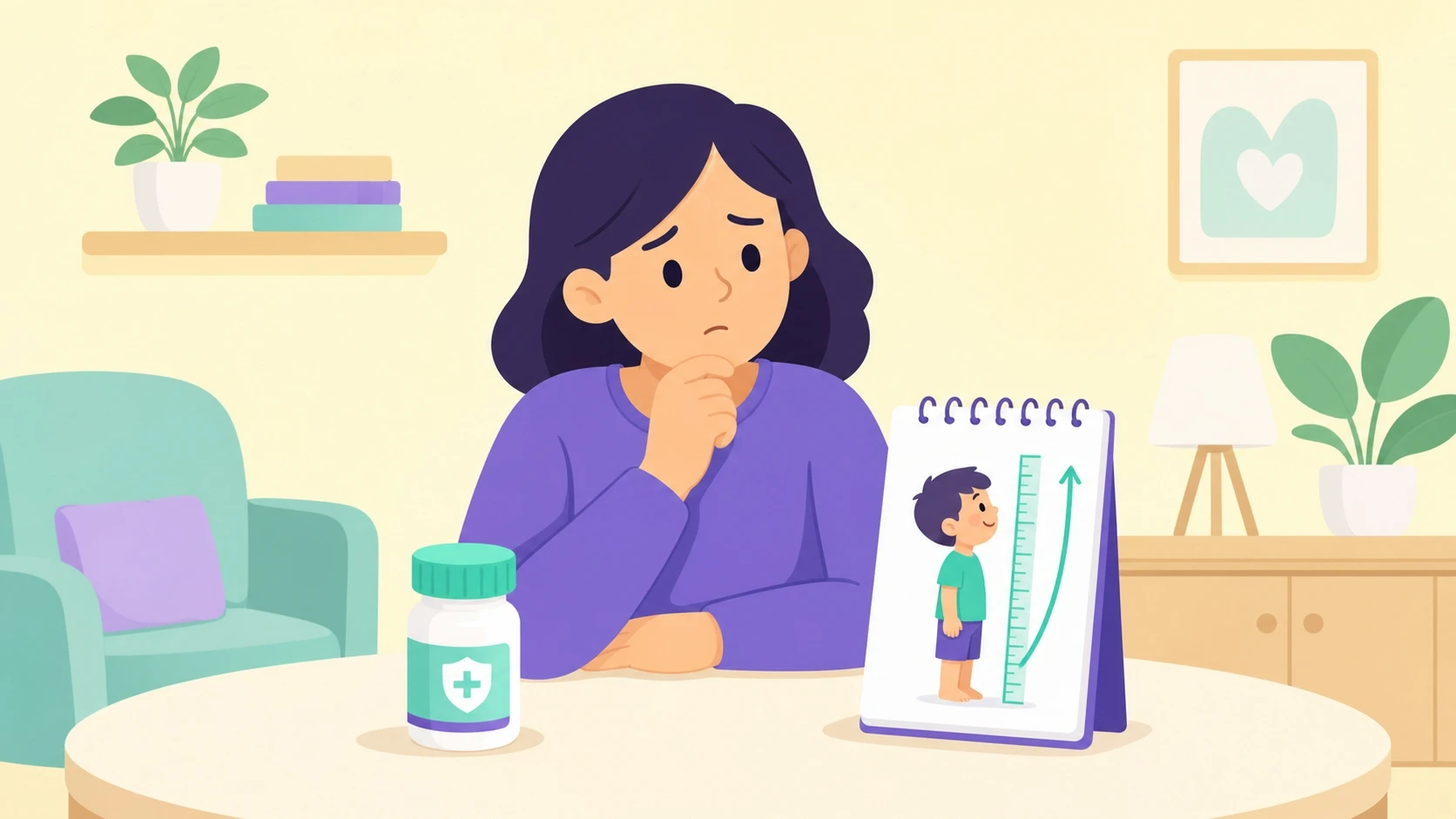
The concern about ADHD medication effect on height is one of the most common questions parents raise after a diagnosis. It almost always starts with the same observation: their child begins taking a stimulant medication and suddenly eats far less at lunch. Weight gain slows. A few centimeters of expected growth seem to vanish. The logical conclusion many parents draw is that the medication is stealing their child's height.
Stimulant medications used to treat ADHD — the most familiar being methylphenidate (sold as Ritalin) and amphetamine-based drugs — work by activating the central nervous system to improve focus. A well-known side effect of this activation is appetite suppression, particularly during the hours when the drug is most active. For a growing child, adequate nutrition is non-negotiable, so watching a child push food away at mealtimes understandably triggers alarm.
This worry has led many families to delay or stop treatment, sometimes at significant cost to the child's development. Understanding what the evidence actually says can help parents make more confident, informed decisions.
What Large-Scale Studies Say About Stimulant Medication and Children's Height

The research picture on stimulant medication children height outcomes has become clearer over the past two decades, and the findings are more reassuring than many parents expect.
Early studies did observe that children on ADHD medications occasionally lagged slightly behind peers in weight gain and height velocity, especially during the first year of treatment. These findings fueled the Ritalin stunts growth myth that spread through parent communities and persists today. However, longer follow-up studies told a different story.
The landmark MTA study (Multimodal Treatment Study of Children with ADHD) tracked participants for ten years. Its findings showed no statistically significant difference in final adult height between children who used long-term stimulant medication and those who did not. Some analyses reported a marginal mean difference of roughly 1 to 2 centimeters in the medication group — a difference so small that most growth specialists consider it clinically insignificant, especially given the wide natural variation in how tall any individual child ultimately grows.
The biological explanation for this recovery lies in what researchers call compensatory, or catch-up, growth. When appetite suppression eases — whether because the medication wears off in the evening, dosage is adjusted, or treatment is paused — children tend to eat more and regain lost ground on the growth curve. The body has a strong tendency to return to its genetically programmed trajectory.
Understanding ADHD Drugs and Height Suppression: The Temporary vs. Permanent Distinction

One of the most important concepts parents should understand is the difference between temporary growth slowing and permanent ADHD drugs and height suppression. The evidence consistently supports the former, not the latter.
Temporary growth slowing refers to a reduced rate of height gain during the active treatment period — often the first six to twelve months. This is real and measurable. Permanent suppression would mean the child's final adult height is meaningfully shorter because of medication use. Current evidence does not support this outcome for the vast majority of children on standard therapeutic doses.
Several factors influence how much, if any, temporary effect a child experiences. Age at which treatment starts matters: children who begin stimulants before their pubertal growth spurt have more time for catch-up growth. Dosage plays a role, as higher doses are associated with greater appetite suppression. The specific medication also matters — different stimulant formulations affect appetite and sleep differently.
Because individual responses vary so widely, blanket reassurances are not useful. What matters is regular, individualized monitoring rather than assuming every child will be unaffected.
Practical Management: What Growth Specialists Recommend

For families where appetite suppression is noticeable, the right response is active management — not simply stopping medication or hoping the problem resolves on its own. Growth clinics that see children on stimulant medications typically recommend a multi-pronged approach.
- Regular growth monitoring: Height, weight, and bone age should be tracked at consistent intervals. Bone age assessment in particular gives specialists an objective window into how much growth potential remains, independent of the temporary fluctuations that stimulants can cause.
- Strategic meal timing: Stimulant medications peak in effectiveness during school hours, which is also when appetite suppression is strongest. Many families find success by offering a substantial breakfast before the medication takes effect, then making dinner and an evening snack the primary nutrition windows when the drug has largely worn off.
- Nutrient-dense snacking: Calorie quality matters more than quantity during periods of reduced appetite. Foods rich in protein, healthy fats, and micronutrients are more valuable per bite than high-carbohydrate options.
- Open communication with the prescribing physician: Dosage, formulation, and timing adjustments can meaningfully reduce appetite side effects for many children without compromising therapeutic benefit. Parents should feel empowered to raise growth concerns directly with the treating doctor.
Growth specialists and ADHD-treating physicians work best as a team around the child, sharing observations and adjusting plans based on objective growth data rather than parental anxiety alone.
Weighing the Risks of Untreated ADHD Against Height Concerns

Every medical decision involves a balance of risks and benefits, and the choice about ADHD treatment is no exception. While the concern about ADHD medication effect on height is legitimate, it is worth placing it alongside the documented consequences of leaving ADHD untreated or undertreated.
ADHD is not simply a label for an energetic child. Without adequate treatment, children with ADHD are at elevated risk for academic underperformance, difficulty forming and maintaining friendships, low self-esteem, anxiety, and — in adolescence and adulthood — higher rates of risky behavior and mental health challenges. These outcomes carry their own long-term consequences for wellbeing.
Effective ADHD treatment, including medication when appropriate, helps children learn more successfully, participate more fully in social settings, and build the self-regulatory skills they will carry into adult life. A potential marginal difference of one to two centimeters in final height — and even that figure is disputed — must be weighed honestly against these developmental stakes.
For many families, the calculus is clear once they have accurate information. Others face genuinely difficult trade-offs that deserve individualized guidance from the child's care team.
When to Involve a Growth Specialist

Most children on ADHD medications do not need specialized growth evaluation — routine monitoring by their pediatrician is sufficient. However, certain situations warrant a closer look from a specialist experienced in pediatric growth.
Consider a growth clinic consultation if your child drops more than one major height percentile channel over six to twelve months on medication, if weight loss is persistent rather than a brief adjustment period, if the child's bone age assessment suggests growth potential may be limited, or if you have concerns about the interaction between stimulant use and an underlying growth condition.
A growth specialist can order and interpret bone age imaging, assess whether the child's growth velocity is within expected ranges, and offer structured nutritional and lifestyle recommendations tailored to the individual child. This kind of data-driven, personalized approach replaces anxiety with a clear picture of where the child stands and what, if anything, needs to change.
Seeking specialized input is not a sign that something has gone wrong — it is simply good medicine when multiple factors are at play in a growing child's life. Professional evaluation is available for families who want objective answers rather than internet reassurances.
FAQ
Does Ritalin stunt growth permanently?
Current evidence does not support the idea that Ritalin or other stimulant medications cause permanent height suppression. Large studies, including the ten-year MTA study, found no statistically significant difference in final adult height between children who took long-term stimulant medication and those who did not. Some children experience temporary slowing of growth velocity, but most recover through catch-up growth once appetite normalizes or dosage is adjusted.
My child on ADHD medication is eating much less — should I stop the medication?
Reduced appetite is a common and expected side effect of stimulant medications, but stopping medication without consulting the prescribing doctor is not recommended. Instead, discuss the observation with the treating physician, who may adjust dosage, timing, or formulation. Strategic meal timing — eating a full breakfast before the medication activates and a nutrient-rich dinner and evening snack when it wears off — can compensate meaningfully. Regular growth monitoring will show whether the appetite change is affecting the growth curve.
When should I see a growth specialist if my child takes ADHD medication?
A growth specialist consultation is worth considering if your child drops more than one major percentile channel on the height chart over six to twelve months, shows persistent weight loss, or if you have concerns about a pre-existing growth condition interacting with stimulant use. A specialist can assess bone age, interpret growth velocity data, and provide individualized nutritional and monitoring guidance — replacing uncertainty with concrete information.
References
- Consensus statement on the diagnosis and treatment of children with idiopathic short stature: a summary of the Growth Hormone Research Society, the Lawson Wilkins Pediatric Endocrine Society, and the European Society for Paediatric Endocrinology Workshop. The Journal of clinical endocrinology and metabolism. 2008. PubMed · DOI
- Effectiveness and Safety of Hormonal Treatments in Children with Growth Disorders: A Systematic Review of Clinical Evidence. Clinics and practice. 2026. PubMed
- Accuracy of final height prediction and effect of growth-reductive therapy in 362 constitutionally tall children. The Journal of clinical endocrinology and metabolism. 1996. PubMed · DOI
- Final height of short normal children treated with growth hormone. Lancet (London, England). 1996. PubMed · DOI
- Aromatase Inhibitors Treatment Alone or With GH Increases Final Height in Short-statured Pubertal Boys-Real-world Data. The Journal of clinical endocrinology and metabolism. 2025. PubMed · DOI